
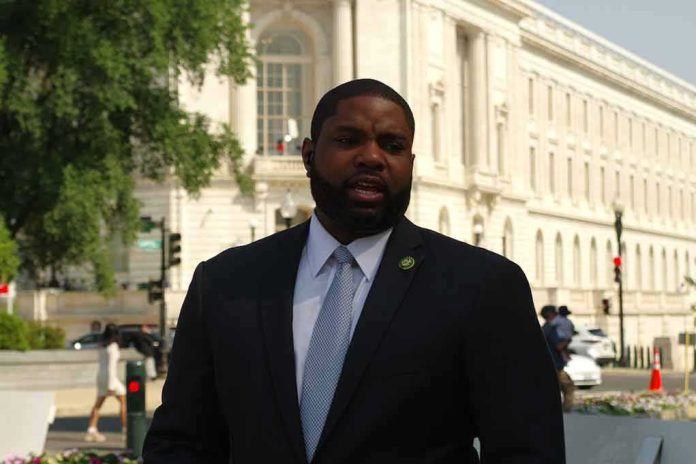
A brief exchange over one word at a Florida campaign stop exploded into a viral fight over respect, identity, and political messaging.
Story Snapshot
- Video shows Byron Donalds addressing an attendee as “sir,” followed by an apology and renewed use of “sir.”
- The attendee said, “I am not a sir, I am a ma’am,” sparking sharp pushback from bystanders.
- Clips from the October 21 Fort Lauderdale event spread online, intensifying partisan framing.
- The incident reflects how short clips turn norms about respect and speech into proxy battles.
What Happened at the Fort Lauderdale Stop
On October 21, 2026, Florida gubernatorial candidate Byron Donalds took questions at a Fort Lauderdale event when a transgender attendee challenged a campaign mailer about a “trans agenda.” Donalds responded and used the term “sir.” The attendee replied, “I am not a sir, I am a ma’am.” Donalds then said he was “listening to the voice” and apologized, but later used “sir” again during the same exchange, which reignited tensions in the crowd.
Multiple outlets reported on the moment, anchored by short video clips from the event. The Advocate said Donalds “repeatedly misgenders” the attendee and quoted his voice-based explanation. A Yahoo aggregation highlighted the apology and the return to “sir,” which drove the backlash. The posts and reposts emphasize the heated lines, not the full conversation flow, which remains unclear without a complete recording or transcript.
How the Exchange Turned Confrontational
Bystanders quickly joined, with one scolding Donalds for saying “sir” after the correction. A content creator’s caption framed the attendee as a transgender veteran who was disrespected, further shaping how audiences viewed the clip. Commentators on the right, by contrast, cast the attendee as unreasonable and defended Donalds’s wording. The result was a flashpoint where each side claimed basic respect was on the line, while the facts rested on brief, edited clips.
Donalds linked his wording to the voice he heard. That explanation may clarify the first “sir,” but it does not explain the later repeats after the correction. Reports and clips show he kept using “sir,” which critics described as disrespectful. Supporters argued elected officials should not be forced to use preferred terms. Neither side offered a neutral, complete event record, leaving gaps about what happened between the viral moments.
Why This Moment Resonates Beyond One Event
This argument taps into a wider fight about language, identity, and who sets the rules in public life. Many Americans on the left and right believe elites in government and media push them to speak in ways that feel imposed. Others believe leaders dodge simple respect for vulnerable groups. Research links misgendering to worse well-being for transgender people, which helps explain why a single word felt so charged in the room that day.
And THIS is why Byron Donalds deserves to be Florida’s next Governor.
He refused to call a man by she/her pronouns!!!
And of course, the White Liberal feminazis berated Byron, and he stood firm. pic.twitter.com/uTZgGckI27
— Just Jen ℞ 🫡🇺🇸 (@JustJenRX) October 23, 2026
Social media makes these clashes spread fast and get sharper. Studies show outrage gets more clicks and shares, so the most intense seconds are what many people see, not the quieter parts where people try to explain themselves. That cycle rewards conflict, punishes patience, and leaves voters certain the other side is acting in bad faith. In this case, short clips, strong captions, and partisan headlines did the rest.
What We Know and What We Don’t
We know Donalds used “sir,” apologized based on what he heard, and later used “sir” again during the same exchange. We know the attendee asked to be addressed as “ma’am.” We have video clips that show these key beats and the crowd reaction. We do not have a complete, unedited record of the event, or a detailed explanation from Donalds on why he continued to say “sir” after the correction. Those gaps limit firm conclusions.
For voters tired of culture-war whiplash, this scene carries a familiar lesson. Leaders who want trust should set clear standards for civil talk at their own events and follow them, even under pressure. Citizens who want change should demand full context, not just viral heat. Neither costs money, and both would lower the temperature. In a season of rising cynicism, small acts of respect and clarity still matter.
Sources:
thegatewaypundit.com, x.com, bps.org.uk