When a donor government conditions lifesaving aid on strict anti-diversion rules, the line between necessary stewardship and harmful overreach runs through the hardest terrain in humanitarian policy—especially when famine risk is rising and the facts of a triggering incident are disputed.
The Short Version
- The U.S. pause of assistance benefiting Somalia’s federal government was justified by Washington as a zero‑tolerance response to alleged mishandling of U.S.-funded food, tied to a named warehouse, port, and quantity.
- Somalia denied destroying or seizing the food; a senior World Food Program official reportedly said all commodity was ultimately recovered, sharpening the dispute.
- Independent humanitarian reporting shows severe food insecurity, with targeted warnings for Baidoa under worst‑case conditions, underscoring the stakes of any broad suspension.
- The core policy dilemma is perennial: deterring diversion without shifting the cost of accountability failures onto civilians who rely on aid systems to survive.
What the suspension rests on—and why it matters
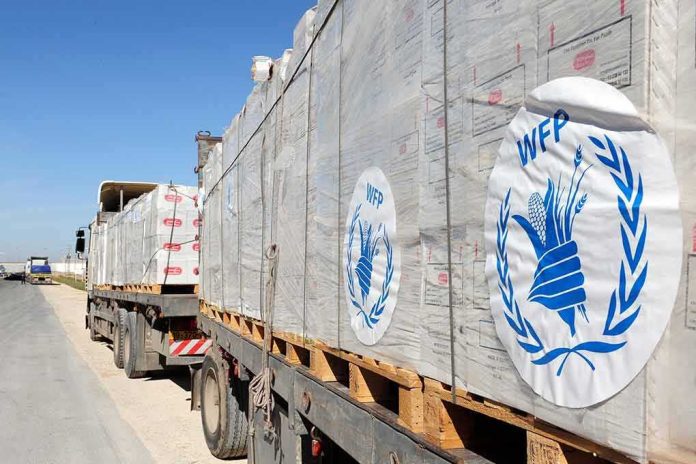
The State Department’s stated rationale was unusually specific for a fast-moving sanction on partner assistance: officials tied the pause to an alleged demolition of a World Food Program (WFP) warehouse at Mogadishu Port and a seizure of U.S.-funded commodities, quantified at 76 metric tons. The department framed the move as an application of a “zero‑tolerance policy for waste, theft, and diversion” and conditioned any resumption on “accountability” and “remedial steps” by Somalia’s federal government. That is the architecture of compliance-based aid: document a breach; suspend leverage-bearing funds; tie restoration to corrective action. In a domain where credible diversion risk is endemic, the logic is not novel—what is unusual is imposing it at breadth during a period of elevated hunger signals.
For readers outside the aid world, this mechanism is the counterweight to a decade of scale-up in cash, voucher, and in‑kind pipelines that often operate through, alongside, or in proximity to state systems. When donors believe partner actions put titled commodities or distribution integrity at risk, pausing support is not only permissible; it can be obligatory under domestic safeguards and appropriations law. The reputational stakes are high because one visible incident can be read as emblematic, fairly or not, of a government’s stewardship.
The contested facts—and what is actually known
Here, however, the evidentiary picture is conflicted in the public record. Somali authorities publicly denied destroying or confiscating U.S.-funded food, asserting the goods remained under WFP control. The number itself varies by outlet—75, 76, or 83 tons—a small gap in absolute terms but a meaningful one for critics looking to puncture confidence in the narrative’s precision. Most consequentially, The Atlantic reported that WFP’s deputy executive director, Carl Skau, said the organization ultimately recovered all of the food. If accurate, that does not resolve whether a warehouse was improperly demolished without coordination; it does, however, weaken the claim of irreversible loss or diversion at the heart of a zero‑tolerance posture. In the public domain, no chain-of-custody file, inventory reconciliation, or photographic record has been released by Washington to settle the matter definitively.
Two realities can coexist: a government’s redevelopment action may have been executed without donor coordination and still not have resulted in permanent commodity loss; WFP can recover stocks post‑incident, while the underlying breach of protocol remains disputed. That duality is exactly why sophisticated suspension decisions typically rest on a documented risk assessment that distinguishes between program lines exposed to the alleged misconduct and those that are not. The reporting available so far does not publicly demonstrate such program-by-program distinction.
The humanitarian operating picture: scale, risk, and consequence
Somalia’s food security outlook has oscillated between catastrophe averted and catastrophe deferred, driven by climate shocks, conflict access constraints, and funding volatility. WFP’s own country briefs and emergency pages describe millions facing crisis-level hunger or worse and identify a worst-case famine risk in Baidoa for internally displaced families—high‑confidence, operationally grounded signals that argue for continuity of lifesaving pipelines, even as compliance measures tighten. That is not a moral flourish; it is the discipline of triage under shortage.
Independent advocates and medical NGOs have warned that reduced funding and access degrade the ability to stabilize nutrition, water, and primary care platforms that prevent surges in mortality. Their analysis is not dispositive on the warehouse dispute—nor does it need to be to carry weight. When an assistance freeze overlaps with elevated IPC projections and constrained household coping capacity, the margin for policy error narrows. In such windows, blunt measures amplify second-order harms: fewer households reached, ration cuts, disrupted malnutrition treatment, and slower market recovery where cash programming had been cushioning price spikes.
The stewardship–humanitarian tradeoff: how to draw the line
Oversight and deterrence work when they are specific, time-bound, and attach consequences to the actors responsible for control failures—not to the beneficiaries least able to bear them. In practice, that implies five design principles in disputed environments. First, isolate the sanction to the implicated locus—here, the port authority or the relevant line ministry—rather than blanketing government-benefiting programs, unless a formal assessment supports systemic risk. Second, publish the incident file eligible for release: inventory reconciliations, waybills, title documentation, and coordination logs; sunlight deters repeat offenses and inoculates against claims of politicization. Third, require verifiable remedial steps—e.g., binding standard operating procedures for port demolitions, donor-notification protocols, and indemnification clauses—tied to a resumption schedule. Fourth, ring‑fence humanitarian pipelines whose governance and custody chains are demonstrably distinct from the locus of alleged misconduct. Fifth, pair sanctions with surge monitoring: more spot checks, third‑party verification, and audit-able digital traceability for commodities and cash assistance.
None of these absolve partners of accountability; they increase it, while minimizing collateral harm. And they align with how risk management has evolved across major humanitarian actors—toward targeted controls and layered assurance rather than binary on/off switches.
What would settle the specific dispute
Three disclosures would move this case from dueling statements to verified chronology. One: a U.S. government incident dossier establishing the chain of evidence for demolition, custody, and any temporary or permanent loss, including who authorized what at the port and when. Two: a WFP reconciliation—warehouse stock ledgers, loss reports if any, and a signed attestation from responsible logistics officers—closing the gap between the 75/76/83‑ton figures and confirming the disposition of each lot. Three: Somali government documentation—port notices, redevelopment contracts, and correspondence with WFP and donors—demonstrating either coordination or its absence. The result would not only clarify what happened; it would also signal the corrective steps necessary for a calibrated resumption.
Until such a record is public, the debate will continue to be framed as a clash between a stewardship doctrine and humanitarian risk warnings. Both are real. But evidence can—and should—decide the balance in a concrete case.
How to judge policies like this going forward
Use four questions to evaluate any aid suspension in a famine‑risk context. Is the triggering allegation specific, documented, and attributable—down to location, quantity, and authority? Here, specificity exists, documentation public does not. Is the remedy proportionate and targeted to the locus of risk? The public record does not clearly differentiate across assistance lines. Are protections in place to shield life‑saving pipelines from collateral effects, with measurable thresholds for resumption? Absent the incident file and remedial roadmap, that remains opaque. Finally, do independent humanitarian signals indicate that a pause materially heightens risk to civilians? In Somalia, reputable sources point to heightened risk under worst‑case scenarios, which argues for design choices that keep essential pipelines intact while accountability is pursued.
Sources:
twitchy.com, alternet.org, apnews.com, cbc.house.gov, wfp.org, latimes.com