Releasing targeted images to the public, then rapidly converting community tips and video into a named suspect and an arrest, is now a cornerstone of major-crime investigations; Boulder’s Halloween shooting shows how that pipeline actually works when it is organized well and executed quickly.
The Short Version
- Boulder police said they identified everyone shown in images and security video released after a deadly Halloween shooting near the University of Colorado campus.
- The investigation produced a primary suspect: 18-year-old Omar Perez of Thornton, arrested and charged with first-degree murder, attempted first-degree murder, and first-degree assault.
- A family member tip—reportedly triggered by police-released visuals and clothing, and supported by location insights—helped steer detectives to Perez.
- Witnesses and reporting tied a SWAT-style outfit and a Purge-style mask to the suspect; police still emphasized they believed Perez was the lone shooter while not ruling out additional arrests.
What Police Say They Accomplished: From Public Frames to Full Identifications
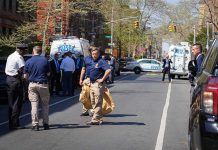
After gunfire at a Halloween house party in Boulder left one college student dead and another seriously wounded, detectives moved quickly to harvest, curate, and publicize images and clips of persons of interest. Within days, Boulder police stated that “everyone shown” in the released photos and security footage had been identified—an unusually strong claim in the early arc of a homicide probe, especially one with multiple overlapping crowds and camera angles. That statement matters because it closes the first loop of open-source policing: if you ask the public to help you put names to faces, you need to demonstrate those asks converted into concrete progress. In this case, they did.
The payoff was not merely a collection of names. Police arrested 18-year-old Omar Perez and prosecutors charged him with first-degree murder, attempted first-degree murder, and first-degree assault in the killing of 19-year-old Luca Hanlon and the wounding of another student—charges at the top of Colorado’s hierarchy of violent offenses. While an arrest is not a conviction, securing a named defendant on the record within days signals that the identification pipeline produced more than speculative leads. It yielded a focal suspect with an evidentiary path prosecutors judged strong enough to file.
How The Identification Pipeline Worked
The operational backbone here combined three elements: broad video intake, deliberate public release, and a personal tip that gave investigators traction. Detectives and community partners captured more than 50 video submissions—doorbells, phones, and nearby security systems—then curated images for public distribution to spark recognition. That curation stage is a craft in itself: choose frames that are distinctive enough to jog memory but not so generic they produce noise. The approach worked. Reporting derived from the arrest affidavit indicates Perez’s sister recognized him—either directly from video or from the clothing depicted—then used a Life360 family location app check before contacting authorities. The district attorney did not on-record confirm the precise sequence of that tip, but the throughline is clear: a family recognition triggered by publicized visuals set the case in motion.
Parallel witness accounts linked the shooter’s appearance to a SWAT-style outfit and a mask resembling those popularized by The Purge franchise. Later reporting says Perez’s sister found a black Purge-style mask in his Audi when he picked her up—an observation consistent with the witness description and with the police imagery that dominated coverage. Descriptive identifiers like distinctive clothing or a theatrical mask are not forensic proof; they are investigative accelerants that help stitch disparate data into a coherent lead. In Boulder, they served precisely that function.
What “Identified” Does—and Doesn’t—Mean
“Identified everyone shown” does not imply universal culpability; it means police believe they have put true names to the individuals visible in the materials they chose to release. That cohort can include witnesses, bystanders, companions, and the alleged shooter. Investigators consistently draw those distinctions internally—who saw what, who went where, who did what—then route people into divergent lanes: victims, witnesses, associates, or suspects. In this case, police messaging and subsequent charges delineated Perez as the alleged shooter while emphasizing that detectives believed he was the only person who fired a gun. Even so, officials left open the prospect of additional arrests as they trace potential accomplices or evaluate conduct surrounding the encounter. That posture is standard: once a principal is in custody, the case continues to expand or contract as forensics, digital traces, and interviews are reconciled against the timeline.
There is also a conceptual point every serious reader should internalize: identification is a process, not a verdict. Eyewitnesses and video can be powerful, yet social science and post-conviction casework show they must be handled with discipline to avoid contamination. The National Registry of Exonerations has long documented how mistaken identifications can seed wrongful convictions; meta-reviews of DNA-based exonerations likewise describe misidentification as a recurrent factor. Those patterns are not claims about this case; they explain why police, prosecutors, and courts increasingly combine open-source visuals with corroborating material—time-stamped digital location data, clothing recovery, chain-of-custody property logs, and, when available, laboratory testing—to fortify the record.
The Timeline and the Setting: From Party Shut-Down to Homicide Call
Context clarifies causality. Police had already responded to the Marine Street address earlier in the evening on a noise complaint and issued a nuisance party ticket as the gathering wound down. Later, when a separate group reportedly attempted to enter the home, a confrontation preceded gunfire that left two CU students shot; one, later identified as Luca Hanlon, died at the hospital. That sequence—party de-escalation, reapproach by an outside group, sudden escalation to gunfire—tracks with the account prosecutors summarized at early court appearances. The district attorney also signaled the possibility of further charges as the full picture firms up, a common prosecutorial safeguard when co-defendant or ancillary conduct may still be under review.
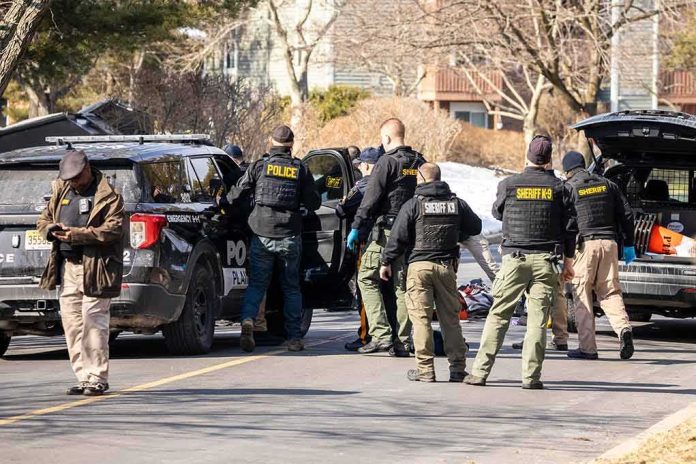
Boulder’s investigative deployment was large by any measure—more than 15 detectives, multiple supervisors, and sustained patrol support—reflecting both the gravity of a homicide in a low-violence city and the modern reality that canvassing, collecting, and triaging digital media now consumes a meaningful portion of early-case resources. Properly managed, that resource burn buys speed and specificity. This case demonstrates the payoff: a narrow suspect set, an arrest, and a public assurance that the people captured in circulated images have been accounted for.
JUST IN: Omar Perez, 18, faces murder and related charges after killing 19‑year‑old Luca Hanlon at a Boulder Halloween party.
Omar Perez, 18, faces murder and related charges after killing 19‑year‑old Luca Hanlon at a Boulder Halloween party. The shooting left Hanlon dead the…
— Redpulse (@Redpulse_News) November 15, 2026
Why This Approach Matters Going Forward
Three lessons travel well beyond Boulder. First, prompt, selective release of visuals can compress weeks of door-knocking into hours of targeted outreach; the public will help if you give them crisp frames and clear call-ins. Second, family-member recognition remains one of the most reliable triggers of movement in masked-offender cases: distinctive clothing, gait, vehicles, and social-media breadcrumbs often matter more than facial features. Third, tying open-source recognition to corroborating strands—location services like Life360, property findings such as a distinctive mask, and structured witness re-interviews—gives prosecutors a layered theory of the case rather than a single point of failure.
None of that minimizes the human stakes. A 19-year-old student is dead; another was gravely injured. The charges against Perez will move through preliminary hearings, discovery, and, if not resolved, trial. Police say they believe he was the lone shooter, yet they have wisely kept the aperture open for additional accountability if evidence supports it. For communities that increasingly live on camera, Boulder’s experience offers a clear template: collect everything, release judiciously, convert recognition into leads, and corroborate relentlessly.
Sources:
nypost.com, foxnews.com, theboldcu.com, hoodline.com, news.ssbcrack.com, denver7.com, gazette.com, breakingnewsnation.com, pmnsports.com, boulderreportinglab.org, preprints.org, pmc.ncbi.nlm.nih.gov