Federal agents arrested a California woman at LAX on a foreign-agent charge after she allegedly surveilled the son of Taiwan’s president in Seattle.
Story Highlights
- FBI arrested Wanying “Heather” Zhang at LAX on a charge of acting as an unregistered foreign agent.
- Federal affidavit alleges she conducted directed surveillance in Seattle, collecting photos and license plates.
- Law-enforcement sources identified the target as the son of Taiwan’s president, Ting-Yu Lai.
- Case reflects rising counterintelligence focus on state-backed operations tied to adversary nations.
FBI Arrest At LAX And The Federal Charge
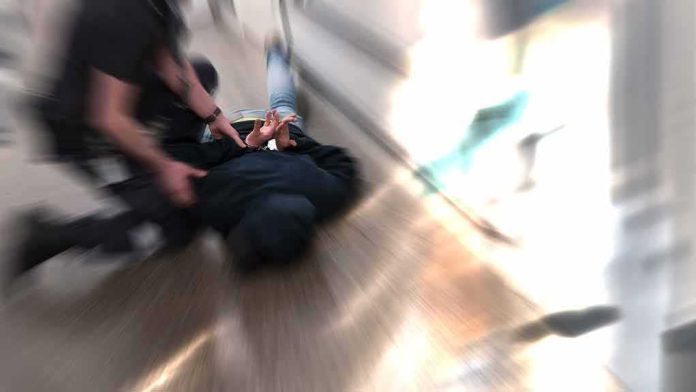
Federal Bureau of Investigation (FBI) agents took Wanying “Heather” Zhang into custody at Los Angeles International Airport as she prepared to board a flight to Shanghai. Prosecutors charged her with acting as an unregistered agent of a foreign government, a federal felony used when someone secretly advances a foreign state’s interests on United States soil. CBS News reported she was cuffed on Sunday and booked on the foreign-agent count, not a mere investigative hold.
Court records describe a counterintelligence case, not a paperwork dispute. The complaint and affidavit say Zhang worked at the direction of officials from the People’s Republic of China. That direction matters under federal law. It goes beyond casual contact and points to control by a foreign state. Media reports say federal authorities framed the conduct as espionage activity on China’s behalf, while the filed charge is acting as an unregistered agent under federal statute.
Alleged Directed Surveillance In Seattle
An affidavit from an FBI special agent alleges Zhang and another person traveled to the Seattle area last year to surveil a close relative of a Taiwanese government official. Reports say they parked a rented sport utility vehicle outside a residence, recorded family arrivals, and gathered license plate data. ABC News and local outlets reported she sent photos, videos, and plate numbers to her contacts as part of the operation directed from China, aligning with basic clandestine tradecraft.
CBS News, citing law-enforcement sources, identified the target as Ting-Yu Lai, the son of Taiwan’s President Ching-Te Lai. That detail raises the stakes, given the long-running pressure campaign Beijing applies against Taipei. While the charging document reportedly did not name the individual, multiple outlets matched on the core surveillance claims: travel to Seattle, data collection near a residence, and transmission of materials to Chinese contacts.
Why This Case Matters For U.S. Security
This arrest lands amid a broader push to disrupt foreign influence and covert operations inside the United States. Legal analysts note the Justice Department has focused criminal cases under 18 U.S.C. § 951 and related laws on conduct that looks like classic state-directed espionage. Guidance in recent years urged prosecutors to reserve such charges for activity tied to adversary governments, a category that prominently includes China.
A policy paper submitted in a Justice Department rulemaking docket cited a study of 49 cases under 18 U.S.C. § 951 from 1998 to 2020. It found eighty-eight percent involved defendants connected to adversary nations, with China, Cuba, Iran, and Iraq most common. The pattern shows why cases like Zhang’s keep drawing firm action: state-linked direction, sensitive targets, and tradecraft signs such as surveillance, data transfer, and coordinated tasking.
Geopolitical Context And U.S. Response
Tensions between China and Taiwan place any threat to Taiwanese leaders or family members under a harsh light. Focus Taiwan reported Taiwan condemned the alleged surveillance of President Lai’s son on United States soil, underscoring the cross-border pressure campaign Taipei says it faces. The United States treats such activity here as a red line. It puts Americans, legal residents, and allied communities at risk and aims to chill free speech and political ties.
FEDS ARREST ALLEGED CHINESE FOREIGN AGENT AT LAX
First Assistant U.S. Attorney Bill Essayli says Wanying “Heather” Zhang was arrested while attempting to leave for China—accused of surveilling a Taiwanese official’s relative at the direction of PRC officials. https://t.co/DVGbW0iArQ
— Real America's Voice (RAV) (@RealAmVoice) October 4, 2026
President Trump’s administration has prioritized countering Beijing’s reach at home. This case shows that push at work: find the operation, move fast, and enforce the law. If prosecutors prove their claims, the message is simple and firm. The United States will not allow foreign governments to run spy-style missions in our neighborhoods, target families, or test our resolve. The government still must prove the charge in court, but the arrest signals a clear national security stance.
Sources:
cbsnews.com, abc11.com, abcnews.com, focustaiwan.tw, wpde.com