
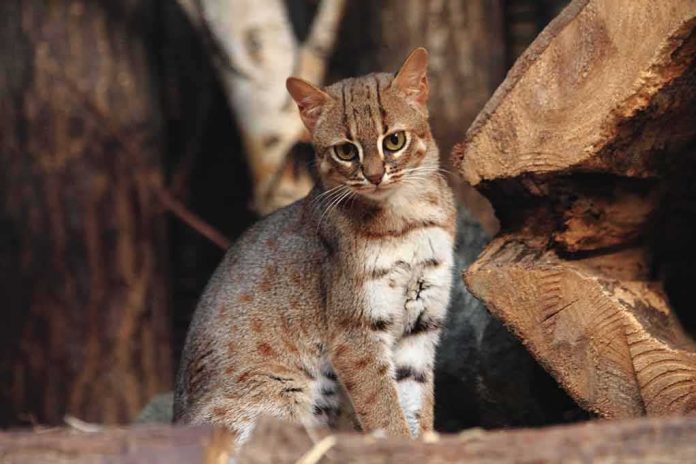
A tiny, three-pound wild cat from Bolivia has been confirmed as a brand-new species, marking the first living feline added to science in more than a century.
Story Highlights
- Scientists identified Leopardus tilcayo as a new wild cat species from Bolivia’s Yungas.
- Researchers say this is the first living feline species formally described in over 100 years.
- Genetic tests and museum samples helped confirm the cat’s distinct lineage.
- The cat is small, spotted, and adapted to Bolivia’s cloud forests.
Scientists Confirm a New Species: Leopardus tilcayo
Researchers announced that a small, spotted wild cat from Bolivia’s Yungas cloud forests is a distinct species, now named Leopardus tilcayo. Reports say the study appeared in the journal Current Biology and relied on genetic analysis and comparisons to related tiger cats in South America. Outlets describe a light brown coat with irregular rosettes and rounded ears. Scientists place the habitat in the eastern Andean slopes near La Paz, in the humid, high-elevation forests known for rich biodiversity.
Coverage highlights that this is the first time in more than a century that a living feline species has been formally named and described. That claim underscores how rare such finds are in well-studied animal groups like cats. Scientists say the animal split from close relatives about 1.4 million years ago, which supports treating it as its own branch on the cat family tree. The finding adds to our picture of South American wildlife and the hidden diversity in remote forests.
How Researchers Identified the Tilcayo Cat
Reports say the team used DNA from both living animals and museum specimens to map where the cat sits on the family tree. Journalists describe a dataset that compared genomes across many cats to sort out which lineages are separate species. One account says the description drew on two known live individuals, including one rescued as a kitten at a Bolivian refuge, which later helped confirm the species with genetic testing. That small sample makes field surveys the clear next step.
Scientists and reporters describe a cat that weighs around three to five pounds and measures about 18 inches long, with a slim body and a long tail. The fur is light brown with broken spots, more like rosettes than stripes. Rounded ears and a delicate face give it a youthful look. These traits help separate it from other small South American cats, like oncillas and pampas cats, which have different coat patterns and ranges. Distinct looks plus genetic distance are the core of the case.
Why This Matters for Conservation and Science
This discovery shows how modern tools can reveal new species even in groups we think we know well. Researchers relied on genomes and careful study of old museum skins to fill gaps where fresh samples were hard to find. That approach has grown common as scientists revisit collections with better methods. For a place like the Yungas, where steep terrain makes fieldwork tough, these tools can speed up findings that guide on-the-ground protection.
Recognizing Leopardus tilcayo as its own species can change how land managers plan. A unique species can qualify for targeted protection in Bolivia’s cloud forests, which face logging, road building, and climate strain. Clear names and maps help set priorities for parks, local communities, and scientists. Reporters say the research also sorted out other tiger cat lineages, which could reshape how conservation groups rank threats and fund projects across the region.
A Glimpse Inside Bolivia’s Refuge and Next Steps
Journalists say one tilcayo reached a Bolivian wildlife refuge as a kitten, where staff first thought it was a common small cat. Later tests showed it did not match any known species, which helped scientists build the case for Leopardus tilcayo. That story tracks with how many finds now happen: a mix of local caretakers, museum archives, and genetics. It also shows the value of keeping careful rescue records and sharing data with research teams.
Scientists in Bolivia have identified and named a previously unknown wild cat species — the first such discovery in a century. The 10-year-old wildcat, named Tigrino, is one of two known living members of the newly identified Leopardus tilcayo.
Here's more of its story. pic.twitter.com/2dZCNReWTh— CGTN America (@cgtnamerica) September 20, 2026
Next steps are clear and practical. Field teams need camera traps, scat sampling, and community reports to locate more tilcayos in the Yungas. Mapping the range, counting numbers, and noting threats will shape any conservation plan. For readers in the United States, this is a reminder that discovery is not only about big budgets or politics. When institutions work with locals and share data, we learn more about the world—and sometimes find a new species hiding in plain sight.
Sources:
es.wikipedia.org, discoverwildlife.com, cbc.ca, livescience.com, timesofindia.indiatimes.com, livenowfox.com