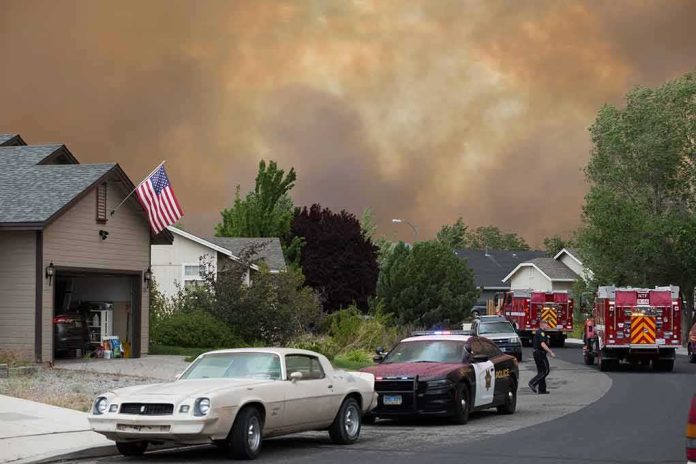
Los Angeles logged 12,241 fires tied to homelessness by September 20, and fire crews feel the strain.
Story Snapshot
- Los Angeles counted 12,241 homeless or encampment-related fires through September 20, 2026.
- That pace averages about 47 such fires every day citywide.
- The volume diverts engines, slows response, and risks neighborhoods and freeways.
- Annual totals rose for years, showing a structural trend, not a fluke.
City fire data shows a relentless daily drumbeat
The Los Angeles Fire Department reported 12,241 fires labeled “Homeless or Encampment Related” from January 1 to September 20, 2026. That works out to about 47 fires every single day across the city, often clustered along freeway corridors and dense encampment zones. This count includes trash burns, warming and cooking fires, suspected arsons, and blazes that start in or near encampments. Firefighters say the constant calls stretch staffing, equipment, and overtime to uncomfortable limits.
Crews do not get to choose which call to skip. Engines rolling to encampment fires are engines not available for heart attacks, structure fires, or car crashes. Dispatchers juggle priorities while units shuttle between hotspots. Each incident can be small on its own, yet the sheer volume compacts time and energy. That daily grind wears on firefighters and increases the odds of a bad overlap—when a major blaze breaks out while crews are stuck on repeat nuisance fires.
A years-long rise that changed the rhythm of the job
Reporters and city records show this is not a one-off spike. The category rose for several years, with thousands more such fires logged since 2020. In 2025, the city tallied 16,982 fires tagged to homelessness, averaging 46 per day, which marked a steep climb from earlier years. The 2026 pace remains massive. This trend reshaped deployment patterns, forced more red flag days for staffing, and made warm, windy evenings feel like a coin toss for neighborhoods on the edge.
These labels cover a wide mix of sources, but the effect on readiness is plain. Trash fires jump to a fence, tents catch, propane tanks vent, and stray embers drift under freeway overpasses. Investigators cite cooking mishaps, open flames inside makeshift shelters, and suspected arson among people in crisis. However the spark starts, crews face the same sprint: find the seat of the fire, protect exposures, pull lines, and clear before the next tone drops.
Public safety, common sense, and the duty to act
Taxpayers expect fast response and safe streets. That is not a cruel demand; it is the basic promise of city life. When nearly 50 fires a day link to encampments, leaders owe residents a plan that cuts ignition risks and restores capacity. Common sense says reduce open flames where people sleep, ban fuel storage in dense camps, and enforce laws that protect brush, bridges, and businesses. Compassion without guardrails is not compassion; it is neglect that burns everyone.
Firefighters stretched to breaking point after homeless people spark over 12K fires in Los Angeles https://t.co/L9rukLwQrm
Firefighters across Canada are responding to large numbers of fires in homeless encampments. Absence of safety and fire standards/enforcement creates risk.— Emergency Management Group Inc. (@EmergMgt) September 27, 2026
Firefighters do their part on the back end. The front end belongs to policy. Shelters and sober beds must be open when outreach shows up. Mental health holds must be real, not paper. Street camping bans must be enforced near schools, brush zones, and critical roads. Utilities must harden lines to stop illegal taps. Public works must clear flammable debris faster. If officials do not cut fuel and flame at the source, the city will keep paying in smoke, delays, and lives.