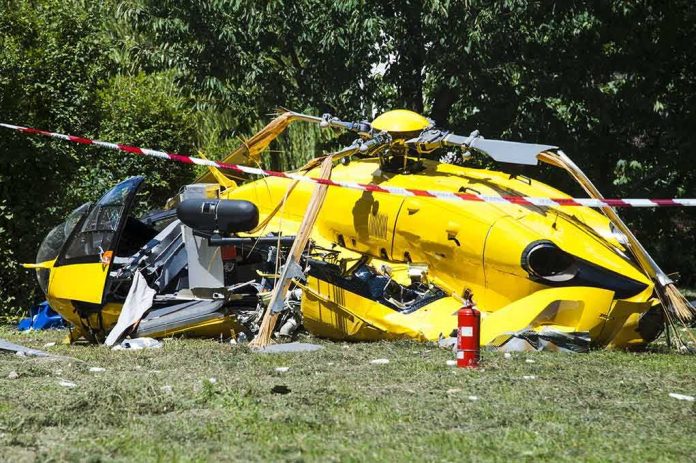
A KNBC news helicopter crashed while covering a deadly bus collision in Los Angeles, killing the reporter, the pilot, and a person on the ground.
Story Snapshot
- NewsChopper4 crashed near a fatal bus collision scene in Los Angeles, killing three people.
- NBC4 and Telemundo 52 confirmed the helicopter was providing live aerial coverage.
- Los Angeles Fire Department reported additional injuries and hospitalizations.
- Federal investigators often find multiple factors in helicopter crashes, not one cause.
What Happened in Chatsworth
Los Angeles firefighters reported that a television news helicopter went down Tuesday evening near a fatal bus crash scene in the San Fernando Valley. The crash killed three people, including the helicopter’s reporter and pilot, and a person on the ground. One additional person was taken to a hospital, according to initial updates from city officials and local outlets. NBC’s Los Angeles station reported the aircraft was covering the earlier bus collision when it crashed and burned.
NBC4 and Telemundo 52 confirmed the aircraft was assigned to provide aerial coverage for their stations. The joint statement expressed condolences to the families, friends, and colleagues of those who died. The statement did not assign a cause and focused on supporting staff and honoring the victims. The stations identified the helicopter as part of their news operation serving Los Angeles viewers during breaking traffic and public safety events.
Victims and On-Scene Conditions
Local reports named the two people on board as a veteran pilot and an aerial journalist, and said a pedestrian on the ground also died. Those reports matched the casualty count announced by city leaders that night. The helicopter reportedly came down in or near a parking area close to the bus crash site, and fire followed the impact. Los Angeles officials called it a heartbreaking night for the city given the two deadly incidents in the same area.
Broadcast outlets across the region described how several news helicopters had been working the same scene before the crash. Early reporting said the news aircraft belonged to KNBC and was known as NewsChopper4, a familiar sight in Southern California skies during traffic and disaster coverage. Live coverage of the bus crash ended abruptly as the helicopter descended, and stations shifted to updates from ground crews as firefighters responded.
Why Helicopter Safety Is Back in Focus
National Transportation Safety Board leaders have warned in recent years that helicopter risk often stems from a mix of design, weather, training, maintenance, and organizational pressure, not a single error. A former board member explained that the machines can be safe when operations are managed well, but lapses in pilot decision-making and oversight can be deadly. Federal safety officials have also criticized gaps in how the Federal Aviation Administration responds to safety recommendations.
🚨 #BREAKING LOS ANGELES UPDATED: NTSB Details Helicopter Crash That Killed 3 in Chatsworth
NewsChopper4 crashed shortly before 7 p.m. Tuesday in Chatsworth while reporter Eliana Moreno and pilot George Marciniw were covering a deadly SUV-versus-Metro bus collision. A third… https://t.co/1bRdV2PBvw pic.twitter.com/OYpgfBWevy
— Victoria (@VictoriaMunroee) September 16, 2026
Investigators have also highlighted special hazards when helicopters fly in busy urban airspace near other aircraft. After a deadly midair collision near Washington, the National Transportation Safety Board faulted route placement and risk oversight, and pressed for reforms to reduce conflicts between helicopters and planes. Those findings do not speak to the Los Angeles cause, which has not been determined, but they explain why broadcast helicopter operations draw close scrutiny after crashes.
What Comes Next for Los Angeles Viewers
City officials and the stations have focused on helping families and coworkers while federal and local investigators gather facts. The review will likely examine maintenance records, pilot history, flight track, air traffic instructions, workload, and weather at the time. That process often takes months, and preliminary updates may come sooner. For many Angelenos, the loss hits hard because these crews guide daily commutes, warn about wildfires, and support public safety from the air.
Sources:
nypost.com, citizen.com, abc30.com, nbclosangeles.com, en.wikipedia.org, pbs.org