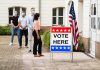
California officials are resisting federal scrutiny of voter records while investigations into election irregularities proceed, raising urgent questions about transparency and trust in the state’s system.
Story Snapshot
- Federal prosecutors in California confirm multiple election-fraud investigations are underway [1].
- Public claims say state officials are resisting a federal review of voter rolls, but underlying request and response letters are not publicly available [1].
- California’s leadership publicly defends its election process and pushes back on federal authority narratives [1].
- Key records, legal filings, and the exact scope of any voter-roll audit remain undisclosed, limiting verification [1].
What Federal Officials Have Confirmed About Current Probes
Statements highlighted in broadcast coverage report that federal prosecutors in California have “multiple election fraud investigations underway,” signaling active scrutiny of election-related conduct within the state [1]. Public-facing Department of Justice pages confirm the leadership of United States Attorneys in California’s districts but do not add details about the investigations’ targets or scope [2][3]. Officials have declined to provide specifics, a common constraint in ongoing inquiries, which leaves the public dependent on fragments rather than full records for understanding [1][2][3].
California’s political leadership has publicly resisted broad federal assertions of authority in election domains, reflecting a long-running posture favoring state control of election administration [1]. A multistate comment letter joined by California’s Attorney General demonstrates skepticism toward expansive federal claims, setting the backdrop for any dispute over voter-roll access [1]. This posture does not, by itself, confirm refusal of a specific federal request, but it frames the state’s likely legal stance on privacy limits and the boundaries of federal oversight [1].
The Voter-Roll Audit Claim And What Is Missing From The Record
Commentary circulating online says California is “blocking” a federal audit of voter rolls, but no primary-source Department of Justice request letter, subpoena, or court filing is publicly available in the referenced materials to verify the exact data sought or the legal authority invoked [1]. Likewise, no written refusal from California, privilege log, or redaction rationale appears in the record provided [1]. Without those documents, claims about a statewide audit fight and specific withheld fields cannot be independently validated here.
Reports also blur distinct issues: real-time observation of ballot processing, discrete fraud investigations, and a possible voter-roll access dispute are different matters governed by different authorities [1]. Monitoring a ballot-count location or opening a criminal case is not the same as conducting a statewide list-maintenance review. This conflation invites confusion and can inflame tensions by suggesting a single sweeping conflict where the law may treat each request and dataset separately [1]. Clear documentation is necessary to ground the public narrative.
California’s Defense Of The Process And The Conservative Concern
California officials publicly defend their system by pointing to signature verification procedures, tabulation audits, and explanations for lengthy counting driven by mail voting and population size, while rejecting allegations of systemic fraud [1]. Those points answer broad legitimacy critiques but do not specify which voter-roll fields, if any, can lawfully be withheld from federal investigators. The absence of a documented, line-by-line legal justification for redactions keeps voters guessing about where transparency ends and where privacy claims begin [1].
Conservative readers rightly worry when any government resists oversight, because sunlight is essential to election confidence. If the federal government seeks voter-roll data under lawful authority, California should cooperate promptly, subject to clear, court-tested privacy protections. If the state asserts privacy limits, it should publish a detailed legal basis for every withheld field, enabling accountability without exposing sensitive personal information. Both sides owe the public verifiable documentation, not dueling press fragments [1].
What Accountability Should Look Like Now
Federal officials should release, when lawful, the exact statutory authority for any voter-roll request, the data fields sought, and applicable redaction standards. California should disclose corresponding responses, including any objections and the statutes cited for each withheld category. If litigation exists, unsealing non-sensitive filings would clarify whether courts recognized limits or compelled disclosure. These steps would replace speculation with evidence and help restore confidence across ideological lines [1].
OMG
US attorney Bill Essayli reveals California lets people register to vote using:
-Gym memberships
-Employer ID card
-Credit or debit card
-Prescription drug label
-Insurance cardCalifornia is also BLOCKING a federal audit of voter rolls
They aren’t even trying to hide it
— TESLA JAPAN MARKET DRIVE (@teslaccn) June 8, 2026
For readers determined to ensure clean rolls, two truths can coexist. First, rigorous list maintenance and lawful access to records are vital to deter fraud and catch errors. Second, responsible privacy protections are legitimate and can be tailored without shielding problems. The Trump administration’s Department of Justice should press for lawful transparency, and California’s officials should meet that standard with prompt, documentable cooperation. Until primary letters or orders surface, caution about sweeping claims is the prudent path [1][2][3].
Sources:
[1] Web – US Attorney Torches California Officials As They Continue To Block a …
[2] Web – Attorney General Bonta Opposes US DOJ Exclusive Authority …
[3] Web – Craig H. Missakian Sworn In As United States Attorney For The …