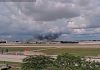
A small plane landing at Carlisle Regional Airport struck a hovering Pennsylvania State Police helicopter, killing the airplane’s pilot and injuring two troopers, according to federal and state officials.
Story Snapshot
- Federal officials confirmed a Cessna 150 and a Bell 407 helicopter collided near Carlisle, Pennsylvania.
- The airplane’s pilot died; two state police aviation officers were hospitalized.
- Authorities say the helicopter was on a training mission when the crash occurred.
- Federal investigators will examine see-and-avoid, radio use, and traffic pattern factors common in midair crashes.
What Officials Confirmed About the Collision
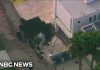
Federal Aviation Administration (FAA) officials said a Cessna 150 and a Bell 407 helicopter collided in midair near Carlisle, Pennsylvania, around 7:50 p.m. on Wednesday, August 19. Pennsylvania officials reported the small airplane’s pilot was killed and two state police troopers flying the helicopter were injured during a training flight at Carlisle Regional Airport. The FAA said it is working with the National Transportation Safety Board (NTSB) to investigate the collision and determine the cause.
Pennsylvania Governor Josh Shapiro shared that he visited the injured troopers and their families at Penn State Hershey Medical Center after the crash. Local outlets reported the crash scene near the airport’s approach path, with emergency teams responding quickly. Officials have not released a full timeline of air traffic calls or the detailed flight paths. Investigators will gather wreckage, radio recordings, radar data, and witness accounts before issuing preliminary and final findings.
Why Midair Collisions Often Happen Near Uncontrolled Fields
NTSB accident records show many midair collisions occur near non-towered airports at low altitude, where pilots rely on visual scanning and a shared radio frequency to self-separate. The Federal Aviation Administration’s Airplane Flying Handbook echoes that pattern, noting most midair accidents occur near uncontrolled airports and often involve pilots not on a flight plan, making see-and-avoid and clear radio calls even more important. Prior NTSB cases cite inadequate visual lookout and poor pattern discipline as recurring factors.
Past investigations detail how traffic-pattern geometry, straight-in approaches, and training operations can create blind spots or split attention, especially close to the runway. Reports have highlighted collisions during pattern work, overhead approaches, and converging entries when pilots did not detect each other in time. These records guide today’s investigators. They look at where each aircraft flew in relation to the standard pattern, what each crew reported on the radio, and whether cockpit tasks limited outside scanning.
What Investigators Will Scrutinize in Carlisle
NTSB teams typically start with who was where and at what altitude, then map debris to confirm an impact sequence. Investigators will review whether both aircraft broadcast on the correct common frequency, announced position and intent, and followed typical pattern practices for Carlisle’s non-towered environment. They will also examine lighting, cockpit workload, training tasks in the helicopter, and visibility at dusk, when contrast can drop and traffic can be harder to see.
A deadly midair collision between a small plane and a Pennsylvania State Police helicopter near Carlisle Airport in the US left 57-year-old pilot Dr Paul Sokoloski dead and two police troopers injured on the evening of August 19.
The Cessna 150 collided with a Bell 407… pic.twitter.com/NkyJ33yqRP
— India Today Podcasts (@IndiaTodayPods) August 21, 2026
Officials caution that final causes are rarely one mistake. Many midair cases involve several small misses that add up: a late radio call, a blind spot behind a window post, or a pattern entry that others did not expect. People on the left and right often feel that public systems fail at basic safety. This probe matters because it tests whether training standards, guidance on non-towered operations, and common-sense cockpit discipline still protect people when government oversight is thin on the edges of the system.
Sources:
independent.co.uk, 6abc.com, wgal.com, x.com, youtube.com, instagram.com