Police say a man charged officers with a pole saw that had a serrated blade, and an officer shot him dead on a Boyle Heights street.
Story Snapshot
- LAPD says the man advanced with a pruning pole and ignored commands to drop it.
- The tool was described as 8–10 feet long with a 10–12 inch serrated blade.
- Officers say they tried to reposition before one fired; no one else was hurt.
- Detectives are reviewing body-camera video and other evidence as the probe continues.
What Police Say Happened on Gillette and Bridge
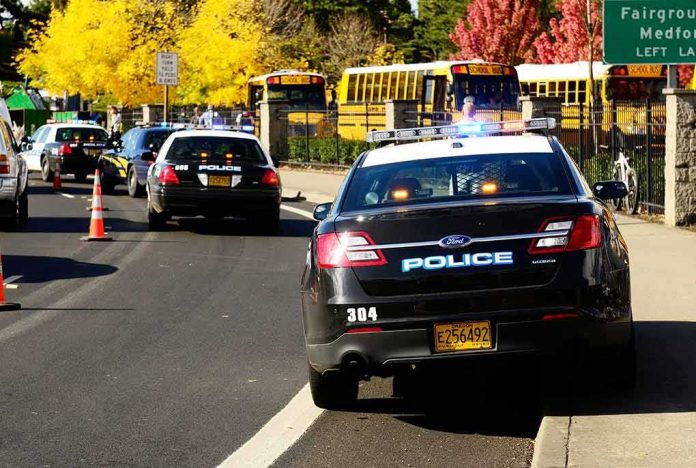
Los Angeles police officers responded around 9:54 a.m. to reports of a man swinging a metal pipe in Boyle Heights on September 7, 2026, near Gillette and Bridge Streets. The Los Angeles Police Department says officers found a man holding a long tree-trimming pole with a serrated blade. Police say they ordered him to drop the tool, but he kept moving toward them. An officer then fired, striking the man. No officers or bystanders were reported injured at the scene.
Police and local outlets described the tool as a pruning pole roughly 8 to 10 feet long with a 10 to 12 inch serrated blade. Officials say officers tried to create space before the shot, but the man kept advancing. The Los Angeles Police Department says the pole saw was collected as evidence. The man died after being taken to a hospital, according to reports. Authorities did not release his name or the names of the officers involved in the shooting.
From “Pipe” Call to “Pole Saw” Evidence
Dispatchers first broadcast a call about a man with a pipe, which shaped the initial police response. Later accounts from police and reporters say the object recovered was a pole saw with a blade. That shift is common as officers and reporters learn more at the scene. Here, the difference matters because a serrated blade on a long pole can cut at distance and change the level of risk officers face in a fast encounter.
The Los Angeles Police Department says investigators are reviewing body-worn camera footage, other videos, and statements from officers and neighbors. The Force Investigation Division and the Los Angeles County District Attorney’s Office typically conduct parallel reviews in such cases. Early reports indicated some local cameras were down due to an internet outage, which can limit outside video, though officials still expect to draw from body cameras and other sources.
How This Fits Wider Los Angeles Trends
Los Angeles has seen more police shootings involving sharp or edged tools in recent years. A Los Angeles Times review found that since 2018, about 27 percent of police shootings involved people holding sharp objects, and more than 60 percent of those cases were fatal. Department data and local reporting also show periodic spikes in officer-involved shootings, with many calls linked to people in a behavioral or mental health crisis. These patterns set the backdrop for what unfolded in Boyle Heights.
City records and past District Attorney reviews show that legal findings often hinge on whether a person advanced with a weapon at close range and whether officers used available time and distance. In this case, police say they tried to redeploy before firing and that the man kept coming with a bladed pole. If body-camera video confirms the commands, the advance, and the timing, investigators will weigh those facts against training and policy.
Public Safety, Mental Health, and Trust
Residents on both sides of politics share a core concern: government systems seem slow to fix known gaps. Street-level crises keep falling to police who are asked to be first responders, mental health triage, and last line of defense all at once. Officers face split-second choices when a person closes distance with a weapon. Families ask why earlier help did not arrive. Both views reflect a system that too often responds late, when the options are worst.
#BREAKING: LA Fire says a suspect was transported to the hospital with a gunshot wound after the LAPD responded to reports of a man armed with a pipe in Boyle Heights Monday morning. https://t.co/bX0OmaLKms pic.twitter.com/P8YD08T4UV
— KTLA (@KTLA) September 7, 2026
Clear, fast releases of video and timelines can help the public judge what happened. In Los Angeles, investigators usually post edited briefings that include body-camera clips, dispatch audio, and scene maps. Those materials, plus any autopsy and evidence photos, can show distances, commands, and movement. That level of detail builds trust, even when the facts are hard. Police say they are moving through that process now in the Boyle Heights case.
Sources:
nypost.com, ktla.com, abc7.com, mynewsla.com, cbsnews.com, latimes.com