
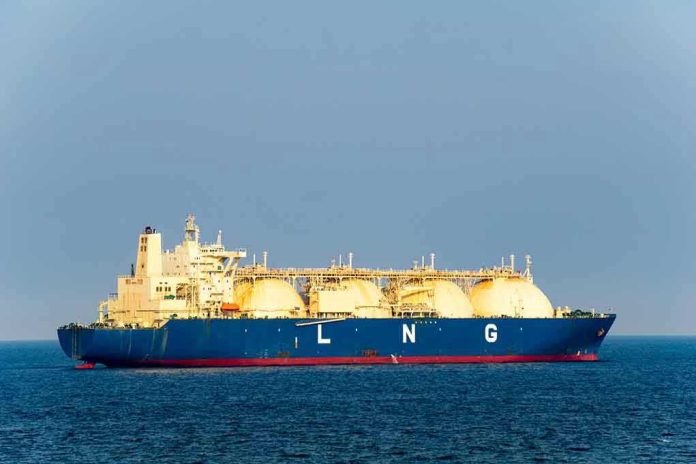
Even after a war-driven squeeze on liquefied natural gas, Southeast Asia is pressing ahead with one of the world’s biggest gas power buildouts.
Story Highlights
- Planners are adding over 100 gigawatts of gas power and large new import terminals.
- Thailand leads import capacity now and plans a third terminal to grow even more.
- Analysts warn new projects could lock in exposure to price and supply shocks.
- Governments say gas helps keep lights on as demand and industry grow.
Region pushes forward with major gas expansion plans
Reuters, citing Global Energy Monitor data, reported that Southeast Asia is building more than 100 gigawatts of gas-fired power capacity and about 70 million tons per year of liquefied natural gas import capacity. The plans are moving ahead despite risks from conflict in the Middle East, which can tighten fuel markets and shipping lanes. The numbers show this is not talk. It is a large pipeline of plants, terminals, and contracts tied to expected growth in power and industry.
Semafor’s summary of the same dataset points to more than 100 gigawatts still planned and says developers are pursuing about 70 million tons per year of import capacity across the region. Domestic gas fields may soften future shocks but need years to deliver reliable volumes. That lag keeps planners focused on imports to bridge demand growth. The push also reflects a desire to avoid blackouts and keep factories running when electricity use surges.
Thailand emerges as a central hub in the buildout
Thailand has the largest active liquefied natural gas import capacity in Southeast Asia and plans a third terminal at Map Ta Phut. Zero Carbon Analytics says the third site could add around five million tons per year, cementing Thailand’s lead. Local reporting describes Thailand’s first two terminals and the planned third, which together would raise capacity above 20 million tons per year and support a role as a regional energy partner. Policy aims link the buildout to growth in power and industry.
Developers and power producers are locking in long-term supply. The Diplomat reported recent Thai deals for 0.8 million tons per year each with Eni and Engie, with terms of ten and fifteen years, beginning in the late 2020s. Such contracts give buyers price and volume certainty but can also create dependence on global suppliers. For officials, these moves show action to secure fuel. For critics, they risk tying bills and grids to volatile global markets for decades.
Security and affordability trade-offs shape the strategy
Regional policy work argues liquefied natural gas is key for energy security and the shift to lower-carbon systems, since gas can back up wind and solar and replace dirtier fuels in industry. At the same time, research from Global Energy Monitor warns that today’s expansion plans could double gas power capacity and raise import capacity by about 80 percent, which may lock countries into a fuel with a record of price swings and supply risk. Both points can be true at once.
Planners see concrete needs: rising power demand, fragile grids, and aging coal plants. They also face real constraints: big dams are site-limited, nuclear is slow and costly, and batteries cannot yet cover long seasonal gaps. That is why many governments present gas as a “bridge” that balances renewables while keeping lights on. The bet is that stable contracts, new terminals, and more suppliers can blunt shocks, even if global markets remain bumpy.
Why this matters for Americans skeptical of elites
Energy choices abroad hit American wallets and jobs at home. When Asia buys more liquefied natural gas, global prices can rise, and United States exporters ship more. That can help American workers in energy states but can also raise gas and power costs for families and small firms in the United States during tight markets. The pattern will feel familiar: big players sign long contracts, risks move to ratepayers, and regular people get the bill when markets swing.
Both conservatives and liberals worry when policy seems to favor large developers over common sense. This story shows that tension. Governments want reliable power and growth. Industry wants projects and profits. Watchdogs warn about lock-in and overbuild. The facts show Southeast Asia is choosing to build through uncertainty, not pause and reassess. That choice could steady grids. It could also extend exposure to the same shocks that rattled fuel markets in recent years.
Sources:
zerohedge.com, reuters.com, zerocarbon-analytics.org, nationthailand.com, linkedin.com, shell.com