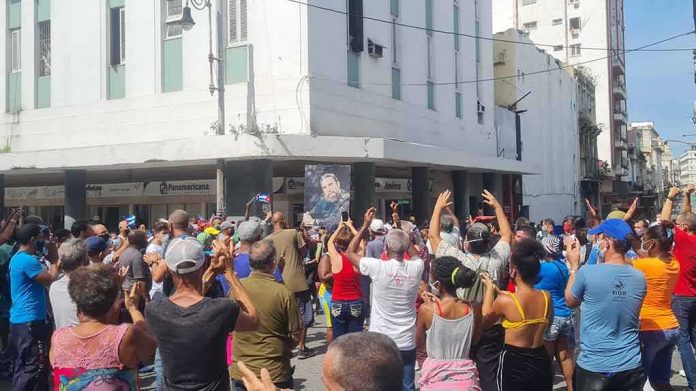
When Washington declares that “freedom is coming to Cuba,” it is not just rhetoric; it is a signal that U.S. coercive statecraft, legal architecture, and regional politics are converging on an island already buckling under compounded crises of fuel, infrastructure, and governance.
At a Glance
- President Trump’s U.N. assertion that Cuba is a failed state under “unprecedented pressure” reflects a deliberate maximum-pressure strategy, not an offhand line.
- Cuba’s cascading blackouts and fuel scarcity are real; they arise from aging infrastructure and import dependence, intensified by U.S. energy sanctions.
- Havana rejects the “failed state” label and frames U.S. measures as an unlawful attempt to force political change; the diplomatic walkout was a public rebuke, not a rebuttal on facts.
- The Helms-Burton framework hardwires regime-change incentives into U.S. policy, making liberation rhetoric part of a long-running conditionality debate, not a new doctrine.
What Washington Said — And Why It Matters
In a high-visibility address to the United Nations, President Trump characterized Cuba as “an absolutely failed state,” predicted it “will fall,” and vowed that “freedom will be coming to Cuba,” while saying his administration is seeking a “fundamental change” on the island. This was not freewheeling improvisation. It aligns with a multi-year pressure campaign that tightened sanctions, targeted fuel flows, and explicitly linked economic relief to political concessions in Havana. Such statements matter because markets, foreign suppliers, and regional governments read them as guidance: the United States intends to keep leverage high and timelines short.
The Cuban delegation’s walkout underscored diplomatic rupture, but it did not alter the operational reality: access to oil, credit, and parts has been throttled, and Havana must now manage both domestic scarcity and international isolation in real time. The speech functioned as a capstone message to that strategy.
Mechanism of Pressure: Energy, Sanctions, and Scarcity
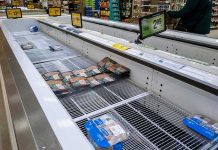
Cuba’s electrical grid is old, fuel-heavy, and brittle. When fuel tightens, power plants fail, maintenance slips, and blackouts cascade across an island where reliable electricity underpins water pumping, cold-chain medicine, and basic commerce. In 2026, the grid suffered repeated, nationwide collapses that left millions without power; import shortfalls and a choked spare-parts pipeline compounded the failures. Energy sanctions magnify this technical fragility. If your system runs on imported fuels and your political adversary controls the shipping, insurance, and financial chokepoints, scarcity is not a bug of policy—it is the tool.
That is why the blackouts are both infrastructure news and geopolitical news. Havana can patch lines and rotate outages, but without stable fuel inflows the grid remains a rolling triage operation. The outcome—lengthy outages, curtailed services, and shrinking economic activity—feeds the very “failed state” narrative that sanctions advocates cite as justification for more pressure, producing a feedback loop that is strategic by design.
The Counter-Case from Havana
Cuban leaders call the failed-state framing a lie and the policy behind it an attempt to “asphyxiate” the population into surrender. They assert sovereignty, deny posing any threat to the United States, and argue that Washington’s measures—not Cuban governance—are the decisive drivers of current hardship. A senior diplomat described contacts with U.S. officials as perfunctory and fruitless amid a drumbeat of new sanctions, framing negotiations as impossible while the economic vise tightens.
As an on-the-record rebuttal, this is coherent and politically salient; as evidence, it leaves key facts uncontested. The lights are going out. Fuel is scarce. Services are degraded. Those are observable realities. Havana’s claim is causation, not condition: that external coercion, not internal failure, explains the collapse. The U.S. response is equally categorical: internal mismanagement and repression made the island vulnerable, and pressure is the lever to force change. Neither side disputes the blackouts; they dispute what they prove.
The Policy Backbone: Conditionality Baked Into Law
U.S.-Cuba policy has long married sanctions to political conditionality. The Helms-Burton Act codifies that sanctions lift only when Cuba transitions toward competitive democracy; the embargo is not a bargaining chip for incremental reform but a statutory tool tied to regime change benchmarks. That is why liberation language reliably accompanies energy and financial measures. It is not mere flourish—it is the legal and strategic frame into which actions must fit.
Internationally, the latest rounds of sanctions—especially those aimed at energy—drew criticism from U.N. human rights experts who characterized them as coercive attempts to force change in a sovereign state. That condemnation sharpens the normative dispute but does not alter the leverage calculus: as long as major shipping, banking, and insurers price U.S. sanctions risk into every Cuban transaction, Havana’s room to maneuver remains narrow.
What “Failed State” Really Conveys in This Context
“Failed state” is not a clinical label; it is an argument about capacity and legitimacy. Applied to Cuba, it highlights systemic inability to deliver power, fuel, and basic services predictably, and the erosion of citizen confidence that follows. The rolling national blackouts—six or more in a year, including total collapses—are a concrete test of capacity, not a metaphor. Whether one emphasizes sanctions or governance, the operational outcome is indistinguishable to the citizen waiting for water to resume or insulin to stay cold.
Still, failure is not collapse. Cuban security organs remain intact, the state still rations scarce goods, and social control persists. The term signals political intent from Washington more than it maps a definitive institutional breakdown. In practice, it functions as predicate language for escalated pressure, tighter secondary sanctions, and, at the rhetorical extreme, threats of military options—statements that themselves deter third-country suppliers and investors, tightening the spiral.
Paths Forward: Transition Scenarios and Their Risks
Maximum pressure often posits a clean arc: scarcity leads to elite fracture, fracture yields transition, and transition unlocks investment to rebuild power, transport, and telecom. The statutory blueprint for post-transition assistance has existed for years, anticipating large-scale infrastructure injections once political conditions change. Yet history warns against assuming linearity. State-linked conglomerates, security services, and legacy party structures do not evaporate when fuel runs out; they bargain, repress, or reconfigure.
There are two structurally plausible paths. The first is a negotiated easing: limited fuel relief and targeted economic openings in exchange for discrete political steps—prisoner releases, diaspora investment channels, or calibrated de-militarization of key state enterprises. The second is unmanaged degradation, where outages, emigration, and inflation deepen until informal markets and patronage networks displace formal provisioning, without a decisive political break. The first requires a ladder for both sides to climb down; the second is simply what happens when there isn’t one. Under current law and rhetoric, Washington has built ladders mainly for a full transition—leaving partial de-escalations politically costly on both sides.
What to Watch
Three indicators cut through the noise. First, sustained fuel arrivals from non-U.S.-aligned suppliers that survive insurance, financing, and port-service hurdles; if those normalize, blackouts shorten and the state regains basic capacity. Second, statutory or executive movement in Washington that creates a reversible relief mechanism short of regime change; without it, the sanction-to-transition linkage remains binary and brittle. Third, signs of intra-elite bargaining in Havana—rotations, purges, or policy pivots that reallocate control over energy revenues and logistics—often the preface to a managed transition or a harder crackdown.
Bottom Line
The claim that “freedom is coming to Cuba” is less a prediction than a policy instrument deployed against a system under stress. The lights going out are real; so is the leverage. Whether those facts add up to liberalization, negotiated change, or prolonged degradation will depend on whether pressure is paired with credible off-ramps. Right now, the architecture encourages maximalist outcomes—and the grid, along with ordinary Cubans’ daily lives, bears the cost either way.
Trump Stuns World: Announces America Will TAKEOVER Cuba at U.N. Speech, … https://t.co/bTXhSoHmwl via @YouTube pic.twitter.com/wyQi6TunLu
— Joanne Marie Momoa (@jmmomoa1967) September 23, 2026
Sources:
military.com, en.cibercuba.com, reuters.com, bbc.co.uk, straitstimes.com, thehill.com, news.un.org, 2001-2009.state.gov