
When mail theft becomes a gateway to large-scale financial crime, the harm extends far beyond a missing envelope: it compromises the integrity of payment rails, weaponizes stolen identities, and recruits whole networks to monetize what began as a breach of trust inside a logistics chain.
At a Glance
- A contracted USPS route driver, working through AiLO Logistics, admitted to stealing mail and pleaded guilty to conspiracy to commit bank fraud, aggravated identity theft, possession of stolen mail, and money laundering.
- Authorities say the theft fed a broader fraud supply chain that trafficked stolen checks for resale, counterfeiting, and deposit attempts.
- The government calculated at least $4,466,000 in attempted losses linked to stolen personal checks—an anchor figure in the case and a common metric in federal fraud sentencing.
- The scheme echoes a national surge in mail-theft-enabled check fraud documented by postal inspectors and financial-intelligence agencies.
What McDowell Admitted To, and Why It Matters
The core facts are not in dispute: McDowell entered a federal guilty plea encompassing conspiracy to commit bank fraud, aggravated identity theft, possession of stolen mail, and money laundering. The case centers on a straightforward but potent access vector—contracted transport inside the postal stream—used to divert valuable contents: U.S. Treasury checks, personal checks, gift cards, credit cards, and other mail. According to the government, stolen checks were funneled to co-conspirators who resold, counterfeited, or tried to negotiate them at financial institutions. This is textbook fraud architecture: acquire authentic instruments, alter or exploit them, and move proceeds through accounts or money mules. The sophistication resides less in exotic technology than in predictable weak points—custody gaps and human access.
Prosecutors also pinned the scale to a sentencing-relevant number rather than a headline flourish: a minimum of $4,466,000 in attempted losses tied to stolen personal checks. In federal practice, intended or attempted loss often drives advisory guidelines because it signals the risk created by the conduct, not merely what cleared the banking system. It is nonetheless a meaningful anchor—large enough to demonstrate this was not opportunistic pilfering but feedstock for organized check fraud.
The Access Vector: Contract Carriers Inside the Mailstream
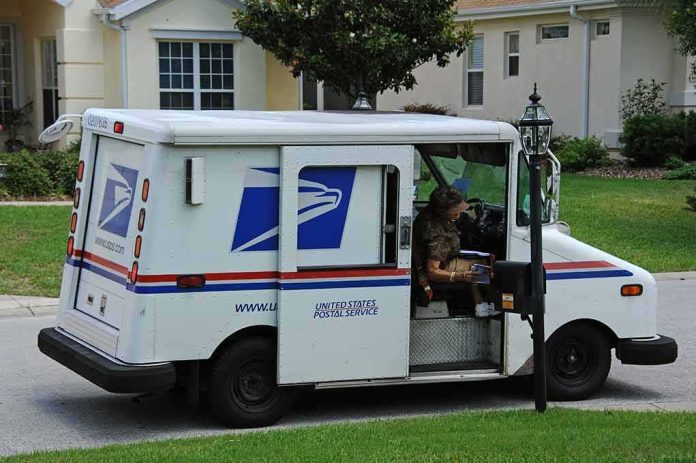
McDowell’s role was neither a retail clerk nor a letter carrier; he worked for AiLO Logistics transporting mail between USPS facilities and post offices along specified routes during a defined window—October 16, 2024, through May 1, 2026, with reporting identifying movements between the Kansas City Processing and Distribution Center and the Grandview and Belton post offices. Contract carriage is a long-standing operational model: the Postal Service relies on private firms to move vast mail volumes over predictable corridors, governed by service contracts and security protocols. The benefit is scale and cost efficiency; the risk is that every badge, truck, and cage key is a potential insider access point. This case is a study in exploiting those points. It also underscores that custody controls must extend beyond USPS employees to contractors who touch mail under federal protection.
From Stolen Envelope to Laundered Proceeds: How the Fraud Supply Chain Works
Stolen checks are valuable because they are authentic, carrying real account and routing data and often signaling payee identity. Once diverted, they can be “washed” (chemical removal of ink), altered, or replicated. They can also be mined for identity elements used to open mule accounts or authenticate fraudulent mobile deposits. Conspirators monetize them in several ways: direct deposit attempts, counterfeit reproductions, or online resale to other actors who specialize in negotiation. Money laundering follows—structuring deposits, layering across accounts, and rapid cash withdrawals or cryptocurrency conversions. Federal authorities described precisely that chain here: theft, resale, counterfeiting, and presentation at banks, with laundering to obscure the trail.
This is not theoretical. Financial-intelligence and postal-inspection authorities have tracked a significant rise in mail-theft-enabled check fraud since 2020, as criminals discovered that physical envelopes could be as lucrative as digital intrusions when paired with modern remote-deposit tools. FinCEN has documented a surge in suspicious-activity reporting related to check fraud and mail theft, and postal inspectors have testified to sharp increases in high-volume mail-theft incidents over the same period.
Scale and Measurement: Attempted Loss, Actual Loss, and Sentencing Reality
Readers often conflate attempted loss with money irretrievably gone. They are not the same. Federal fraud cases typically rely on intended or attempted loss to reflect the harm risked and the seriousness of the scheme; actual-loss figures—after holds, reversals, and recoveries—may be lower, but they can take months to reconcile across institutions. In McDowell’s case, the government’s floor figure—$4,466,000 in attempted losses tied to personal checks—anchors guidelines and restitution analysis. It also signals the operational scale of stolen instruments injected into the system. Even when banks stop fraudulent deposits, the costs are real: investigative time, account remediation, and downstream identity-theft risks borne by victims.
This measurement nuance matters for public understanding, not to minimize impact but to correctly frame it. The criminal law has long recognized that the dangerousness of conduct should be measured by more than the luck or agility of the victims’ banks.
How This Case Fits a National Pattern
McDowell’s conduct tracks a broader threat landscape. Postal Inspection Service leaders have detailed a sustained increase in mail-theft incidents since 2020, coinciding with a marked rise in check-fraud suspicious-activity reports filed by financial institutions. The pattern features division of labor—recruiters, thieves, check “washers,” negotiators, and launderers—coordinated through online marketplaces and messaging apps. The effect is to transform a single point of theft into a scalable enterprise. Recent government analyses and testimony outline both the scale and the mechanisms, reinforcing that cases like this are not outliers; they are nodes in a national criminal economy leveraging the postal network as an access channel.
For USPS and its contractors, the challenge is dual: harden physical custody and access controls while partnering with banks and FinCEN to shorten the window for monetizing stolen instruments. That includes enhanced screening of high-risk routes, tighter key and container management, video coverage of transfer points, and faster intelligence loops with financial institutions to flag stolen check serials and payees before negotiation.
Practical Implications for Institutions and Households
Financial institutions should assume that stolen, altered, and counterfeit checks will continue to test mobile-deposit and ATM channels; automated anomaly detection must be paired with rapid interdiction and victim outreach. Positive pay and payee verification—tools that match presented items against issuer files—remain underutilized by many businesses. Consumers still reduce exposure by using secure acceptance points for outgoing checks and by migrating recurring payments to electronic rails with robust authentication. None of these steps is foolproof, but together they shorten the monetization window that rings the cash register for fraud networks.
Bottom Line
McDowell’s guilty plea establishes a clear narrative: insider access at a contractor enabled theft of mail that fed an organized check-fraud pipeline, with at least $4.466 million in attempted losses tied to personal checks. The case is not an isolated oddity; it is a local expression of a national criminal trend that treats physical mail as raw material for scalable financial fraud. The remedy is equally clear: reduce insider opportunity, accelerate cross-industry intelligence, and shrink the time between theft and interdiction. When those three levers move together, the economics of this crime deteriorate—and so does its appeal.
Sources:
kttn.com, kctv5.com, ksnt.com, fourstateshomepage.com, justice.gov