Airline security is built for threats coming through the door, not from the right-hand seat; when the insider is the danger, the safeguards we rely on are forced into a hard, improvised test.
The Short Version
- Authorities say the FlyDubai co-pilot violently attacked his captain in the cockpit and attempted to seize control of the aircraft, prompting an emergency diversion.
- Investigators in the UAE later described the attack as an attempted terrorist act and specified the use of the cockpit’s crash axe as the weapon.
- Passengers and off-duty flight crew helped subdue the co-pilot after the wounded captain opened the reinforced cockpit door, enabling a safe landing.
- The case revives rare but consequential questions: pilot vetting, cockpit access protocols against insider threats, and what to disclose before motive is fully established.
What the investigation established and why it matters
The central facts are no longer in serious dispute: during FlyDubai flight FZ1073 from Dubai to Tel Aviv, the co-pilot assaulted the captain inside the cockpit, grievously injuring him and contributing to a dangerous loss of control before the aircraft diverted and landed in Tabuk, Saudi Arabia. Initial official statements were careful—an “altercation” pending inquiry—but subsequent, named authorities filled in decisive details. The United Arab Emirates’ attorney general stated that the co-pilot attacked the captain with the cockpit’s crash axe and attempted to take control of the airplane in an attempted terrorist attack. Saudi authorities, in a preliminary account, likewise reported the captain was assaulted by his co-pilot, with injuries to both men.
Why this matters is straightforward: commercial aviation’s post-9/11 security architecture assumes the principal threat approaches the cockpit from the cabin. Reinforced doors, access denial systems, and layered screening work well against outsiders. They do not prevent a qualified, bad-acting insider from initiating harm. Incidents of deliberate violence by flight crew are rare, but when they occur, they demand a reexamination of hiring, recurrent vetting, and cockpit procedures tailored to the insider risk profile—without compromising safety in routine operations.
How the defenses failed—and then recovered—in sequence
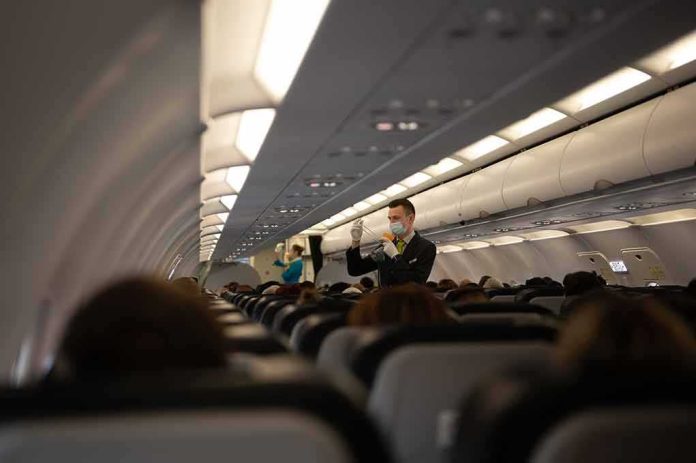
The cockpit is equipped with a crash axe for emergency egress and post-crash survival; it is not a security device. In this case, investigators say it became the weapon of attack. The reinforced door, designed to block intruders, also slows rescue when the threat is inside—a structural paradox aviation has wrestled with since 2001. According to multiple official and media accounts, the wounded captain managed to open the cockpit door, enabling flight attendants, passengers, and additional FlyDubai pilots who were aboard to intervene and help stabilize the situation; those extra-qualified pilots ultimately brought the aircraft to a safe landing in Tabuk. That sequence—initial breach of cockpit safety by an insider; door opened from within; ad hoc intervention by crew and passengers; handover to qualified pilots—tracks with human-factors analyses of prior, rare cockpit assaults: when procedures are not purpose-built for an insider threat, recovery depends on presence of mind, teamwork, and redundancy.
The description of a steep, uncontrolled descent before recovery is consistent with both the captain’s injuries and the chaos of a cockpit fight. Specific performance parameters will belong to the final technical report, but the operational arc is clear enough to extract lessons: delay in access to an embattled cockpit costs altitude; a second, ready flight crew is a decisive backstop; and reinforced doors must remain openable from the inside quickly under duress, or they risk becoming barriers to saving the airplane.
What remains contested—and what does not
Two categories of claim traveled in parallel after the diversion. First, the hard operational facts: a co-pilot attacked his captain; the captain was badly wounded; the aircraft diverted safely with help from passengers and additional pilots. These elements are reinforced by consistent official statements, on-record interviews, and subsequent prosecutorial characterizations. Second, assertions about motive and prior radicalization. Israel’s leadership publicly framed the co-pilot as ideologically indoctrinated and suicidal, pointing to an apparent intent to crash the aircraft, but without placing all underlying intelligence in the public record at the time. The UAE attorney general has now explicitly labeled the act an attempted terrorist attack, the most authoritative public attribution to date. Airline statements, appropriately, remained noncommittal about motive in the incident’s early days to avoid prejudicing a still-forming case.
For readers separating signal from noise, this is the fulcrum: the physical attack and attempted seizure of the aircraft are well supported by named, competent authorities and convergent accounts; the precise pathway to radicalization, any co-conspirators, and the attacker’s full digital footprint are investigative matters that tend to surface later or remain partially classified. That asymmetry is normal in counterterrorism aviation cases and should not be mistaken for ambiguity about the core event.
Insider threat in the cockpit: rare, devastating, and policy-shaping
Commercial aviation’s safety record is built on designing out single points of failure. But the cockpit is, by necessity, a concentrated locus of control, and there is no substitute for a human pilot when a situation degrades quickly. History shows that insider attacks or suicidal acts by flight crew are statistical outliers; they are also policy-shaping catastrophes that rewire security practice. The Germanwings 9525 tragedy in 2015—different in mechanism but similar in its insider profile—triggered widespread rethinking of medical screening, peer monitoring, and two-person cockpit rules on some carriers. Analysts place the FlyDubai incident on that same branch of the risk tree: too rare to measure with traditional base-rate logic, too consequential to ignore in design and oversight.
What makes insider mitigation difficult is the collision of three imperatives: pilot privacy and medical confidentiality; the airline’s duty of care to passengers and crew; and the state’s responsibility to counter terrorism without turning every cockpit into a surveillance node. The answers tend to be practical rather than ideological: strengthen pre-employment background checks across jurisdictions; require verifiable, periodic re-vetting for crews on politically sensitive routes; build confidential, well-resourced pathways for peers to report concerning behavior without career-ending stigma; and ensure regulators have the authority to share and act on international derogatory information when it exists. Each is imperfect; together they move the needle.
Engineering and procedural levers that actually help
There is no purely technical fix to an insider with cockpit authority, but layered mitigations reduce risk. On the hardware side, reinforced doors remain nonnegotiable; the lesson here is about controlled, interior egress when the pilot at the controls is the victim. Door logic and crew-access protocols should be stress-tested for scenarios where an injured pilot must summon help rapidly. On the human side, redundancy saves lives: non-operating, type-rated pilots deadheading in the cabin proved decisive here, as they have in other emergencies; where feasible, rostering practices on certain routes can tilt toward that resilience without undue cost. Finally, cabin-crew training should explicitly cover coordinated response to cockpit distress signals and controlled entry when invited by a pilot—this is delicate work, but it need not compromise the barrier against outsiders if done under tightly defined conditions.
Investigators and courts will continue to parse motive, networks, and individual accountability. The operational community’s job is simpler and more immediate: treat this as a focusing event and harden the few places where procedure met its limits. That balance—respect for due process alongside relentless closing of safety gaps—is how aviation converts rare horrors into even rarer recurrences.
⚠️ FLYDUBAI FZ1073 UPDATE
A deeper examination of Hamam al-Hammami’s online history has uncovered years of violent and extremist rhetoric predating the attack, as al-Qaeda supporters begin exploiting the attempted hijacking for propaganda, without claiming responsibility.
The… https://t.co/0zDlKjU5o0 pic.twitter.com/tCqn1T4MiY
— The Tectonic (@thetect0nic) October 3, 2026
Bottom line for travelers and practitioners
For passengers, nothing about this episode changes the fundamental equation: modern commercial aviation remains extraordinarily safe, precisely because it learns aggressively from edge cases. For airlines and regulators, the mandate is clearer still. Insider threats cannot be screened away entirely, but with better cross-border vetting, targeted recurrent checks for sensitive operations, cockpit-access logic that contemplates an embattled captain, and crew training that rehearses the unthinkable, the next insider who tries will face a more hostile environment long before a passenger hears a chime or feels a dive.
Sources:
facebook.com, reuters.com, news.flydubai.com, en.wikipedia.org