A stabbed captain opened a cockpit door, and a packed jet found its way to safety.
Story Snapshot
- Israeli Prime Minister Benjamin Netanyahu said a Flydubai co-pilot stabbed the captain mid-flight.
- Passengers and crew entered the cockpit, restrained the attacker, and helped stabilize the jet.
- The plane made an emergency landing in Tabuk, Saudi Arabia; all passengers survived.
- Two off-duty pilots on board aided the landing as authorities began inquiries.
Inside the cockpit fight and the frantic dive
Israeli Prime Minister Benjamin Netanyahu said a Flydubai co-pilot stabbed the captain during a flight from Dubai to Tel Aviv and “apparently tried to crash the plane”. The captain, identified in reports as Smit Machchhar, managed to trigger the cockpit door release while wounded, allowing help to rush in. The aircraft then descended thousands of feet in a sharp drop as chaos spread through the cabin, before the crew and passengers fought for control and steadied the jet.
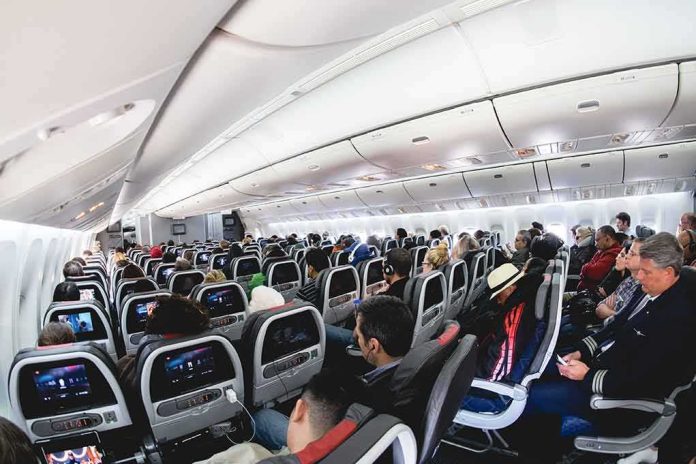
Reports from multiple outlets describe a quick, disciplined response by passengers, flight attendants, and two off-duty pilots on board. They entered the cockpit, subdued the attacker, and helped set up for a diversion. Saudi controllers cleared an emergency landing in Tabuk, where responders took the injured pilots for care. Netanyahu called the incident “a highly severe security event,” and praised the group that stopped it as heroes who saved 174 lives.
How the plane reached Tabuk in one piece
Flight crews train for fires, decompression, and system failures. They rarely train for a knife fight in the flight deck. Even so, standard checklists and muscle memory still matter when everything breaks at once. Crews set emergency codes and call air traffic control when they can. In this case, accounts say the team stabilized the jet, managed the approach, and landed on a long, capable runway in Tabuk. All passengers exited safely as Saudi authorities began interviews.
The pattern matches a known class of “crew-related interference” incidents. Alaska’s 2023 jump-seat case and FedEx Flight 705 in 1994 showed the same core truth: a determined insider can create sudden danger, but fast teamwork can still save a flight. Media often labels these events as hijackings on first pass, since emergency signals and steep descents look the same from the ground. The result here was the same as those precedents: a safe diversion and a living cabin.
What this means for security, training, and common sense
Cockpit doors are hardened and locked for a reason. That design stops outsiders. It does not stop a rogue insider. The lesson favors layered defense: pilot screening, peer checks, mental health support, and procedures that keep two trained people engaged in the front at all times. Airlines that plan for the unthinkable cut risk. That is not fear; that is how aviation wins. When training meets courage, cabins walk off planes instead of becoming memorials.
Israel’s PM, said an Indian had prevented a “9/11-style tragedy.
Captain Smit Machchhar, pilot of Flydubai FZ1073, was seriously injured after a cockpit attack by his co-pilot.Despite his injuries . The aircraft landed safely in Tabuk.
PM Modi
🫡🇮🇳#SmitMachchhar #Flydubai pic.twitter.com/Jh2HiBGB1b— Kalam&Kavach (@KalamKavach) October 1, 2026
Calls to expand air marshals or add more cameras will surface. Spend first on what works: well-vetted crews, strict access rules, and drills that include real-world assaults. Keep emergency communications simple and clear for controllers and cabin crews. Teach passengers that when crew calls for help, seconds count. This event also shows the value of strong ties. Israeli, Emirati, and Saudi channels worked fast enough to get a wounded jet to a safe runway. That is the kind of quiet cooperation that saves lives.
Sources:
facebook.com, theguardian.com, bbc.com, jpost.com