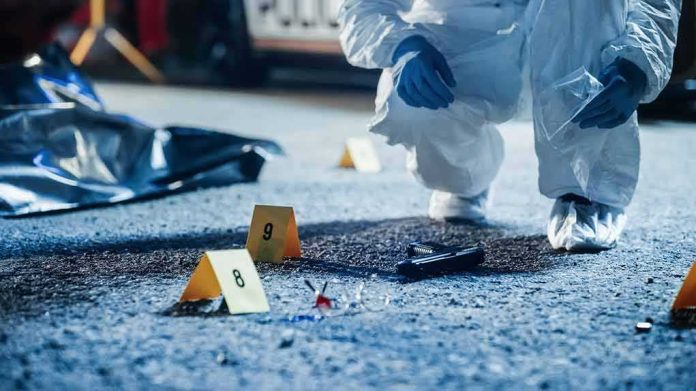
A neighbor says an 18-year-old dropped a plastic tub, and inside was a woman’s dismembered torso.
Story Snapshot
- Police say a witness saw Kingston Bradley carrying a tub with a body, then fleeing.
- Officers found a dismembered torso at the Smyrna, Georgia complex and later upgraded charges to malice murder.
- Investigators say they recovered more remains from a vehicle during a follow-up search.
- The suspect’s father denies any involvement and says he did not know the victim.
The moment that turned a missing person call into a homicide case
Smyrna police traced a missing person report to the Park Valley Apartments, where a family member searching for 26-year-old Shanteria “KT” Mosley told detectives she saw a young man with a heavy tub. A warrant says that man, 18-year-old Kingston Bradley, dropped the plastic container when he realized he had been seen and ran toward his nearby apartment. Officers found a dismembered torso inside the tub, and the air in a related apartment smelled strongly of bleach, according to the same warrant.
Police booked Bradley into the Cobb County jail on a charge of concealing the death of another. Jail records show no bond. After additional investigative work, Smyrna police announced late Friday that they had upgraded the case to malice murder. Investigators identified Mosley as the victim and said their search had widened as they worked to locate and recover all of her remains, which is common in complex body-handling cases.
The evidence trail that prosecutors say links suspect to the remains
The heart of the state’s case begins with eyewitness testimony. The magistrate-court warrant ties Bradley to the tub at the scene. That puts the suspect in direct contact with human remains at the moment they were found. Police say the tub held a dismembered torso. Detectives then executed searches tied to the complex and to vehicles. They later reported finding additional remains in a car trunk, which moved the case from concealment toward murder in their charging decisions.
Reporters who reviewed the warrant describe details that fit a known pattern in concealment crimes: cleaning agents, a movable container, and body separation. Forensic teams often use these signatures to guide lab work and scene reconstruction. The initial concealment charge aligns with that sequence. Police can charge concealment when they can show possession or handling of remains, while medical examiners and lab results build the homicide proof over days and weeks.
What the family, the father, and the police each say
Michelle Weaver, Mosley’s aunt, is named in the warrant as the witness who spotted the container. She told local media she confronted Bradley at his door earlier that day while searching for her niece. She later saw him with what looked like a bag with a container inside, and then watched him throw it and run. Her account matches the core claim in the court filing that triggered the arrest.
This is a HARD 18. He's charged with malice murder and concealment of a body, after the body was found at Park Valley Apartments on Monday Sept 21, 2026.
According to the arrest warrant, a witness spotted Bradley carrying a plastic tub through an open area of the Park Valley… pic.twitter.com/L4gKDL71n3
— Dark Triad (@darktriadtc) September 26, 2026
Bradley’s father, Kenneth Bradley, released a statement denying any role and saying he did not know the victim or her family. He said he cooperated with detectives and had no knowledge of what happened. His statement does not dispute the charges against his son but seeks to distance the family from the alleged acts. Police, for their part, say the suspect has not given a statement, and they have not tied a specific tool to the dismemberment at this stage.
How to weigh the claims through law, forensics, and common sense
Courts treat concealment and homicide as separate questions. The concealment charge stands if prosecutors prove the suspect handled or tried to hide remains. The murder charge must tie the suspect to the killing itself. The reported facts that a witness saw the tub, the torso was inside, and more remains were found following targeted searches form a coherent chain for arrest and charging decisions. That chain aligns with how violent crime units build these cases step by step.
From a conservative, common-sense view, communities expect swift action when evidence points to danger. Police appear to have moved fast, secured a scene, and escalated charges as new facts came in. That is how accountability should work. The defense will have a chance to question the eyewitness, the searches, and the forensic links. For now, the public record supports the state’s path: possession and concealment first, then malice murder as the evidence deepened.
Sources:
nypost.com, ajc.com, abcnews.com, kktv.com, fox5atlanta.com, 13newsnow.com, wltx.com