
When a wild animal bites a person in open water, the public thinks “attack”; wildlife and health professionals think “rabies management.” The Cunningham Falls case shows why: one confirmed rabid beaver turned a family emergency into a park- and county-level public health operation, from animal capture and testing to closures and staged reopening.
At a Glance
- A 13-year-old boy was bitten while swimming at Cunningham Falls State Park; the beaver was captured and tested positive for rabies.
- Maryland officials treated the incident as a public-safety event, temporarily closing swimming and water access while they evaluated additional risk.
- Within two weeks, a second rabid beaver was confirmed after a separate bite; both animals were euthanized and tested positive.
- Beaver bites on humans are rare; when they occur, rabies is frequently implicated, which drives an aggressive health response.
What Happened: A confirmed rabid-animal bite in a designated swim area
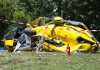
On July 26, a 13-year-old swimmer in the designated North Beach area of Hunting Creek Lake was bitten by a beaver around 9 a.m. Local reporting from that week aligns with the family’s account: park staff and Maryland Natural Resources Police located and euthanized a beaver near the scene; Frederick County Health Department testing the next day showed the animal was rabid. Maryland’s Department of Natural Resources (DNR) later summarized the sequence plainly: the July 26 beaver was caught, euthanized, and tested positive for rabies on July 27. The boy was airlifted to a trauma center and subsequently underwent multiple surgeries for bite wounds and nerve damage, a clinical trajectory consistent with deep, crushing injuries from a large rodent’s incisors.
State officials treated the incident as an urgent but bounded public-safety problem. Swimming and water access were closed while wildlife staff assessed whether other beavers in the area might also be infected, a standard precaution once a rabid aquatic mammal is confirmed in a popular lake. Less than two weeks later, a second bite—this time involving a fisherman—resulted in a second captured beaver that also tested positive. DNR’s August update documented both cases and codified the closure rationale; by late August, after targeted removal and risk assessment, the park reopened with DNR explicitly reaffirming that both animals had been rabid.
Why Rabid Beaver Bites Demand Such a Forceful Response
In North American public health, the term “rabid wildlife incident” is a trigger for a specific cascade: identify the animal, remove it if possible, submit brain tissue for testing, and treat exposed people with post-exposure prophylaxis. That machinery engages because rabies is nearly always fatal once symptomatic. Beaver attacks on humans are uncommon, but when they surface in the literature or news, rabies repeatedly features as the driver of aberrant aggression. A recent clinical case report describes such attacks as extremely rare and “usually associated with rabid beavers,” underscoring why a single positive test justifies outsized caution in a family recreation setting.
Maryland authorities followed that playbook. The first confirmation on July 27 established a reservoir risk at Hunting Creek Lake; the second positive test within days transformed a rare event into a localized pattern. Park leaders shuttered water access to break contact chains while biologists surveyed for additional beavers and law enforcement stood ready for further removals if needed. This is not theater; it is risk management in a venue where thousands of swimmers and anglers mingle with semi-aquatic mammals that, when rabid, abandon avoidance behavior and may bite repeatedly.
The Medical Reality: Bite mechanics, wound burden, and prophylaxis
Beavers are powerful gnawing specialists. Their incisors, backed by masseter muscles built for felling saplings, produce deep, crushing, often tearing wounds with a high risk of neurovascular injury and contamination. The reported need for airlift and subsequent surgeries in the Cunningham Falls swimmer’s case is consistent with severe hand and chest bites; hand wounds, in particular, carry a disproportionate risk of tendon and nerve damage and require meticulous debridement and repair in the operating room. The medical algorithm after a confirmed rabid-animal bite is straightforward: copious irrigation, tetanus update, targeted antibiotics when indicated, and prompt administration of human rabies immune globulin infiltrated around the wounds plus a vaccine series—all ideally begun the day of exposure or as soon as diagnosis is confirmed.
Because laboratory confirmation arrived quickly in this case, clinicians could treat decisively. That speed is not accidental: DNR’s capture-and-test protocol is designed to reduce diagnostic ambiguity for emergency physicians and to minimize unnecessary prophylaxis for low-risk contacts. When results are positive, the clarity bolsters adherence to the full prophylaxis regimen and supports insurer and public-health follow-through.
How Officials Decided When to Reopen
Closing a swim beach is easy; reopening it demands evidence and process. After the second positive beaver, Maryland wildlife staff stepped up surveys and removals, then communicated milestones: two captured animals, two positive tests, no additional targets located, and no new human exposures while closures were in effect. The reopening notice explicitly tied the decision to the removal of the rabid beavers and updated risk assessment, reinforcing that the closure had a narrow purpose—interrupting potential exposure while the immediate threat was located and eliminated.
That disciplined sequencing matters. It avoids conflating a discrete rabies cluster with generalized “dangerous wildlife” messaging that can erode public trust in parks. It also calibrates community expectations: lakes and streams are not sanitized environments, but they are manageable ones when agencies test quickly, publish results, and lift restrictions once the acute risk is resolved.
Rarity, Not Mystery: Placing the Event in the Scientific Record
For lay readers, “rabid beaver” sounds like an outlier; for disease ecologists, it is rare but legible. The medical literature catalogs very few human beaver attacks and links many of them to rabies. A 2012 Pennsylvania case, for example, documented more than twenty bites from a river beaver later confirmed rabid—an event analyzed virologically to illuminate transmission dynamics from terrestrial reservoirs into a semi-aquatic rodent. The pattern aligns with broader guidance: rabies in the United States is now predominantly a wildlife disease, and when species that typically avoid humans shift to daylight aggression and close contact, clinicians and rangers assume rabies until proven otherwise.
That is precisely what happened at Cunningham Falls. The family’s emergency became a public-health incident the moment testing confirmed the virus, and the park’s closure became a risk-control measure rather than a punitive restriction. The outcome—rapid testing, targeted removal, medical prophylaxis, and staged reopening—reflects a matured system responding as designed.
A Maryland teen is recovering after a rabid beaver attacked him while he was swimming at Cunningham Falls State Park in Frederick County.
Dominick Cebula was 13 at the time of the July 26 attack. The beaver reportedly latched onto his chest, then bit his hand as he fought it… https://t.co/jLvFGdfWbj
— MDBayNews (@MDBayNews) September 16, 2026
Practical Takeaways for Families and Park Managers
For families: swim and paddle where parks direct you; report unusual wildlife behavior immediately; and if bitten or scratched, seek care the same day, even if the wound looks minor. Post-exposure prophylaxis is time-sensitive and effective. For managers: keep incident command tight between rangers, animal control, and health departments; communicate in plain language with timestamped facts (attack time, capture status, lab result dates); and tie closures to explicit investigative steps and reopening criteria. The Cunningham Falls sequence—document the bite, remove and test the animal, pause access, verify there are no additional high-risk animals, then reopen—is the durable model.
Sources:
foxnews.com, news.maryland.gov, washingtontimes.com, journals.sagepub.com, meridian.allenpress.com