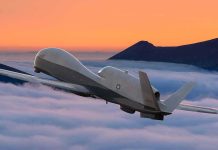
U.S. strikes on Iran have stretched into a 13-night campaign, with Central Command saying the goal is to punish attacks on shipping and keep the Strait of Hormuz open.
Quick Take
- U.S. Central Command said the strikes were a response to Iranian attacks on commercial shipping and U.S. forces.
- The military said it hit command centers, air defenses, missile and drone sites, and coastal surveillance facilities.
- Reporting shows a repeated strike pattern over many nights, not a single isolated raid.
- The public record is still dominated by U.S. military statements, leaving key legal questions unanswered.
What the U.S. Said It Was Doing
U.S. Central Command said the first wave of strikes began after what it called Iranian attacks on commercial shipping and U.S. forces in the region. Reuters reported that the military described the operation as a “powerful response” aimed at imposing costs on Iran and protecting freedom of navigation in the Strait of Hormuz.
By the middle of the month, the campaign had grown into repeated overnight strikes. CENTCOM said later rounds hit Iranian military command centers, drone storage facilities, communication networks, coastal surveillance sites, and maritime capabilities. Reuters and the Associated Press both reported that the stated purpose was to weaken Iran’s ability to threaten civilian mariners and commercial vessels.
How the Campaign Expanded
The reporting shows a steady pattern of escalation across multiple nights. NPR, CNN, the Associated Press, and Reuters all described a rolling series of strikes that reached at least the 11th, 12th, and 13th nights. That matters because it shows this was not treated as a one-off retaliation, but as a sustained military effort with a defined mission.
CENTCOM’s July 23 statement said the latest strikes targeted Iranian military command centers, drone storage facilities, communication networks, coastal surveillance sites, and maritime capabilities. Reuters likewise reported that the 13th night of strikes hit military targets tied to the Strait of Hormuz, where commercial ships continued to transit with U.S. support.
What Remains Unclear
The public record provided here does not include the full legal memo behind the strikes, a detailed necessity analysis, or a proportionality review. It also does not include the complete incident file for the attack that triggered the first strike wave. That leaves the administration’s self-defense claim stated, but not fully documented for outside review.
#Iran says 3 people were killed & 2 injured in #US strikes on Qeshm Island in the Strait of Hormuz pic.twitter.com/yO8lZFd3od
— Ayman Mat News (@AymanMatNews) July 30, 2026
That gap matters in a country already worn down by distrust. Supporters will see a hard answer to attacks on shipping and U.S. forces. Critics will see another case where military power moved faster than public proof. Both reactions fit a wider pattern in U.S.-Iran crises, where the government frames force as defense while opponents question the legal basis and the end goal.
The Bigger Picture
The wider stakes go beyond one night of bombing. The Strait of Hormuz is one of the world’s most important shipping routes, and the U.S. said the strikes were meant to keep it open. When that waterway comes under attack, the result can hit energy markets, shipping costs, and regional stability all at once. That is why each new strike raises the risk of a wider conflict.
The information flow also matters. In this case, the clearest public record comes from U.S. military releases and fast-moving news updates. That kind of reporting gives the public the basic facts quickly, but it can also leave major questions unresolved while the fighting is still underway. For readers who already distrust government spin, that uncertainty is part of the story.
Sources:
townhall.com, centcom.mil, aljazeera.com, cnn.com, reuters.com