
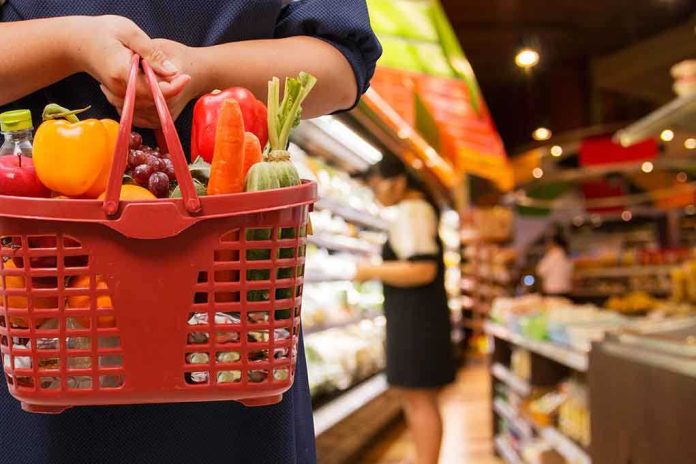
Americans are quietly turning grocery shopping into a survival skill class, rewiring decades-old routines after the sharpest food price jump in half a century.
Story Snapshot
- Food at home is about one‑third more expensive than before the pandemic, forcing new habits.
- Roughly 8 or 9 in 10 Americans say they have changed how they shop for groceries to cope.
- Shoppers now chase sales, switch to store brands, and trim nonessential items from their carts.
- Brand loyalty is fading as middle‑class families treat every grocery trip like a budget drill.
Grocery prices jumped, and routines snapped with them
Government data show food bought to eat at home is about 33 percent more expensive in U.S. cities than it was in early 2019. That is the biggest jump in grocery prices in roughly 50 years. When prices rise that fast, people do not just “feel squeezed.” They change how they live. For millions of Americans, the weekly grocery run became the first place they fought back, long before any politician admitted there was a problem.
A LendingTree survey found 88 percent of Americans say they have changed their grocery routines to save money. That figure was already high in 2022 and has climbed since. Consumer research from other firms lines up with that story. One study cited by ConsumerAffairs reported more than 90 percent of shoppers changed how they buy food in response to higher prices. When many different polls agree, you are looking at a real shift, not a passing mood.
How everyday shopping turned into a tactical mission
Purdue’s Consumer Food Insights work reported that 82 percent of American adults changed their food purchasing habits in 2025, mostly because of high food prices. They are seeking out sales and discounts, switching to cheaper brands, and skipping treats like ice cream when money is tight. Zappi’s research, summarized by ConsumerAffairs, shows shoppers using coupons, moving to store brands, buying only essentials, and even cutting the number of items in their baskets. What used to be casual browsing has become a planned operation.
These changes reach beyond snacks and splurges. A UserTesting survey found 77 percent of respondents adjusted their grocery habits, often cutting back on meat, dairy, eggs, soda, desserts, and name brands. Many now shop at discount stores such as Aldi and Walmart to stretch paychecks. Shoppers talk about stress, frustration, and a “bleak” feeling in the aisles. That emotional strain matters in politics, because people who feel cornered financially are quick to blame leaders who promised relief and delivered more inflation instead.
Brand loyalty crumbles as price becomes king
ConsumerAffairs notes that 70 percent of shoppers now say price or value is the most important factor when choosing snacks and drinks. Nearly one‑third will simply buy the cheapest option that meets their needs. The share of people who insist on brand‑name groceries has dropped sharply, from 21 percent to 10 percent in a single year. Instead, most households mix store brands with a few favorites. That is bad news for big brands that relied on habit and decades of advertising to keep shoppers loyal.
America's grocery volume recession started in March 2025. Inflation hid it for almost a year.
Unit sales, the count of actual items leaving stores, have been negative most months since then. But prices kept climbing 2 to 3% a year, so total dollar sales kept growing and earnings… https://t.co/7IxqfO2xdl
— Aakash Gupta (@aakashgupta) July 27, 2026
Food and Wine’s coverage of the LendingTree survey shows the same pattern. About 44 percent of Americans now opt for store or generic brands, and 38 percent say they fight impulse buys that are not on their list. Morning Consult reports that half of U.S. adults often compare grocery prices, and generic buying, coupon use, and multi‑store shopping are all trending up month by month. This is classic middle‑class behavior under strain: people do not riot, they start clipping coupons and watching every price tag.
Smaller baskets, fewer treats, and a volume recession
Surveys capture what people say they do, but market data hint at what they actually buy. Researchers and analysts now talk about a “volume recession” in grocery, where total units sold are flat or shrinking even as dollar sales rise. ConsumerAffairs reports that about 34 percent of shoppers are buying fewer items overall. Some are dropping nonessential products they once saw as basic, including snacks and specialty foods. For many families, the cart may still look full, but hidden cuts show up in missing meat, fewer sodas, or less variety.
Older Americans, especially those on fixed incomes, feel the squeeze most sharply. The American Association of Retired Persons notes older consumers tighten control with discounts, store brands, and fewer impulse purchases. Younger shoppers also adjust, but often by chasing the best prices across different stores. From a conservative point of view, the story is simple and sobering: when Washington lets inflation run hot, people improvise to survive, and the quiet sign of trouble is not protest lines but smaller, cheaper grocery baskets week after week.
Are these coping tactics here to stay?
Purdue’s expert commentary says more than half of consumers are unsure if they will keep these new habits into 2026. That uncertainty matters. If food prices ease, some shoppers may drift back to old routines. But once families learn they can save real money with lists, generics, and price checks, many will not forget those skills. Multiple reports, from Seattle Times to UserTesting, describe pantry staples like beans and rice coming back into style as people rediscover simple, cheap meals.
What is missing so far is clear, public transaction data that show exactly how basket size, item mix, and brand share changed over time. Most of the record relies on surveys and industry studies that are not fully open to outside review. That gap should make any careful reader demand more hard numbers. Still, when almost every serious survey finds 75 to 90 percent of Americans changing how they shop, the burden of proof now sits on anyone claiming grocery life is “back to normal.”
Sources:
feedpress.me, foodandwine.com, retailers.com, seattletimes.com, fmi.org, ag.purdue.edu, prnewswire.com