Israel’s sweeping ban on nearly 200,000 Palestinian workers after October 7 has devastated Palestinian livelihoods while exposing deep bias and blind spots in much of America’s left-leaning media coverage.
Story Snapshot
- Israel canceled almost all Palestinian work permits after the Hamas attacks, citing security concerns.
- The number of Palestinians working inside Israel has crashed, pushing West Bank unemployment and poverty sharply higher.
- Israeli ministers now argue Palestinians are a permanent security risk and seek to replace them with foreign labor.
- Many Western outlets focus on Palestinian suffering but downplay Hamas’s use of workers and Israel’s security case.
Israel’s Post–October 7 Ban on Palestinian Workers
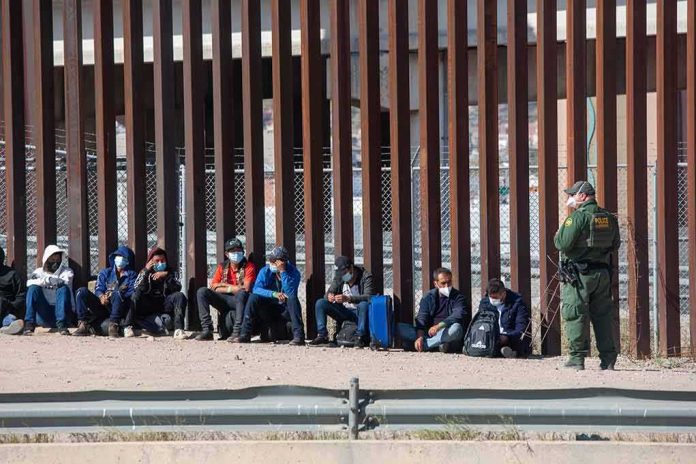
Soon after the October 7, 2023 Hamas attacks, the Israeli government canceled virtually all permits that allowed Palestinians to enter Israel for work or medical care, formally saying the move was needed for security. Before the war, more than 140,000–150,000 Palestinians from the West Bank and Gaza worked in Israel and earned about double the wages they could get at home. After the ban, almost no workers from the West Bank were allowed into Israel, except a narrow group labeled “essential workers” and a small number in industrial zones tied to Israeli settlements.
The ban fit a long pattern. Researchers note that since the Second Intifada in 2000, Israel has often cut off Palestinian labor after major violence and then reopened it later when the economy needs cheap workers. In this latest round, the state not only canceled permits but also detained thousands of workers from Gaza and the West Bank who had valid papers, even though rights groups say many were not connected to the October 7 attacks. International organizations now describe these steps as collective punishment that goes far beyond specific suspects.
Economic Shock for Palestinians — and Costs for Israel
The sudden labor cutoff hit the Palestinian economy like a hammer. One quarter of the West Bank’s workforce had jobs in Israel before the war, and those wages were a lifeline for families. When Israel barred nearly 200,000 laborers, unemployment in the West Bank surged to around 29–32 percent, and poverty rates roughly doubled. Think tanks estimate hundreds of thousands of jobs lost and billions of dollars in gross domestic product wiped out, pushing many households into deep insecurity and hunger.
Israel has paid a price too. Construction, farming, and some industries relied on Palestinian crews. Analysts estimate the Israeli economy is losing hundreds of millions of dollars a month because of labor shortages, even as war costs and wider disruption already weigh on growth. To plug the gap, ministries opened talks with countries such as Sri Lanka, India, China, and Thailand to bring in tens of thousands of foreign workers. This attempt to replace Palestinians instead of restoring permits has fueled claims that the policy is not just about security, but also about reshaping who lives and works between the river and the sea.
Security Rationale and the Charge of Collective Punishment
Israeli officials frame the worker ban as a clear security need. The United States Department of State reports that Israel cited “frequent attempted terrorist attacks” when it canceled nearly all Palestinian permits. Some Israeli and pro-Israel commentators go further, saying Hamas used Palestinian workers to gather maps and detailed knowledge of Israeli cities and communities, helping plan the October 7 attack. They argue that when insiders pass along such information, Israel has no choice but to close its doors, even if most workers never aided Hamas.
Human rights groups and many global media outlets describe the same policy in very different terms. Amnesty International and others label the sweeping permit cancellations, the arrests of thousands of workers, and the sealing of village entrances in the West Bank as “collective punishment” and part of a wider system they call apartheid. Economic researchers also note that the measures intensified after the Palestinian Authority brought legal cases against Israel in international courts, which suggests political pressure, not only security, was at work. This clash of narratives—security shield versus collective penalty—now drives much of the global debate.
How Western Media Covers the Ban — and What Gets Missed
Many major Western outlets, especially on the political left, focus heavily on Palestinian suffering from the ban while giving far less space to Israel’s stated security concerns. Studies of coverage in high‑profile media show a pattern where Palestinian losses are often framed with soft doubt words like “reportedly” or “claims,” while Israeli statements are treated more as facts. At the same time, some magazines and broadcasters run long human‑interest stories about unemployed workers and collapsing towns, but spend little time on Hamas’s tactics or the internal Israeli security debate.
Is Israel’s ban on Palestinian workers meant to provide security to Israelis or meant to instill fear?
Fear is a very powerful emotion- allows level headed people to commit unspeakable acts.
Israelis have been living in fear for >70 years despite immense unconditional American…
— Norma (@Norma81321397) July 2, 2026
Pro‑Palestinian voices also face pressure. Civil rights groups in the United States have documented hundreds of attempts to silence or punish people who speak out against Israeli policies, including calls for firing employees, canceling conferences, and pulling interviews. Doctors, academics, and journalists say that broad definitions of antisemitism are sometimes used to brand criticism of Israeli actions as hate speech and to shut down debate. Yet, despite these efforts, social media, independent outlets, and some mainstream reporters now highlight both Palestinian hardship and Israeli moves that seem driven by politics or ideology more than by clear, public security evidence.
Deep-State Fears, Shared Frustrations, and What It Means for Americans
For many Americans on both the right and the left, the story of the worker ban and its coverage fits a larger fear: powerful governments and media elites decide which voices count and which lives matter. Conservatives see the New Yorker‑style narratives as proof that left‑leaning outlets care more about defending globalist causes than about defending a democracy fighting terrorism. Liberals see the same ban, and the harsh economic fallout, as evidence that security talk can hide systematic abuse and erasure of a whole people.
Both sides, though, can agree on this: ordinary Palestinians and Israelis are paying the price, while political leaders, bureaucrats, and media brands argue over the story. Research shows the worker ban is not a one‑off choice but part of a long‑running system where labor, borders, and rights turn on elite decisions made far from the job site or the village. For Americans who feel their own government serves donors and entrenched interests first, this distant conflict is a warning close to home: when security and fear are the only explanations we hear, it is time to ask who benefits from keeping people poor, divided, and in the dark.
Sources:
townhall.com, alhaq.org, palestine-studies.org, facebook.com, state.gov, inss.org.il, amnesty.org, btselem.org, al-shabaka.org, un.org, crisisgroup.org