
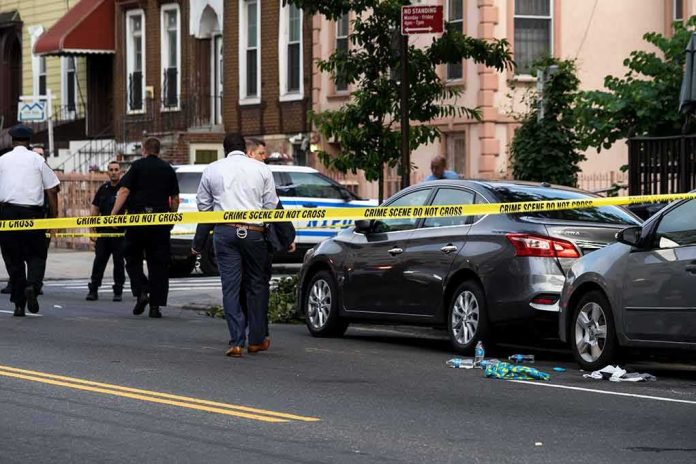
When five people collapse in one home and two never get back up, the label “mass overdose” isn’t sensationalism; it is a practical description of a crisis that demands rapid medical response and careful, follow‑on investigation to understand what, exactly, went wrong and how to prevent the next cluster.
At a Glance
- Police in Oroville, California, responded to a home with five suspected overdoses; two people died, three were hospitalized.
- Officers administered Narcan and CPR before EMS transport; two survivors were initially listed in critical condition, one stable.
- Authorities described the event as a suspected overdose cluster while investigations continued into the precise cause and substance.
- This pattern—rapid “mass overdose” framing followed by toxicology—reflects how modern overdose clusters are identified and managed.
What Happened: A Rapid Response to a Cluster of Medical Emergencies
On a November morning, Oroville police were dispatched around 8:10 a.m. to a residence on the 100 block of Hammond Park Drive for multiple possible overdoses. Inside, they found five individuals in medical distress. Two were pronounced dead at the scene; three were transported to area hospitals, with two reported in critical condition and one in stable condition at the time of transport. The initial account, attributed to a police news release and echoed by multiple outlets, emphasized both the severity of the incident and the immediacy of the response. Officers administered Narcan, performed CPR, and provided emergency aid until medics arrived—standard-of-care steps in suspected opioid-involved respiratory depression, and appropriate first-line measures when the precise intoxicant is unknown.
The early public description from law enforcement used provisional language: suspected or apparent overdoses, with cause under investigation. That wording is not hedging; it reflects a well-established division of labor between first response and forensic medicine. Paramedics and police treat what they see—unconsciousness, depressed breathing, pinpoint pupils, cyanosis—while coroners and toxicologists later determine the specific agents and mechanisms that caused death. Reports from the scene consistently documented five affected individuals, two fatalities, and three transports, with condition updates tied to the time of hospital handoff rather than later inpatient outcomes.
How Overdose Clusters Are Recognized and Managed
When several people in one place exhibit overdose physiology at roughly the same time, responders treat it as a cluster. The working label—often “mass overdose”—is an operational signal: deploy enough personnel, doses of naloxone, and transport capacity; notify nearby hospitals; and begin the investigative clock. It does not presuppose a single substance or a single source, even though a shared supply is common. Clinical management proceeds on the safest assumption: if an opioid could be involved, give naloxone promptly and repeat as needed. If stimulants, sedatives, or polysubstance exposure is suspected, airway protection, ventilation, cardiovascular monitoring, and supportive care lead while toxicology catches up. The Oroville account describes that protocol in action: Narcan on scene, CPR, and rapid transport while police secured the location and preserved evidence for later analysis.
Confirmation—what drug, what dose, what combination—arrives later through autopsy and toxicology. That cadence is routine in overdose epidemiology. The public first hears the emergency framing, then, sometimes weeks later, the medical causation. Across jurisdictions, this sequencing has become the backbone of cluster detection and public health alerts: frontline observation flags the signal; laboratory evidence refines it.
The Facts We Have—and the Gaps That Await Forensics
Several core facts in the Oroville case are well supported: five people at one residence, two deaths on scene, three hospital transports, and documented officer interventions. Multiple independent outlets reported the same counts and dispositions, attributing them to Oroville Police Department’s release. Two of the transported patients were listed as critical and one as stable at the time of the initial report, a standard status snapshot that often precedes days of inpatient care and does not predict outcome.
Equally important is what was not yet stated publicly: the identities of the victims, the toxicological agents involved, and whether a single supply or multiple exposures were responsible. Those blanks are normal at this stage. In many overdose clusters, coroners and state labs later identify fentanyl or a potent analogue, sometimes co‑ingested with methamphetamine, benzodiazepines, or alcohol. In other clusters, non‑opioid sedatives or synthetic adulterants predominate, in which case naloxone has limited effect and airway management becomes the decisive intervention. The operative point is procedural: scene triage first, attribution later.
Why Mass-Overdose Framing Emerged—and What It Signals
Over the past decade, public safety agencies and newsrooms have converged on “mass overdose” as shorthand for any event where multiple people suffer overdose-like symptoms simultaneously. That language is not merely rhetorical; it helps coordinate multi-agency response and primes hospitals for a surge of toxidrome cases. Scholars who study media framing of the overdose crisis have documented how coverage migrated from crime-centric to health-centric frames; in practice, that shift has encouraged timely, life‑saving measures such as broader naloxone deployment and faster alerting when clusters appear.
In operational terms, the label tells you what to do next. For law enforcement: preserve the scene, secure any powders, pills, paraphernalia, or residues for lab analysis, and trace potential supply routes. For clinicians: expect polysubstance patterns and be prepared for recurrent respiratory depression even after initial reversal. For public health: monitor regional EMS calls for similar presentations and stand ready to issue advisories if a hot supply—excessively potent or adulterated—appears to be circulating. The Oroville incident fits this playbook precisely, from first alert to hospital transport.
Two dead in mass overdose in Oroville home https://t.co/drPwF9gMpY pic.twitter.com/C0WlGc3naq
— SFGATE (@SFGate) November 22, 2026
What This Means for Communities and Responders
When a cluster like Oroville’s hits, the most consequential decisions are made in minutes: administering naloxone assertively, maintaining airways, and moving quickly to definitive care. Communities can materially change outcomes by ensuring that police, firefighters, and bystanders carry naloxone and are trained to use it; evidence from countless responses shows that early reversal can make the difference between survival and brain injury or death. At the systems level, reliable communication pipelines—from dispatch to ER, and from police PIOs to local media—help the public understand the nature of the emergency without speculating about specific drugs before labs confirm them.
Sources:
nypost.com, eastbaytimes.com, hoodline.com, article.wn.com