Congressional approval of an arms sale is not the same thing as a missile landing on a launch rail in Ukraine — and the gap between those two moments is where this $2.1 billion Patriot deal will actually be decided.
Key Points
- The State Department has formally cleared a possible Foreign Military Sale of 500 PAC-3 MSE interceptors to Ukraine, valued at an estimated $2.1 billion.
- The purchase is designed to be funded entirely by allies — Canada, Germany, and Norway, plus EU Ukraine Support Loan financing — not by U.S. taxpayers.
- PAC-3 MSE is the most advanced Patriot interceptor in service and one of the only Western systems capable of shooting down ballistic missiles.
- Approval is a procedural step, not a signed contract; no public delivery schedule has been disclosed, and global production runs at roughly 650 interceptors a year against demand from 18 countries.
- The timing lands amid an intensified Russian air campaign, with Ukrainian officials reporting dozens of ballistic missile launches in recent weeks and, per CNN sourcing, periods of acute interceptor scarcity.
What the State Department Actually Approved
On October 30, 2026, the State Department issued a formal determination approving a possible Foreign Military Sale to Ukraine covering 500 PAC-3 MSE missiles and associated equipment, at an estimated cost of $2.1 billion. This is the mechanism prescribed by Section 36(b) of the Arms Export Control Act: before the United States can conclude a major defense sale, the executive branch must notify the relevant congressional committees and give lawmakers a statutory review window, typically 15 to 30 days, during which the sale can in principle be blocked. Reuters and multiple other outlets confirmed the same headline figures the same day.
That legal architecture matters because it explains why “approved” does not mean “delivered.” The notification establishes that the administration intends to let the transaction proceed; it is not itself a Letter of Offer and Acceptance, a production contract, or a shipping manifest. Those steps — negotiating final terms, selecting contractors, scheduling manufacturing slots — happen afterward, and the State Department’s release does not specify when they will occur.
Who Is Actually Paying, and Why It Is Not Washington
The sale’s financing structure is its most distinctive feature. The State Department specified that the full $2.1 billion would be “funded entirely by partners and allies,” not by the U.S. government. Reporting has traced the contributions to Canada, Germany, and Norway through the JUMPSTART initiative, supplemented by funds drawn against the European Union’s Ukraine Support Loan. This arrangement reflects a financing model that has become standard for Ukraine’s air-defense purchases over the past two years: Washington supplies the industrial base and the export authorization, while European and Canadian governments supply the cash, often channeling it through multilateral mechanisms rather than bilateral checks. It insulates the deal from the politics of direct U.S. appropriations, but it also means implementation now depends on parliamentary and EU disbursement processes well outside the State Department’s control.
Why PAC-3 MSE Specifically
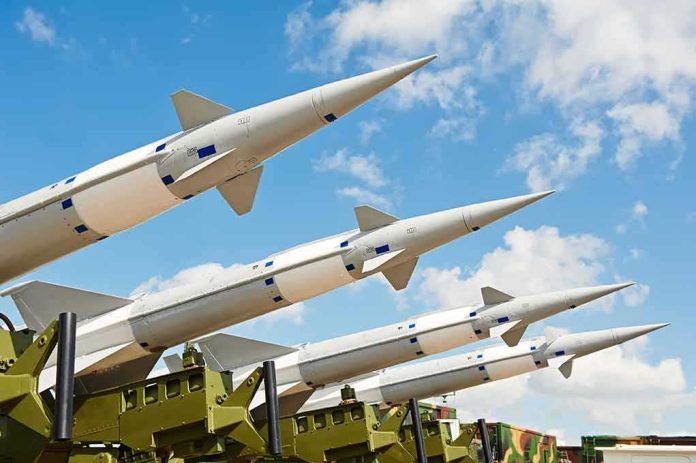
Not all Patriot interceptors are equal, and the variant matters enormously here. PAC-3 MSE is described in contemporaneous reporting as the most advanced version of the Patriot interceptor currently fielded and one of the few weapons systems anywhere capable of intercepting an incoming ballistic missile in its terminal phase. Older Patriot variants, built around blast-fragmentation warheads, are effective against aircraft and cruise missiles but far less reliable against the high-speed, steep-angle reentry of a ballistic warhead. PAC-3 MSE instead uses hit-to-kill technology — destroying its target through direct kinetic impact rather than an explosive burst — guided by an active radar seeker, which is precisely why it has become the interceptor of choice against Russia’s Iskander and North Korean-supplied ballistic missiles. That technical superiority is also its liability: it is harder and slower to build than legacy interceptors.
The Scarcity Problem the Approval Does Not Solve
Here the broader supply picture becomes essential context. The Center for Strategic and International Studies has estimated baseline PAC-3 MSE production at roughly 650 interceptors annually, a figure that must be divided among the United States’ own stockpile needs and 17 other allied users of the system. Separate Ukrainian estimates cited in European reporting put current U.S. output closer to 60 to 65 interceptors a month — a rate that, if accurate, trails the pace at which Russia has launched ballistic missiles at Kyiv in recent weeks. Against that backdrop, a notification for 500 additional interceptors is consequential precisely because the commodity is scarce, not because scarcity has been solved. Whether Ukraine receives meaningful volumes in 2026, 2027, or later depends on production scheduling, allocation decisions among competing buyers, and whether European governments holding existing PAC-3 stocks choose to transfer them now and backfill their own inventories later — an option raised in contemporaneous commentary but not yet confirmed in any official document.
Reading the Announcement Against the War It Is Meant to Address
The approval arrives amid an intensified Russian air campaign against Ukrainian cities and infrastructure, with Ukrainian officials reporting large barrages of ballistic missiles in the nights surrounding the announcement. That operational urgency is the backdrop against which the $2.1 billion figure and the 500-missile quantity should be read: as a signal of sustained Western commitment to Ukraine’s layered air defense, and as a procedural milestone that still requires contracting, financing follow-through, and production capacity to translate into interceptors on Ukrainian launchers. The State Department’s own framing — that the package is meant “to improve Ukraine’s integrated air and missile defense capabilities and sustain the country’s existing Patriot operations” — describes an intent that is now authorized, not yet executed.
https://twitter.com/SamsonNyimu5/status/2116300120341836042
What to Watch Next
The next verifiable milestones are a signed Letter of Offer and Acceptance, a contractor production order, and — most importantly for Ukraine’s battlefield reality — an actual delivery schedule. None of those has been publicly disclosed. Congressional notification starts a clock; it does not by itself move a single interceptor closer to a Patriot battery outside Kyiv.
Sources:
insidedefense.com, state.gov, kyivindependent.com, breakingdefense.com, congress.gov, csis.org