As Venezuelans claw through rubble after twin quakes killed at least 235 people, a familiar crisis of trust is erupting over who controls the facts and the aid.
Story Snapshot
- Venezuela’s acting government reports at least 235 dead and thousands injured, while outside models warn the true toll could reach the tens of thousands.
- Acting President Delcy Rodríguez declared a state of emergency and a $200 million reconstruction fund, but missing-person lists and media reports show huge gaps in official data.
- More than 51,000 people are reported missing, with opposition platforms and United States-backed tools tracking far higher numbers than the government admits.
- The United States and other allies have deployed search-and-rescue teams, warships, aircraft, and millions in aid, even as global outlets push a “government undercount” narrative that echoes past crises.
Quakes Strike Weak Institutions And Raise Big Questions On Numbers
The 7.2 and 7.5 magnitude earthquakes that hit Venezuela’s northern coast were the strongest in more than a century, slamming cities like La Guaira and areas west of Caracas. Acting President Delcy Rodríguez first reported dozens dead and hundreds injured, but Health Minister Carlos Alvarado later raised the toll to at least 235 deaths and around 4,300 injured. He admitted these figures only cover people who reached hospitals, not those who died in collapsed homes or on the streets.
National Assembly president Jorge Rodríguez told reporters that at least 188 people were confirmed dead early on, with about 1,520 hospitalized and roughly 200 trapped under debris. Within days, other official updates spoke of nearly 920 deaths and 3,360 injured, plus more than 51,000 people listed as missing across the country. Opposition-backed tracking websites posted even larger missing-person figures, well over 40,000 and then above 60,000, showing a sharp split between government numbers and citizen reporting.
State Of Emergency, Aid Pledges, And A $200 Million Fund
Delcy Rodríguez declared a national state of emergency in a televised address late Wednesday, activating disaster protocols and allowing extra powers for rescue and security forces. She also announced a $200 million reconstruction fund for hospitals and damaged homes, with economy and finance officials tasked to manage spending. That fund is meant to cover vital repairs in La Guaira, Caracas, and other hard-hit areas where dozens of buildings have collapsed and thousands of families are now homeless.
Countries from across the world moved quickly to help. The United States pledged search-and-rescue teams, medical supplies, temporary shelters, and humanitarian aid, backed by two warships, transport aircraft, helicopters, and around $150 million in assistance. Allies like Chile, Ecuador, El Salvador, Mexico, Switzerland, Spain, France, Portugal, China, India, Brazil, and even Iran sent rescue specialists, equipment, and teams with trained dogs and ground-penetrating radar to hunt for survivors in the rubble.
“Undercount” Narrative And Missing-Person Gaps
While Venezuelans dig with their bare hands, many big outlets focus less on the rescue work and more on questioning the official numbers. The United States Geological Survey (USGS) “PAGER” system, a modeling tool, warned of a 44% chance that deaths could reach between 10,000 and 100,000, with some scientists saying more than 10,000 fatalities would be “no surprise” for quakes this size near crowded cities. These are not confirmed counts, but risk estimates, yet they are repeatedly cited to argue that the government’s figures must be a “substantial undercount.”
#WeStandWithVenezuela | Twelve days after the June 24 earthquakes, Venezuela continues search, rescue, and recovery operations, extending efforts beyond the timeframe commonly referenced in international rescue guidelines.
Authorities say operations will continue as long as there… pic.twitter.com/WcyWvXTCkB— teleSUR English (@telesurenglish) July 7, 2026
Independent reports already show death tolls far beyond the early 235 figure. A rapid field analysis on June 30 cited at least 1,943 confirmed deaths, more than 10,500 injured, and over 43,000 missing people on a national database, while a United Nations relief chief spoke of more than 50,000 people unaccounted for. At the same time, one opposition platform tracked more than 63,000 missing persons, with about 11,000 later found, versus government reports of only about 150 officially unaccounted for. This huge mismatch feeds public anger and suspicion.
Rescue Race, Media Framing, And What Conservatives Should Watch
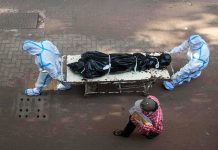
On the ground, rescue work has been intense. Venezuela registered at least 182 major collapse sites, with dozens of survivors pulled out alive and hundreds still believed trapped in twisted concrete. More than 1,000 emergency responders from 25 or more international search-and-rescue teams have arrived or are en route, including units from the United States armed forces and specialized crews from Europe and Latin America. Satellite images and video show widespread destruction, especially in La Guaira, where some areas like Catia La Mar have been described as a total loss.
Yet even as global help pours in, mainstream coverage leans hard on a familiar story line: a “collapsed” Venezuelan system, a likely huge undercount, and weak institutions blamed for every delay. Reports highlight long-standing problems such as inflation, shortages, and broken health infrastructure as reasons why aid is slow to reach neighborhoods, rather than giving credit to citizens and volunteers who stepped in when government capacity fell short. For conservative readers, this should sound familiar—it mirrors how left-leaning media often frame crises to argue for bigger international control and more centralized power over data and response.
Data Transparency, Foreign Involvement, And Constitutional Concerns
The biggest unresolved issue is transparency. Officials admit their early numbers exclude people who never reached hospitals, and they have not yet given a clear, unified count of missing persons, even as tens of thousands log names on hotlines and tracking platforms. Without open access to hospital records, morgue lists, and burial registries, Venezuelans cannot verify whether the state’s figures match reality. That gap lets outside actors, including international agencies and media, define the narrative inside a sovereign country with weak institutions.
At the same time, heavy foreign involvement brings its own risks. United Nations coordinators now help manage 50-plus international rescue teams and large aid flows, while USGS models shape expectations about how many people “should” have died. If these outside systems become the only trusted source of information, local citizens lose control over how their tragedy is counted and remembered. For Americans who care about national sovereignty, limited government, and honest disaster reporting, Venezuela’s struggle is a warning: when institutions fail and data gets fragmented, the door opens for global bureaucracies and narrative-driven media to step in and rewrite the facts.
Sources:
insiderpaper.com, en.wikipedia.org, cnn.com, npr.org, news.un.org, disasteraware.com, reuters.com, youtube.com, facebook.com, usatoday.com, newindianexpress.com, butlereagle.com