
A quiet Pentagon planning shift could leave NATO with far fewer American bombers, warships, and jets in a crisis—while U.S. taxpayers keep footing most of the bill.
Story Snapshot
- Reported U.S. plan would sharply cut bombers, warships, and fighter jets pledged to NATO in a crisis.
- Washington frames the move as overdue burden-sharing after decades of American overcommitment.
- Critics warn the cuts could weaken deterrence and signal retreat if Europe cannot fill the gap.
- Underlying documents and NATO consultations remain hidden, raising questions about transparency.
What The Reported NATO Cuts Actually Do
Reporting based on a briefing to allies in Brussels says the United States plans to cut the number of fighter jets available to NATO in a crisis by roughly one third.[1] The same reporting says the pool of U.S. strategic bombers pledged to NATO would be cut in half, while attack submarines would no longer be pre-assigned for NATO crisis response at all.[1] Naval destroyers and other warships earmarked for alliance missions would also be reduced compared to current levels.[1]
Additional coverage describes this as one of the most concrete shifts yet in how Washington backs NATO with high-end conventional forces.[1] The reported changes come alongside earlier Trump-era decisions to move or withdraw several thousand troops from Germany and adjust rotations to countries like Poland, framed as a broader repositioning rather than a full departure from Europe.[2] Together, these moves amount to a leaner forward posture that relies more on surge capacity from the United States homeland if a crisis erupts.[1][2]
Burden-Sharing Or Backing Away From Europe?
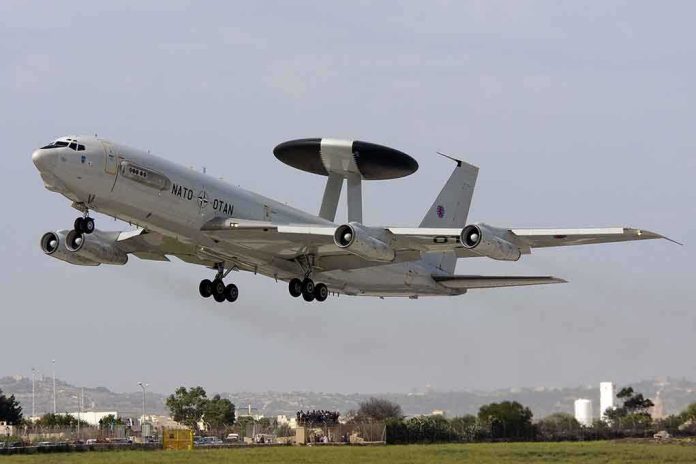
Supporters argue the plan reflects what American leaders have said for years: wealthy European states must stop free-riding on U.S. taxpayers and build serious capabilities of their own. A White House fact sheet from the Obama era already noted that the United States funded about twenty-two percent of NATO’s common budgets and roughly forty percent of the alliance’s joint airborne radar fleet, far above any other ally’s share. Analysts who favor a leaner global posture say Washington has long overprotected Europe militarily.
From that perspective, reducing pledged bombers, jets, and ships forces European governments to confront how dependent they have become on American conventional firepower.[1] Advocates describe this as a tactical adjustment within NATO structures, not an abandonment, arguing that the United States still provides the nuclear umbrella and could surge forces if vital interests are at stake. NATO’s own strategic concept stresses both deterrence and greater allied responsibility, giving political cover for Washington to press Europe to carry more of the conventional load over time.
Serious Questions About Risk, Readiness, And Timing
Critics counter that halving strategic bombers, reducing warships, and assigning zero submarines to NATO crisis plans is not a symbolic tweak but a concrete cut in front-line capability.[1] Strategic bombers, advanced fighter jets, and undersea forces are precisely the tools that deter aggression from adversaries who understand raw power, and their reduced availability could be read in Moscow, Tehran, or Beijing as a weakening of resolve. Commentators warn that the move, coupled with troop adjustments, looks like a broader contraction of America’s European posture.[2]
Trump administration plans to significantly reduce US military contributions to NATO. Europe is being told to step up fast. What’s really behind this move?
According to reports, the US has informed NATO allies that it will sharply cut the pool of military assets available to… pic.twitter.com/9yt1rwCH0S— Behind The Headlines with Shaw Bester (@BTH_with_Shaw) May 27, 2026
Available reporting does not show detailed public evidence that European forces are ready to backfill these gaps with comparable bombers, submarines, logistics, and command capacity.[1] There is also no released cost-benefit analysis explaining why these particular cuts improve NATO’s deterrence posture rather than simply saving money or shifting risk.[1] The absence of primary Pentagon documents or formal NATO minutes leaves an information vacuum that media and partisans quickly fill with either “abandonment” or “tough love” narratives, instead of hard military math.[1][2]
Sources:
[1] Web – Report: U.S. To Cut Strategic Bombers and Warships Available to NATO
[2] Web – US to Cut Military Assets for NATO, Spiegel Reports | KuCoin