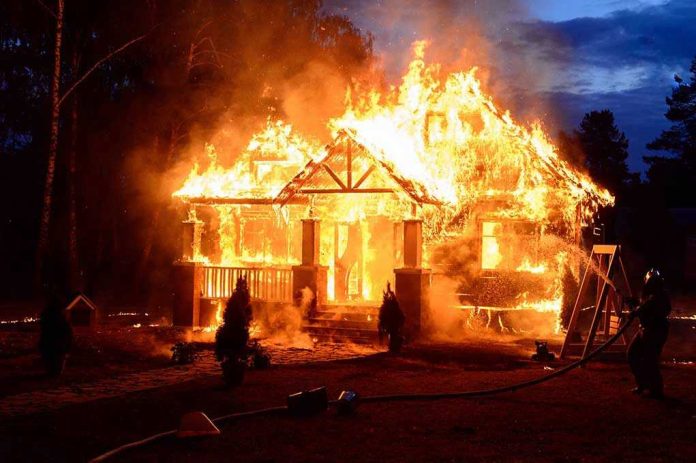
Residents of Pacific Palisades screamed “We were left to burn” as hydrants ran dry and aid trickled in too late, exposing a cascade of government failures that turned a spark into catastrophe.
Story Snapshot
- Alleged arsonist Jonathan Rinderknecht discarded a cigarette on January 1, 2025, sparking the Palisades Fire that reignited January 7 amid 100 mph winds.
- Fire devoured Pacific Palisades, Topanga, and Malibu, forcing 100,000 evacuations and contributing to 32 deaths across Southern California blazes.
- Hydrant failures, abandoned firebreaks, and delayed FEMA aid left homeowners battling toxic soil and insurance denials one year later.
- FireAid concert raised $100 million, but funds routed to nonprofits instead of victims fueled outrage over misallocated relief.
- Ongoing lawsuits target LADWP and LA County for negligence, highlighting wildland-urban interface vulnerabilities.
Fire’s Explosive Origin and Rapid Spread
Jonathan Rinderknecht, an Uber driver, allegedly tossed a lit cigarette at Skull Rock Trailhead around midnight on January 1, 2025. He called 911 at 12:17 a.m., consulted ChatGPT on liability, and trailed firefighters as they suppressed the blaze. Hoses left onsite failed to prevent reignition. On January 7 at 10:30 a.m., Santa Ana winds gusting 80-100 mph revived the fire near Pacific Palisades. It ballooned from 10 acres to 1,262 acres by afternoon.
Governor Gavin Newsom toured the site that day. LA Mayor Karen Bass declared an emergency at 7:58 p.m. Flames pushed into Pacific Palisades and Topanga on January 8, overwhelming 100,000 evacuees. Embers crossed Pacific Coast Highway on January 9, destroying structures and closing the highway until May. CAL FIRE and LA County Fire Department battled chaos until 100% containment on January 31.
This fire stood apart from typical wildfires. Part of 12 simultaneous Southern California infernos, it stemmed from human spark in the driest nine-month period on record. Drought-stricken Santa Monica Mountains amplified the wind-driven destruction in this wealthy coastal enclave’s wildland-urban interface.
Government Response Falls Short
Hydrants failed across Pacific Palisades as LADWP infrastructure crumbled under demand. Abandoned firebreaks and deactivated sensors worsened containment. Evacuations stalled amid traffic and wind. Firefighters faced resource shortages while agencies pointed to weather. Residents gathered at January 26 town halls, voicing fury at Mayor Bass and Governor Newsom for coordination lapses.
FEMA approved aid by January 15, but Cal OES delayed processing due to a contractor outage. Eighty percent of uninsured homeowners waited for assessments. March and April revealed toxic soil laced with lead and arsenic, yet insurance denials mounted. Common sense demands accountability—taxpayer-funded systems like hydrants must function when lives hang in balance, aligning with conservative values of self-reliance undermined by neglect.
US Army Corps of Engineers cleared 90% of debris by July 2025, slowed by terrain and environmental rules. Pacific Coast Highway reopened in May, but rebuilding lagged. These delays echo Woolsey Fire precedents, underscoring persistent infrastructure gaps.
Relief Efforts Spark Backlash
FireAid concert on January 30 raised $100 million. Organizers partnered with nonprofits, routing funds away from direct victim support. California Globe reports criticized this as misallocation, eroding trust. Town halls amplified calls for transparency. Facts support resident skepticism—direct aid to families rebuilding amid contamination beats bureaucratic intermediaries every time.
Lawsuits proliferated against LADWP and LA County for negligence. Litigation persists into 2026, targeting fire road neglect and sensor deactivation. Fire Safety Research Institute timelines stress documentation for future defenses, with VP Steve Kerber deeming it a “critical first step” against interface threats.
One Year Later: Lingering Scars
Pacific Palisades residents confront unrecognizable neighborhoods. Toxic soil poses long-term health risks. Uninsured families battle denials while agencies drag feet. Broader impacts hit LA and Ventura counties: economic strain from debris costs, social distrust from aid flaws, political pressure on leaders. FSRI analysis across 12 fires details progression, urging preparedness.
Conservative principles highlight personal responsibility—arsonist faces justice in Florida custody—yet demand government competence in basics like water pressure. Systemic failures here betrayed communities, foreshadowing risks unless infrastructure hardens against inevitable winds.
Sources:
https://www.americafirstpolicy.com/issues/palisades-fire-timeline-of-key-events-and-failures
https://www.latimes.com/california/story/2025-10-08/la-me-palisades-fire-timeline
https://en.wikipedia.org/wiki/Palisades_Fire
https://fsri.org/research-update/southern-california-fires-timeline-report
https://svs.gsfc.nasa.gov/5568/
https://the-lookout.org/2025/01/21/progression-of-the-palisades-fire/