Trump’s refusal to rule out sending U.S. troops to Venezuela stokes fears of military escalation, alarming constitutionalists and raising concerns over unchecked executive power.
Story Snapshot
- President Trump does not rule out military intervention in Venezuela.
- U.S. military actions in the Caribbean increase tension with Venezuela.
- Congressional review of potential civilian casualties from U.S. operations.
- Venezuelan government prepares for possible armed conflict.
Trump’s Strategic Ambiguity and Military Posture
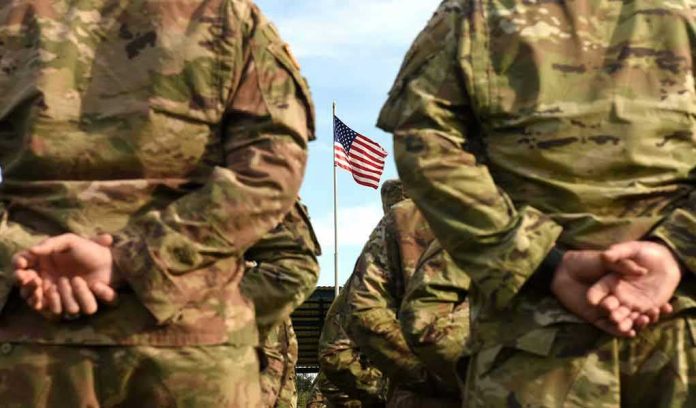
In a recent interview with Politico, President Trump declined to rule out sending U.S. troops to Venezuela, stating, “I don’t want to rule in or out. I don’t talk about it.” This comes amid a significant U.S. military buildup in the Caribbean, officially aimed at combating drug trafficking but raising concerns about potential military actions against the Maduro regime. Caracas has condemned these maneuvers as provocative, escalating regional tensions.
Experts and officials largely dismiss the likelihood of a full-scale invasion, viewing current U.S. activities as coercive pressure rather than preparation for a land war. Nonetheless, Trump’s strategic ambiguity continues to fuel fears of miscalculation and confrontation in the region. This rhetoric, combined with over 20 maritime operations, suggests a shift from offshore to potential territorial actions.
U.S. Congressional Oversight and Reaction
U.S. Congress is actively reviewing earlier military operations in the Caribbean, concerned about reports of civilian casualties. The Gang of Eight, a group of top Congressional leaders, is slated to receive briefings from senior national security officials, underscoring the heightened scrutiny of U.S. military actions. Admiral Alvin Holy of U.S. Southern Command is expected to brief Congress before retiring, raising questions about the timing amidst these sensitive developments.
As Trump’s rhetoric extends to possible actions against Mexican and Colombian interests, regional diplomatic tensions are on the rise. Latin American governments historically oppose U.S. military interventions, and such statements could strain bilateral relations with U.S. neighbors, further complicating the geopolitical landscape.
Venezuela’s Mobilization and Regional Implications
In response to U.S. maneuvers, Venezuelan President Nicolás Maduro has mobilized over four million members of the Bolivarian Militia, declaring a state of maximum preparedness. The Venezuelan government frames U.S. actions as part of a long-term effort to topple Maduro and seize the country’s oil resources, rallying nationalist sentiment and consolidating domestic support against perceived external threats.
This tension not only heightens the risk of unintended clashes but also poses broader implications for regional stability. The repeated discussion of military options reinforces the perception of Venezuela as a military problem, complicating future diplomatic de-escalation efforts. Furthermore, potential U.S. actions could set a precedent for cross-border anti-cartel strikes, impacting norms on sovereignty and transnational security threats.
Sources:
Proposed United States invasion of Venezuela