The Supreme Court just slapped down President Trump’s emergency-tariff play—forcing a new legal pivot that will test whether America First trade policy can survive Washington’s fine print.
Quick Take
- A 6-3 Supreme Court ruling struck down Trump’s broad tariffs imposed under the International Emergency Economic Powers Act (IEEPA), narrowing presidential authority over import policy.
- Trump shifted to Section 122 of the Trade Act of 1974, first announcing a 10% import fee and later raising it to 15%, triggering new legal questions.
- Section 122 tariffs can run 150 days unless extended, giving Congress leverage and setting up a political fight over prices, inflation, and trade pressure.
- Economists and Democrats argue the U.S. does not meet Section 122’s “balance-of-payments” conditions, raising the likelihood of further court challenges.
Supreme Court Limits Emergency Powers, Signaling a Separation-of-Powers Warning
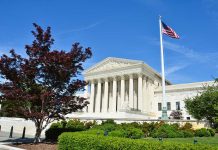
Chief Justice John Roberts wrote for a 6-3 majority that IEEPA does not authorize sweeping tariffs on U.S. trading partners, rejecting an interpretation that would allow what the court described as a “transformative expansion” of presidential power. The ruling matters beyond trade because it draws a bright line around emergency authorities that modern presidents often stretch. Conservatives who value constitutional checks and balances can read this as the judiciary insisting Congress must clearly authorize major economic policy shifts.
President Trump responded sharply in the immediate aftermath, then adopted a more measured tone during his Feb. 24, 2026 State of the Union address, calling the ruling “unfortunate” while emphasizing that tariffs had brought in large revenue and strengthened U.S. leverage. The political contrast—fiery comments one day, disciplined messaging at the SOTU—underscored that Trump intends to keep the pressure on trade partners while staying inside a legal lane that can survive review.
Trump’s Section 122 Pivot: Fast, Temporary, and Built for a Fight
Trump’s alternative route relies on Section 122 of the Trade Act of 1974, a tool that allows temporary import surcharges tied to balance-of-payments concerns, with a built-in 150-day clock. After the court decision, Trump announced a 10% global import fee under this authority and then raised it to 15%. That timeline is crucial: Section 122 is designed for short-term action, so sustaining the policy may require either congressional cooperation or another strategy.
Legal and economic critics are not debating Trump’s goal—pressing other countries for fairer terms—as much as whether the statute he chose fits the facts on the ground. Economists cited in coverage argued the United States does not face a classic balance-of-payments crisis because U.S. deficits are financeable given continuing demand for American debt and equity. Other experts argued that Section 122 is not meant to address ordinary trade deficits, and they pointed to statements suggesting even Trump’s legal team previously treated the concepts as distinct.
Congressional Leverage and Inflation Politics Collide Before the 150-Day Deadline
Section 122’s sunset mechanism hands Congress a pressure point. Senate Minority Leader Chuck Schumer said Democrats would not extend the tariffs beyond the initial period, tying the policy to consumer costs for everyday essentials such as groceries, cars, and housing. That sets up a familiar political contest: supporters view tariffs as leverage and a revenue tool, while opponents frame them as price hikes. The research available does not quantify consumer impacts here, but it does establish that inflation arguments will dominate the extension fight.
What Comes Next: Negotiations, Lawsuits, and the Limits of Executive Trade Policy
Trump’s team signaled that many trading partners may stick with agreements to avoid tougher outcomes, suggesting the administration sees the 150-day window as leverage for renegotiation. At the same time, experts predicted new legal challenges because the court already rejected a broad “emergency powers” rationale and because Section 122 has a narrower trigger. The core question is whether durable tariff policy will ultimately require Congress to legislate plainly—an outcome that would satisfy constitutional clarity, even if it slows executive action.
Legal experts react to Trump’s SCOTUS clash and tariff pivot in fiery SOTU https://t.co/szs56YpMPJ I APPRECIATE FOLLOWS #Trump #SOTU #SCOTUS #Tariffs #Politics pic.twitter.com/hi5V7ZZ9jH
— Jimbo Trump (he/she/bullshit) (@jimbotrump) February 25, 2026
For voters frustrated by years of globalist drift and bureaucratic gamesmanship, the bigger takeaway is procedural: even a popular agenda still runs through statutes written by Congress and interpreted by courts. The Supreme Court’s rebuke of IEEPA-based tariffs narrows executive improvisation, while Trump’s Section 122 pivot shows how quickly the White House can adapt inside the law. Whether the policy holds will depend on negotiations abroad, legislative math at home, and whether courts agree the new statute truly applies.
Sources:
Legal experts react to Trump’s SCOTUS clash, tariff pivot in fiery SOTU
Trump rips Supreme Court tariff ruling, SOTU vows new legal fight after 6-3 blow
Supreme Court strikes down tariffs