A new U.S.-brokered deal claims to sideline Iran and Hezbollah and bring “lasting peace” between Israel and Lebanon—but key gaps should make every American pause.
Story Snapshot
- Rubio unveiled a trilateral framework agreement with Israel and Lebanon that pointedly says “Iran is out, Hezbollah is out.”[1]
- Lebanon calls the deal a path to restoring sovereignty and a “permanent and final cessation of hostilities,” yet core details remain secret.[1]
- The agreement relies on Lebanese forces to police Hezbollah, even though Hezbollah rejected similar talks and sees peace with Israel as a threat.[7]
- Past U.S.-mediated Israel‑Lebanon deals show ceasefires often fail when militant groups are left outside the room.[3]
Rubio’s Deal: What Was Signed in Washington
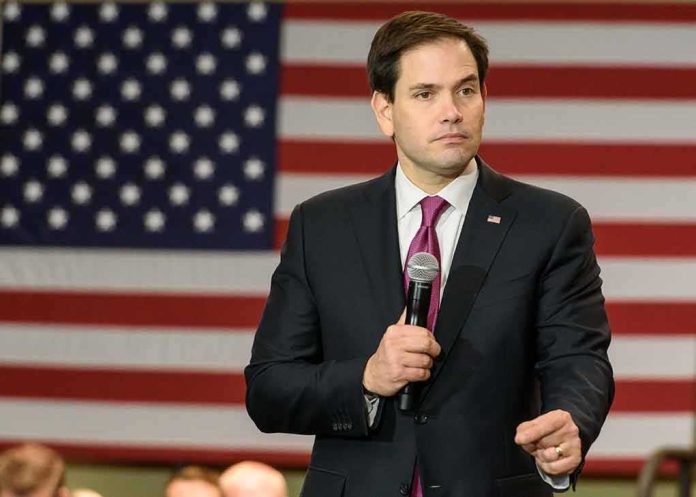
Secretary of State Marco Rubio stood in Washington with the Israeli and Lebanese ambassadors to announce a new framework agreement that he said is aimed at “lasting peace and security” after months of fighting with the Hezbollah militant group.[6] The accord was signed by Israel’s ambassador Yechiel Leiter and Lebanon’s ambassador Nada Hamadeh, making it a formal trilateral deal between the United States, Israel, and Lebanon.[1] Officials refused to release the full text, so Americans are being asked to trust a secret document that shapes a volatile border and involves U.S. power.
Lebanon’s ambassador Hamadeh described the framework as “a first step on the road to restoring Lebanese sovereignty and territorial integrity, securing a permanent and final cessation of hostilities” and letting displaced people return home to “live in peace, security, and prosperity.”[1] That language echoes earlier ceasefire promises in the region, where civilians were told that a short-term truce would open the door to long-term calm, only to see rockets and airstrikes resume once media attention faded.[3] For conservative Americans, the pattern raises serious questions about whether this is real peace or another diplomatic press event.
“Iran Is Out, Hezbollah Is Out” – On Paper
Israeli envoy Yechiel Leiter praised the framework as a road to “real peace,” with both countries’ sovereignty “respected, honored, and protected.” He highlighted the design of the deal as a “performance-based trilateral framework agreement” and declared, “Iran is out. Hezbollah is out. And the road to peace between Israel and Lebanon is in.”[1] That is strong language against Iran’s regional meddling and its arming of Hezbollah, and many patriots will welcome any step that cuts Tehran’s reach and protects Israel, a key ally.
Yet the claim that Hezbollah is “out” clashes with reports that Hezbollah did not take part in the negotiations and has rejected similar U.S.-brokered arrangements, saying direct peace talks with Israel threaten its survival.[7] Past Israel‑Lebanon deals, including maritime border agreements, were negotiated between states while powerful non‑state actors like Hezbollah stayed outside, creating a clear gap between diplomatic text and battlefield reality.[3] When the group with the rockets is not at the table, paper promises depend on weak governments to restrain armed factions they often cannot control.
Pilot Security Zones and Lebanese Control: Can They Really Police Hezbollah?
Lebanese officials say a major goal of the talks is getting Israeli forces out of southern Lebanon, while Israeli leaders focus on disarming Iran‑backed Hezbollah.[5] To bridge that gap, negotiators floated “pilot zones” inside Lebanon, where the Lebanese army would take exclusive control as Israeli troops withdraw.[1] President Joseph Aoun told a British delegation that these zones and the shift to Lebanese military control were still “under discussion pending approval from the Israeli side,” showing that key security details are unsettled.[1]
Other reports on the ceasefire framework say Hezbollah fighters would be banned from these pilot security zones and that the Lebanese army would be the only armed group allowed there.[17] On paper, that sounds like restoring state authority. In practice, Lebanon’s government has struggled for years to restrain Hezbollah, which has its own weapons, funding, and political base.[3] Expecting a weakened state to suddenly push militants out of entire regions, simply because Washington drafted a framework, may be wishful thinking that leaves civilians stuck between promises and gunfire.
Lessons From Past Deals: Fragile Ceasefires and Hidden Loopholes
Neutral analysts point out that U.S.-mediated Israel‑Lebanon agreements often follow the same pattern: diplomats sign a state‑to‑state document that sidesteps Hezbollah, and then everyone hopes the militant group quietly goes along.[3] History shows these ceasefires tend to break down within months, as Hezbollah fires again or Israel responds to new attacks, and both sides claim “self‑defense” under vague clauses.[3] Earlier U.S. statements have even kept Israel’s right to use force “at any time” against threats, a loophole that can turn a ceasefire into a pause between strikes.[15]
For Americans who care about strong borders, clear laws, and honest government, the secrecy around the new framework is a warning sign. The public still has no access to the full timelines, enforcement tools, or verification rules that would show whether this deal truly binds Hezbollah or just adds another press release to a long stack of failed accords.[9] Without sunlight, voters cannot judge if U.S. leverage is being used to secure real peace and protect allies, or to mask another unstable arrangement that invites future escalation and more calls for American involvement.
What This Means for U.S. Interests and Constitutional Values
Rubio’s announcement fits a familiar foreign policy model where Washington tries to manage distant conflicts through complex agreements, while ordinary Americans shoulder the risks if things go wrong.[4] Every fragile ceasefire on Israel’s northern border carries the chance of a wider war that can drag in U.S. assets, intelligence, and even troops, increasing pressure for more spending, more executive‑branch power, and less congressional oversight. That is exactly the drift toward unaccountable government many conservatives have fought against at home.
Israel and Lebanon sign framework agreement with US in 'first step' toward peace, Rubio says https://t.co/L1wJ8WE3zm
— The Right News, Right Now. (@BradPorcellato) June 26, 2026
At the same time, this framework highlights that the Trump administration is trying to back Israel, push back Iran, and support state sovereignty over militias—all goals many readers share.[1] The real test will be enforcement: whether Hezbollah actually leaves key areas, whether Israel respects withdrawal terms, and whether U.S. leaders are transparent with the American people about what was promised in Washington. Lasting peace requires more than speeches; it demands clear limits, strong verification, and respect for our own Constitution as we engage abroad.
Sources:
[1] YouTube – Rubio says Israel, Lebanon reach framework agreement aimed at ‘lasting …
[3] Web – Israel and Lebanon agree to renew fragile ceasefire, create … – PBS
[4] Web – Israel-Lebanon Negotiations: Political Roadblocks and Potential …
[5] YouTube – Israel–Lebanon agree to direct talks after U.S.-mediated breakthrough
[6] Web – US Secretary of State Marco Rubio announces a framework …
[7] Web – The US announced a ceasefire framework between Israel and …
[9] Web – Israel, Lebanon expected to sign framework deal after US-mediated …
[15] Web – Israel and Lebanon Hold US Mediated Talks as Gaza Spillover …
[17] Web – Israel, Lebanon Announce U.S.-Mediated Talks Over Sea Border