In Washington, D.C., the echoes of 1980s civil disobedience are ringing once again as pro-life activists reignite their fight against abortion pills.
Story Highlights
- Rescue Resurrection organizes a protest at HHS headquarters to demand a ban on abortion pills.
- The January 22, 2026 event revisits tactics from the 1980s, resulting in activist arrests.
- Protesters plea with Trump and Vance to leverage their administration against abortion-inducing drugs.
- The event occurs a day before the annual March for Life, amplifying pro-life visibility.
Protest at the Heart of Washington
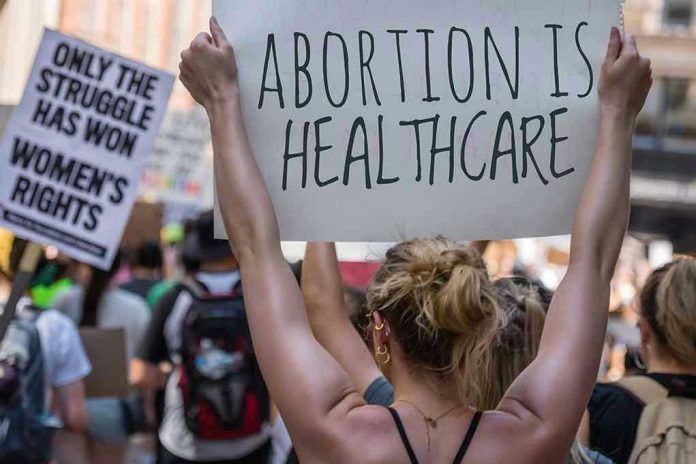
On January 22, 2026, pro-life activists from the group Rescue Resurrection convened outside the U.S. Department of Health and Human Services in Washington, D.C. Their mission was clear: demand the banning of abortion-inducing drugs, often referred to by opponents as the “murder pill.” This protest was not just a demonstration but a calculated act of civil disobedience, reviving the historical “rescue” tactics of the 1980s and 1990s.
These activists, many of whom have been involved in similar protests in the past, aimed to blockade the entrances of the HHS building. Their goal was to create what they call “social tension,” a strategy reminiscent of Martin Luther King Jr.’s nonviolent direct actions. By doing so, they hoped to catch the attention of influential figures like President Trump and Vice President Vance, urging them to take decisive action against the approval and distribution of abortion pills.
A Legacy of Civil Disobedience
The roots of Rescue Resurrection trace back to the Operation Rescue movement of the late 20th century. Led by Randall Terry, that movement saw tens of thousands of arrests as activists blocked clinics to prevent abortions. With the 1994 FACE Act increasing penalties for such actions, the movement saw a decline. However, recent political shifts, including Trump’s pardoning of 23 activists convicted under the FACE Act, have emboldened these groups to reemerge.
January 15, 2026, marked the announcement of the planned protest, building anticipation and preparation among activists. Their efforts culminated in the January 22 event, which served as both a standalone protest and a precursor to the larger March for Life rally scheduled for the next day. The timing was strategic, aiming to maximize the impact and media attention on their cause.
The Power Players and Their Stakes
In this unfolding drama, several key figures and organizations play pivotal roles. Randall Terry, as the leader of Rescue Resurrection, aims to unify diverse pro-life groups under a common banner, employing strategies that echo historical civil rights movements. For President Trump and Vice President Vance, the pressure from these activists is a test of their political promises and alignment with pro-life agendas.
The Department of Health and Human Services, along with the FDA, finds itself in the crosshairs of this movement. Their approval of abortion pills is the primary target of the activists’ demands, placing them at the center of a renewed national debate over reproductive rights and governmental oversight.
Sources:
Pro-life leader: We must create ‘social tension’ to end abortion
Jan. 22 protest at FDA headquarters in Washington announced by Rescue Resurrection
March for Life rally unfolds in Washington; Vance to make first public appearance since inauguration
Pro-life organization calls on HHS