
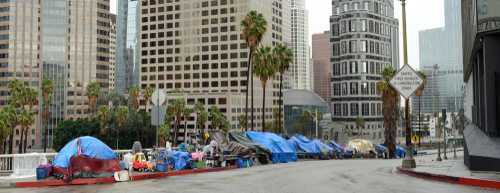
As Atlanta readies its World Cup stage, city workers quietly tossed tents, IDs, and medication belonging to homeless people only blocks from the stadium — raising hard questions about whose safety really counts.
Story Snapshot
- Atlanta cleared a major homeless camp near the World Cup site as part of its Downtown Rising housing push.
- City crews threw away tents and personal items while officials framed the sweep as a safety and cleanup effort.
- Atlanta has invested tens of millions of dollars and built new housing units to move hundreds of people off the streets.
- Advocates say sweeping camps and discarding belongings still fits a global pattern of hiding poverty before big events.
Homeless camp cleared near World Cup corridor
In the months before World Cup matches kicked off in Atlanta, city officials moved to clear a large homeless encampment near Grady Hospital and key downtown routes to the stadium. The cleanup was part of the “Downtown Rising” initiative, a multi-pronged effort launched in 2024 to remove encampments and street sleeping from central Atlanta before the 39-day soccer event. City workers dismantled tents over two days, and reports from the scene say they tossed tents and personal items into garbage trucks.
People living under the bridge lost not only shelter but also important belongings, including medication and identification cards, according to social media posts and first-hand accounts shared online. For someone on the street, a tent is home, an ID is often the only way to access services, and medication can be life-or-death. When those are thrown away, there is no easy replacement. To many regular Atlantans watching the video clips, city workers appeared to be cleaning up for visitors by wiping away the people who were already there.
City says sweeps are tied to safety and new housing
Mayor Andre Dickens’ administration argues the encampment clearance is one piece of a broader plan to move people into stable housing, not jail or constant sweeps. The city committed about $60 million to homelessness programs, the largest such investment in Atlanta’s history, and built hundreds of units of rapid-response housing for homeless residents ahead of the World Cup. The Downtown Rising initiative says it has already housed more than 460 people experiencing homelessness, using a “housing first” model with mental health and medical support.
Cathryn Vassell, head of Partners for Home, the group running much of the city’s homelessness strategy, told local reporters that her team had been working with people at the Bell Street camp for months. Caseworkers identified eight regular residents; six had already moved into permanent housing, and housing for the remaining couple was in progress. Vassell said the decision to clear the camp was “less about optics” and more about safety for people living there and for nearby residents and workers. The city points to crime concerns and health risks in large, unregulated camps as reasons for action.
Pattern of big events and hidden poverty
Atlanta’s moves sit inside a long pattern. When the city hosted the 1996 Olympics, police were accused of arresting thousands of homeless people and moving about 9,000 to a special detention center built for the games. Across the world, host cities often “clean up” visible poverty before mega-events. Research from national homeless organizations and public health groups shows that encampment “sweeps” commonly spike before major sports and political gatherings, as officials try to protect a city’s image for tourists and investors.
National studies warn that forced camp closures and property seizures can damage health, break links to outreach workers, and leave people more vulnerable. Losing medication, documents, or basic gear like tents can push someone deeper into crisis. At the same time, many cities say they face pressure from businesses, homeowners, and event organizers to keep sidewalks clear and public spaces “safe.” This clash between visible order and human impact feeds a growing belief, on both the left and right, that government cares more about optics than about fixing root problems.
Housing gains meet deep public distrust
Supporters of Atlanta’s World Cup housing strategy point to real progress. The city and its partners have created hundreds of new units, expanded outreach, and tried to place people directly into permanent homes instead of shelters or jail. Some advocates say Atlanta compares favorably to past host cities that relied mainly on arrests and mass detention. They see Downtown Rising as proof that a large event can pressure leaders to spend serious money on housing instead of only on police overtime and tourism campaigns.
Atlanta officials throw away tents and medication belonging to homeless people near World Cup spot: report https://t.co/0L5yXzthZc
— The Right News, Right Now. (@BradPorcellato) July 13, 2026
Yet the video of tents, medicine, and IDs being thrown away near the World Cup site cuts against that hopeful picture for many viewers. Americans across the political spectrum see scenes like this and conclude that the system serves wealthy visitors and corporate sponsors first. Conservatives angry about government waste and disorder and liberals outraged by inequality and human rights violations both recognize the same pattern: the state flexes its power against the weakest, while the deeper causes of homelessness—high housing costs, addiction, broken mental health care, stagnant wages—go largely untouched. For Atlanta, and for the country, the question is whether World Cup promises of “housing first” will outlast the final whistle.
Sources:
independent.co.uk, ajc.com, atlantaciviccircle.org, reuters.com, facebook.com, reutersconnect.com, courthousenews.com, reddit.com, pbs.org, popcenter.asu.edu, ncbi.nlm.nih.gov