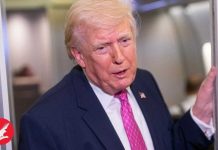
President Trump’s NATO exit threat is turning a Middle East war into a direct test of whether America’s alliances still serve U.S. interests—or just lock taxpayers into another open-ended conflict.
Story Snapshot
- President Trump said he is “strongly considering” U.S. withdrawal from NATO after European allies declined to support U.S. operations tied to the Iran war and the Strait of Hormuz.
- European governments cited legal and strategic limits, with leaders arguing they were not consulted and that “this is not Europe’s war.”
- The dispute centers on allied refusal to provide warships, basing, or overflight support as the U.S. pushes to reopen the Strait of Hormuz, a chokepoint for roughly 20% of global oil.
- Secretary of State Marco Rubio publicly backed a post-war reexamination of NATO ties, echoing “one-way street” concerns.
- With energy prices and war fatigue top-of-mind, MAGA voters are split between backing hardball leverage on allies and rejecting any drift into a new regime-change-style war.
Trump ties NATO membership to allied support in the Iran war
President Donald Trump escalated transatlantic tensions after an interview published April 1 in which he said U.S. NATO membership is “strongly” under review—describing it as “beyond reconsideration” in the context of allies refusing to assist U.S.-led efforts tied to the Iran war. Trump’s argument focused less on the familiar defense-spending dispute and more on reciprocity: if Washington shoulders burdens for allies, allies should step up when U.S. forces face a crisis.
The immediate flashpoint is the Strait of Hormuz, the vital sea lane Iran has threatened or restricted as the conflict intensified. U.S. officials sought help from European partners to deploy warships and support operations aimed at restoring free passage, but several governments declined. Reports describe refusals extending beyond ships to include access to bases and overflight permissions—support that, in earlier eras, often defined coalition warfare even when allies avoided direct combat.
Europe’s refusal: legal limits, strategy, and “not our war” politics
Prime Minister Keir Starmer defended NATO as “the most effective alliance ever,” while emphasizing Britain’s actions would be guided by British interests and that the U.K. was not joining the war. Other European leaders signaled similar caution, framing U.S. requests as escalation in a conflict they did not choose. That stance reflects a strategic calculation: joining offensive operations risks retaliation, domestic backlash, and legal constraints—yet it also fuels Washington’s perception that NATO solidarity becomes optional when America asks for help.
The refusal described in reporting wasn’t limited to one capital. Accounts cite Spain denying base use and restricting airspace, and other allies resisting participation. For conservative Americans who watched years of “coalition” branding mask U.S. leadership and U.S. costs, the split lands hard: the alliance that promises collective defense appears far less willing to share risk when the mission is not an unmistakable Article 5 response. Trump’s “paper tiger” line captures that perception, whether fair or not.
Why Hormuz matters: energy prices hit home fast
Hormuz is not a think-tank abstraction; it is an energy shock waiting to happen. Roughly one-fifth of global oil flows through that chokepoint, and disruptions can translate quickly into higher gasoline and diesel prices. That reality is driving a political squeeze on the White House. Voters who already resent inflation and fiscal mismanagement from prior years are not eager to pay “war tax” prices at the pump, especially if the conflict expands without a clear end-state or a defined constitutional lane for long-term commitments.
Rubio and the legal question: can a president leave NATO?
Secretary of State Marco Rubio added weight to the message by suggesting on March 31 that NATO ties should be reexamined after the war, reinforcing the administration’s view that the alliance has become a “one-way street.” Legal analysis in reporting indicates a president may attempt to invoke Article II authority to withdraw or dramatically reduce participation, but the durability of a full exit could collide with Congress. That uncertainty matters because the threat itself can change policy even without formal withdrawal steps.
MAGA’s split: reciprocity vs. “no new wars” expectations
For Trump’s base, the contradiction is real and difficult to ignore. The administration is pressing allies to help in a war many Americans want ended quickly, while Trump simultaneously argues he is using leverage to defend U.S. interests and avoid being taken advantage of. Reporting also notes Trump claimed Iran sought a ceasefire, though that claim was not independently verified in the same accounts. The policy question for conservatives is not whether NATO should be coddled, but whether this war’s objectives are tight enough to justify new, expensive entanglements.
On the constitutional and accountability front, the most important takeaway is that alliance pressure and wartime urgency can blur the line between defensive necessity and discretionary intervention. If the U.S. remains in an active conflict while threatening to dismantle or bypass a major treaty structure, Congress and the public will inevitably confront basic questions: what is the mission, what is the exit plan, and what obligations—formal or informal—are being created for Americans who did not vote for another long war?
Sources:
https://www.foxnews.com/politics/trump-nato-withdrawal-iran-war-allies
https://time.com/article/2026/04/01/trump-considering-pulling-us-out-of-nato-iran-war-legal-options/
https://www.livenowfox.com/news/can-trump-leave-nato