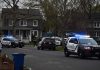
An 18-year-old arrested within 60 hours of a mass shooting that killed one and injured 23 at a public lake reveals how rapidly organized gang violence can escalate in suburban America.
Story Snapshot
- Jaylan Ahmad Davis, 18, arrested May 6 in connection with Arcadia Lake shooting that left one dead and 23 injured
- Police recovered ammunition from Davis’s residence that matched the shooting scene, corroborated by multiple witness identifications
- Law enforcement classified the incident as gang-related with additional suspects still at large and actively being pursued
- Davis faces felony assault with deadly weapon charges being upgraded to felony murder following the victim’s death
A Rapid Response That Raises Bigger Questions
The Edmond Police Department’s swift arrest of Jaylan Ahmad Davis demonstrates investigative competence, but it also exposes a troubling reality. Sixty hours from shooting to custody sounds impressive until you consider what those 60 hours mean: three full days when additional perpetrators remained free. Davis presented himself to police while the arrest warrant was still being finalized, a detail that complicates the narrative of law enforcement prowess. The real story isn’t the arrest. It’s what comes next.
Police deliberately withheld details about the other suspects, citing operational security. This restraint makes sense tactically but leaves the public with an unsettling void. A mass shooting at a public recreational facility doesn’t happen in isolation. The gang-related classification signals organizational structure, territorial conflict, or retaliation. When authorities confirm additional shooters remain unidentified, they’re essentially telling Edmond residents that the threat hasn’t been neutralized.
The Evidence Trail and What It Reveals
Ammunition recovered from Davis’s residence matched the shooting scene. Multiple witnesses identified him as a shooter. These are strong forensic and testimonial foundations for prosecution. The $1 million bond reflects the severity the court assigned to the charges and Davis’s assessed flight risk. Yet ammunition matching and witness identification, while compelling, don’t answer the critical question: who organized this incident? An 18-year-old operating alone doesn’t typically execute a coordinated mass shooting at a public gathering.
The victim, Aviana Smith-Gray, was also 18 years old. Two teenagers, same age, intersecting at Arcadia Lake in violence. The specificity of this detail matters. This wasn’t random. The fact that authorities upgraded charges to felony murder following her death indicates they recognized the gravity and premeditation involved. Felony murder charges carry weight that assault charges don’t, suggesting prosecutors believe this shooting involved criminal conduct beyond the moment of firing.
Gang Violence and Suburban Vulnerability
Arcadia Lake sits in Edmond, Oklahoma, part of the Oklahoma City metropolitan area. Suburban communities typically view themselves as insulated from gang violence, a phenomenon associated with urban cores. The Arcadia Lake shooting challenges that assumption. Public recreational facilities, by definition, lack the security infrastructure of controlled environments. Families camping and enjoying outdoor spaces become vulnerable when organized violence erupts at those locations.
The gang-related classification carries implications beyond the immediate incident. If this shooting stems from organizational conflict, retaliatory violence becomes a genuine risk. Additional suspects remain at large, meaning the underlying dispute that sparked this violence likely remains unresolved. Law enforcement’s silence about these suspects reflects operational necessity, but it also leaves community members unable to assess their actual risk level.
The Unfinished Investigation and Public Safety
Jaylan Ahmad Davis sits in custody on $1 million bond, charged with felony assault with deadly weapon and facing felony murder charges. The investigation, however, remains active and incomplete. Police confirmed additional perpetrators exist but disclosed nothing about their identities, number, or current whereabouts. This creates a peculiar situation where one suspect faces serious charges while the investigation’s scope remains undefined.
The 23 injured individuals receive minimal mention in official statements. Their conditions, recovery trajectories, and long-term impacts remain largely unreported. A mass shooting produces casualties that extend far beyond fatalities. Physical injuries heal at different rates. Psychological trauma persists longer. These 23 people and their families now carry the aftermath of violence they didn’t initiate and couldn’t prevent.
What the 60-Hour Timeline Actually Means
Law enforcement served search warrants within 24 hours, obtained an arrest warrant within 48 hours, and arrested Davis within 60 hours. This demonstrates coordination and investigative efficiency. It also demonstrates that evidence collection, witness interviews, and warrant justification happened remarkably fast. Speed in investigation can be a virtue when it leads to accurate arrests. It can also reflect confirmation bias when authorities pursue the most obvious suspect without fully exploring organizational structure.
The fact that Davis presented himself to police while the warrant was being processed introduces ambiguity. Did he surrender voluntarily, or did he turn himself in after learning he was identified? The distinction matters for understanding his intent and potential cooperation with investigators. Police haven’t clarified this point, maintaining operational discretion over details that might assist the remaining suspects.
The Broader Pattern and What Comes Next
Arcadia Lake now joins the list of public spaces transformed by violence. The shooting will likely reduce recreational facility usage, prompt security assessments, and generate community anxiety about public gathering spaces. These secondary effects compound the primary trauma of one death and 23 injuries. Suburban communities expect safety precisely because they’ve positioned themselves as alternatives to urban environments. When that expectation shatters, the psychological impact reverberates across entire regions.
The felony murder trial will attract regional attention. The outcome will influence sentencing precedents for mass shooting incidents in Oklahoma. Additional arrests could lead to coordinated trials that expose the organizational structure behind the violence. Or the investigation could stall if additional suspects successfully evade capture or if witness cooperation falters under pressure or fear. The next 60 hours, and the 60 hours after that, will determine whether this case represents law enforcement success or a cautionary tale about incomplete investigations.
Sources:
Suspect arrested in Arcadia Lake mass shooting that killed 1, injured 22