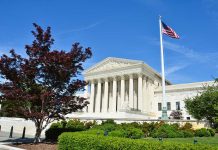

The Supreme Court is set to review President Trump’s executive action on birthright citizenship after a Reagan-appointed federal judge blocked the policy, setting up a constitutional showdown that could reshape American immigration law.
Story Overview
- Reagan-appointed Judge John Coughenour blocked Trump’s birthright citizenship executive action in January
- The Supreme Court will now review this constitutional challenge
- Judge with four decades of experience took strong stance against the policy
Federal Judge Blocks Trump’s Birthright Citizenship Order
Judge John Coughenour, appointed by President Reagan and serving over four decades on the federal bench, became the first federal judge to issue an injunction against President Trump’s executive action targeting birthright citizenship. The experienced jurist did not hold back his criticism of the policy, suggesting it crossed constitutional boundaries that even a conservative-appointed judge could not overlook.
Constitutional Battle Heads to High Court
The Supreme Court’s decision to take up this case represents a critical moment for constitutional interpretation. Trump’s policy aims to address what many conservatives view as abuse of birthright citizenship by illegal immigrants, but faces opposition from those who argue the 14th Amendment provides clear protection. The case will test whether executive action can modify constitutional provisions without going through the amendment process.
Conservative Legal Principles at Stake
This legal battle highlights tensions within conservative constitutional thinking. While many Trump supporters favor restrictions on automatic citizenship for children of illegal immigrants, strict constitutionalists argue that executive overreach threatens the rule of law regardless of policy goals. Judge Coughenour’s four-decade tenure and Reagan appointment lend weight to concerns about constitutional boundaries, even when pursuing conservative immigration objectives.
The Supreme Court’s eventual ruling will determine whether Trump’s approach represents legitimate executive authority or unconstitutional overreach. This decision could establish precedent for how future presidents address immigration policy through executive action, making it one of the most consequential cases of Trump’s second term.
Sources:
The Supreme Court will decide whether Trump’s birthright citizenship order violates the Constitution