When violence arrives at a workplace, outcomes hinge on minutes and on who is positioned to act; in Tampa, a security officer’s on-site response ended an attack that began with a vehicle breach and a rifle, leaving two people dead but preventing a far wider toll.
At a Glance
- Authorities say a gunman crashed into a Tampa-area office campus at midday, shot and killed a woman, and was then shot by an armed security guard.
- 911 calls began around 12:11 p.m.; the guard engaged the suspect inside the cafeteria within minutes, and the suspect later died at a hospital.
- Four additional people sustained non-life-threatening injuries; roughly 3,200 workers were on campus during the incident.
- The rapid, large-scale response—367 deputies and allied agencies—cleared a multi-building complex in about two and a half hours.
What Happened: A Minute-by-Minute Picture
According to the Hillsborough County Sheriff’s Office, the attack unfolded during the lunch hour at the Citibank Center complex outside Tampa. Multiple 911 calls hit the system at approximately 12:11 p.m. as a small sedan drove over medians and through a secure fence line, crashing into an outdoor seating area where employees were eating. The driver exited with a rifle and shot a woman. Within several minutes, an armed campus security officer confronted the suspect inside the cafeteria and fired, striking him; the suspect was transported to Tampa General Hospital and later pronounced dead. Officials reported one woman killed by the gunman, the suspect deceased from the guard’s fire, and four additional people treated for non-life-threatening injuries.
The sheriff’s office characterized the deployment as an “all hands” posture: 367 deputies, including SWAT elements, supported by fire and federal partners, moved to secure and clear a multi-structure campus hosting about 3,200 workers at the time. Investigators began the laborious process of canvassing witnesses, collecting video, and reconstructing the sequence from surveillance, radio, and emergency medical timelines. That level of response—measured here in hundreds of sworn personnel and hours of systematic clearance—tracks with what large, modern business campuses require when active gunfire has been reported.
The Security Intervention: What We Know and How It Fits the Data
Officials have credited the on-site armed security guard with stopping the shooter before he could continue firing. That assessment aligns with the observed timeline: first 911 calls at about 12:11 p.m., engagement with the suspect reported within minutes in the cafeteria, and no subsequent reports of continued gunfire after that confrontation. The point is not rhetorical. In the national record of active-shooter incidents, private security engagement is uncommon. FBI reporting over recent years notes that security personnel intervene in only a small share of such attacks; while there were hundreds of active-shooter incidents from 2020 through 2024, security interventions accounted for roughly a few percent of case outcomes, with some resulting in the shooter’s death and others in apprehension.
That rarity matters for interpretation. A visible case in which an armed guard acts quickly can create the impression that this is the typical terminating mechanism in workplace attacks; it is not. The base rate remains low. Yet where security is trained, present in the threat area, and empowered to respond, the local effect can be decisive—as it appears to have been in Tampa given the narrow casualty count relative to the number of potential victims gathered in a cafeteria at midday.
Mechanics of the Attack: Vehicle Breach, Outdoor Victim, Indoor Engagement
The attack followed a familiar tactical sequence seen in a subset of workplace shootings: an initial perimeter breach using a vehicle, immediate proximity to people in a public-facing or semi-public space, and the rapid transition from outdoor assault to an interior area where more targets may be present. Video reviewed by local outlets appears to show the suspect exiting the car with a rifle and moving toward seated individuals, which is consistent with the account that the first fatality occurred at or near the outdoor seating area before the attacker entered the cafeteria itself.
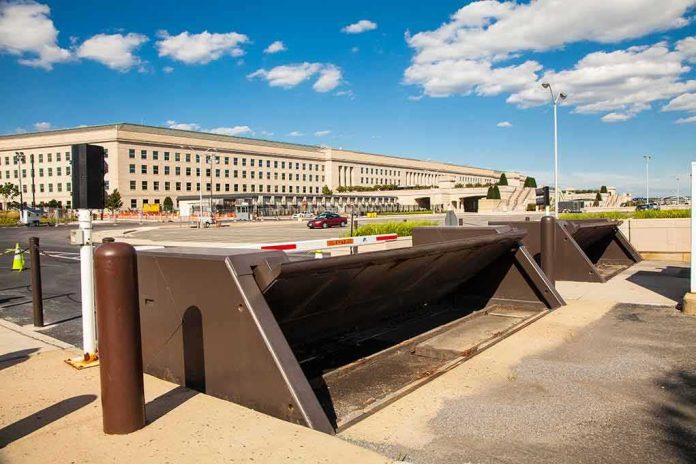
From a protective design standpoint, this sequence underscores why modern campuses layer physical controls (bollards, reinforced gates), procedural controls (badge access, lunch-hour staffing patterns), and human controls (trained security with direct radio links to dispatch). A determined attacker can defeat a single layer—here, a fence and landscaping medians—but layered defenses can buy time for people to move, for communications to propagate, and for a trained responder to break the attacker’s momentum.
Response and Containment: Scale, Timing, and Clearance
Large, multi-structure campuses present two operational problems once gunfire is reported: finding the threat and accounting for people. Hillsborough County leaned on mass to solve the first and patience to solve the second. Three hundred sixty-seven deputies, plus SWAT, methodically cleared buildings described as six or seven structures of multiple stories, concluding the primary sweep in roughly two and a half hours. That timeline is consonant with doctrine: once the shooter is neutralized and no additional fire is heard, the mission shifts from immediate interdiction to deliberate search, casualty care, and evidence preservation.
Accounting for approximately 3,200 employees—scattered by flight into hallways, parking areas, and nearby businesses—requires structured reunification sites, quick medical triage, and information control robust enough to discourage rumor while investigators confirm identities and injuries. Officials reported four people with non-life-threatening injuries, treated locally or transported, and maintained confidentiality on names pending notifications; this is standard practice and not evidence of ambiguity about the casualties.
🚨 Shooting at Citibank's office complex in Tampa, Florida 🇺🇸
2 dead including the suspect, 4 hurt (non-life-threatening). 367 deputies cleared the building. Police call it "a targeted incident." 🙏
When will this stop?#Tampa #Citibankhttps://t.co/bbbaYTUTE0
— Keiwai_C (@keiwai_c) November 5, 2026
Where Public Understanding Often Goes Awry
Three dynamics routinely distort how events like this are perceived. First, early witness impressions about shot counts, numbers of assailants, or custody status often diverge from the settled record; that is a feature of human attention under stress, not bad faith. Second, a sheriff’s social media post labeling an incident “targeted” may collide with an investigator’s caution in a briefing—because motive and relationships are analytic conclusions, not observations, and they take time to substantiate. Third, graphic video creates a narrative gravitational pull that can overshadow the base rates. The correct synthesis is simple: in Tampa, the sequence of acts and outcomes is clear and consistent across agencies and outlets; questions about motive and relationships, if any, sit downstream of those settled facts.
What This Means for Workplace Risk Management
Three lessons deserve emphasis. First, perimeter hardening and vehicular barriers around congregation points—courtyards, outdoor seating, lobby-adjacent cafés—are not cosmetic. They are the difference between an attacker entering a dense crowd in seconds and being forced to dismount further away, bleeding time to move and aim. Second, visible, trained, and well-integrated on-site security compresses the time from first shot to first countermeasure. That compression, measured in minutes here, coincided with the absence of additional fatalities after the guard’s engagement. Third, communications discipline—redundant channels from employees to security to 911—keeps evacuations controlled and enables law enforcement to scale the response appropriately. The Tampa case illustrates each principle under real-world stress.
Sources:
washingtontimes.com, wtsp.com, cbs19.tv, cnn.com, tcpalm.com