A gunman walked into a seasonal costume shop inside a suburban California mall on a Friday night before Halloween and left one woman dead, six other people wounded, and a community asking how a store built for children’s costumes and plastic pumpkins became a crime scene.
Key Points
- Seven people were shot inside the Spirit Halloween store at Solano Town Center in Fairfield, California, around 8:30 p.m.; one victim died and three others were listed in critical condition.
- Fairfield police identified the deceased victim as Constance Hages, a 31-year-old pregnant woman, in follow-up reporting after the initial scene statement.
- No suspect has been publicly identified or detained; the FBI joined local police in an active, ongoing investigation that authorities describe as a targeted shooting.
- Officials stated there is no continuing threat to the public even as detectives continue interviewing witnesses and working the scene.
- The episode sits inside a larger, decades-long debate over how “mass shooting” gets defined and why shopping malls remain persistently vulnerable soft targets.
What Happened Inside the Store
Fairfield police said officers responded to the Spirit Halloween location inside Solano Town Center at roughly 8:30 p.m. after reports of gunfire. In a statement posted to Facebook, the department said seven people had confirmed gunshot wounds, and that “one of those victims has tragically died from their injuries,” while the rest were transported to area hospitals, at least three of them in critical condition. The store, which occupies a former Best Buy space inside the mall, was still open to shoppers browsing for last-minute costumes when the shooting began. A witness told reporters his wife was inside retrieving an item when she heard multiple gunshots, saw people running, and dropped her keys while fleeing the building.
The response drew a heavy multi-agency presence, including Fairfield police, the Solano County Sheriff’s Office, and California Highway Patrol, alongside paramedics who treated the wounded at the scene before transport. Police described the location as “a very active crime scene” in the hours immediately following the shooting, with detectives interviewing witnesses and working to piece together what had occurred inside a retail space that, by its nature, offers little in the way of surveillance infrastructure or security staffing compared with larger anchor stores.
The Victim and the Investigation’s Status
Follow-up reporting identified the woman who died as Constance Hages, 31, who was pregnant at the time of the shooting. Additional accounts indicated at least one other victim, a 19-year-old man, remained in critical condition in the days following the attack. Fairfield police have not released the identities of the other five people wounded, a withholding consistent with standard practice while next-of-kin notifications and medical privacy protections remain in effect. The gap between the department’s first public statement — which offered only a raw casualty count — and later reporting that supplied names, ages, and conditions illustrates how any initial police account of a shooting is necessarily provisional; it reflects what responders know in the first hours, not the full picture that typically emerges over subsequent days.
The FBI’s Sacramento field office joined the investigation, a step that signals the scale and seriousness local authorities attached to the case rather than any formal change in jurisdiction. NBC News reported that investigators believe the shooting was targeted rather than random, though the specific basis for that assessment — whether it rests on witness accounts, the shooter’s apparent behavior, or physical evidence recovered at the scene — has not been detailed publicly. No suspect has been named, located, or taken into custody, and Fairfield police have continued to describe the search for the gunman as an active, ongoing manhunt. Chief Dan Marshall told reporters that despite the unresolved search, officials do not believe there is a continuing threat to the public.
Why “Mass Shooting” Is Harder to Define Than It Sounds
At seven people shot, the Fairfield incident meets the threshold used by the Gun Violence Archive, which classifies any event with four or more people shot or killed — not counting the shooter — as a mass shooting, a purely numerical standard with no requirement around motive, location, or weapon type. That is not, however, a universal definition. The FBI has no formal definition of “mass shooting” at all; its closest analogue, “mass murder,” requires three or more deaths and excludes incidents, like this one, where the toll is overwhelmingly injuries rather than fatalities. Academic reviews of the competing databases — Gun Violence Archive, the Stanford Mass Shootings in America project, FBI Supplementary Homicide Reports, and others — consistently find that they produce substantially different national counts each year precisely because they disagree on whether to count injuries, how to treat gang or domestic violence, and what time window constitutes a single incident. A Congressional Research Service review tallied 1,965 mass shootings under the Gun Violence Archive’s broad standard between 2014 and 2023 alone, a figure that would look dramatically smaller under narrower, fatality-only definitions. The practical upshot for the public: when officials, reporters, and commentators all use the same two words, they are frequently describing different thresholds of harm.
A 19-year-old man remains in critical condition Sunday following the mass shooting at the Solano Town Center on Oct. 30, Fairfield police said in a Sunday evening update. pic.twitter.com/cDsoq7cP7o
— CBS Sacramento (@CBSSacramento) November 2, 2026
Soft Targets, Thin Security
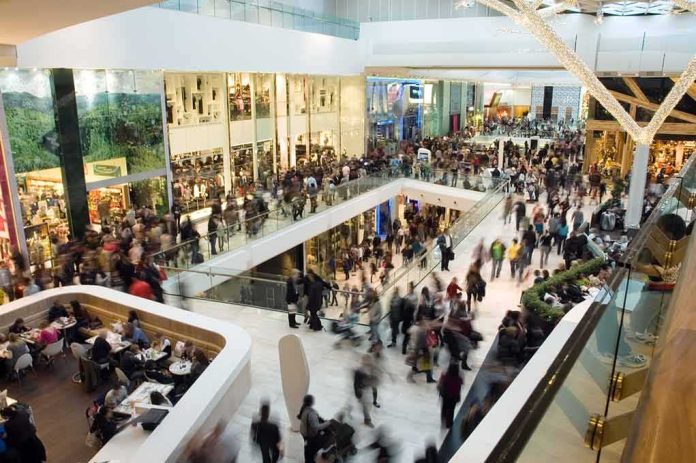
Shopping malls occupy an uncomfortable position in American public-safety planning. Research from the Department of Justice’s National Institute of Justice has long flagged that private security spending at malls lagged well behind the threat environment even after the post-9/11 push to harden other soft targets, leaving large, open-access retail environments with limited emergency preparedness relative to their foot traffic. RAND’s analysis of attacks on what security planners call “soft targets and crowded places” — malls, houses of worship, restaurants, nightclubs — found these venues suffer the highest average lethality precisely because their appeal depends on easy, unscreened public access, which is the same quality that makes them difficult to defend without undermining the business model itself. A seasonal costume retailer tucked into a mall corridor represents close to the least-defended end of that spectrum: minimal staffing, no metal detection, and crowds moving in and out freely on one of the busiest shopping nights of the year.
What Comes Next
The practical resolution of this case now depends on what detectives can extract from witness interviews, surveillance footage from the mall and surrounding businesses, and forensic evidence from the scene — none of which has been made public while the investigation remains open. A suspect identification, an arrest, and eventually a charging document would convert the current account from an active police narrative into a matter of public record subject to court scrutiny. Until then, the verified facts remain what Fairfield police and corroborating reporting have established: seven people shot, one of them fatally, inside a Halloween store on a Friday night, and a manhunt for the person responsible that, as of this writing, has not produced a named suspect.
Sources:
thereporter.com, theolympian.com, pressdemocrat.com, nbcnews.com, newsweek.com, kcra.com, yahoo.com