
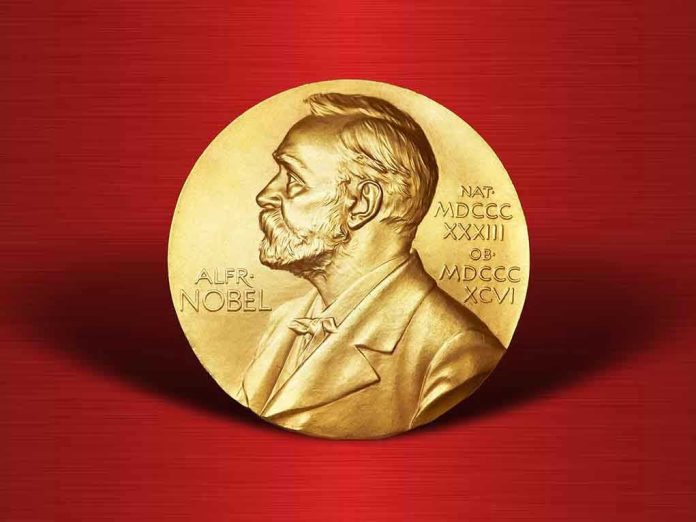
At 11:00 a.m. in Oslo, the Norwegian Nobel Committee unveiled the 2026 Nobel Peace Prize laureate as planned, turning weeks of guesswork into one decisive announcement.
Story Snapshot
- The Nobel Peace Prize 2026 was announced Friday at 11:00 a.m. Central European Summer Time in Oslo.
- The reveal came at the Norwegian Nobel Institute, following the tradition of a single, official disclosure.
- Nominations and deliberations remain sealed for 50 years under Nobel rules, fueling annual speculation before the reveal.
- The award ceremony is scheduled for December 10 in Oslo, Norway.
Official Reveal In Oslo Kept To The Published Schedule
The Norwegian Nobel Committee announced the 2026 Nobel Peace Prize at 11:00 a.m. Central European Summer Time on Friday, October 9, at the Norwegian Nobel Institute in Oslo. The event matched the published schedule on official Nobel channels and followed the standard press conference format. The committee delivered a single, formal decision, ending public guessing and betting for the year. The moment drew global media attention and live streams from outlets that planned coverage in advance.
Organizers had highlighted the date and time for days, and the announcement began on time. The Norwegian Nobel Institute listed the press event in its calendar, while the Nobel Foundation’s site promoted the Peace Prize slot within the broader week of Nobel reveals. Media advisories and event pages guided audiences to watch live on official digital platforms, reinforcing transparency of the reveal moment, even as the selection process itself remains confidential.
Why The Process Stays Secret For 50 Years
Nobel rules keep nominations and committee discussions sealed for half a century. The Nobel Foundation explains that secrecy helps protect nominees who do not win and shields judges from outside pressure. That design preserves independence but also guarantees a yearly cycle of rumors and predictions before the announcement. Only the final choice becomes public right away; the roster of who was in the running and why will not be opened until decades later.
This long-standing policy shapes how the Peace Prize is covered. Reporters track hints from known nominators and past patterns, yet no official shortlist exists. The committee neither confirms nor denies names ahead of time. As a result, the announcement is not a step in an open contest but the last word from an independent body. The process may frustrate some, but it aims to reward real work for peace without lobbying or media campaigns steering the outcome.
What Comes Next For The Laureate And The World
The Peace Prize ceremony will take place on December 10 in Oslo, aligning with the tradition that honors Alfred Nobel’s legacy. After the announcement, attention shifts to the laureate’s plans, platform, and any travel or security issues tied to receiving the award. Institutions in Oslo and museums linked to the prize often host programs to explain the year’s choice and its context, helping the public connect the selection to current global tensions and hopes.
International judge Navi Pillay was applauded by colleagues as she gave her first public reaction to her Nobel Peace Prize win, and joked about ‘sharing it with Trump’.
Pillay only learned the news after the announcement because the Nobel committee was unable to reach her. pic.twitter.com/AgT0Xqy9gh
— Al Jazeera English (@AJEnglish) October 9, 2026
For readers across the political spectrum, the day underscores a simple truth: one independent committee can still make a clear decision on a hard global question. Many Americans feel their own government is stuck and serves insiders first. The Nobel announcement, for all its secrecy, shows a firm process that ends with accountability in public. People can agree or disagree with the pick, but the decision is made, stated, and owned in the open.
Sources:
youtube.com, nobelpeacecenter.org, nobelpeaceprize.org, nobelprize.org, en.ara.cat, yahoo.com, nobelprizemuseum.se