Stored fireworks exploded beside a packed church in central Mexico, killing at least 10 people and injuring more than 60 during a village festival.
Story Snapshot
- Authorities reported at least 10 dead and 64 injured after the blast in Temascalcingo.
- Fireworks stored next to the Nuestra Señora de la Luz church detonated during patron saint festivities.
- State officials opened an investigation; the precise cause has not been confirmed.
- Mexico has a long record of deadly festival fireworks accidents tied to storage and oversight gaps.
Deadly Blast During Patron Saint Festivities
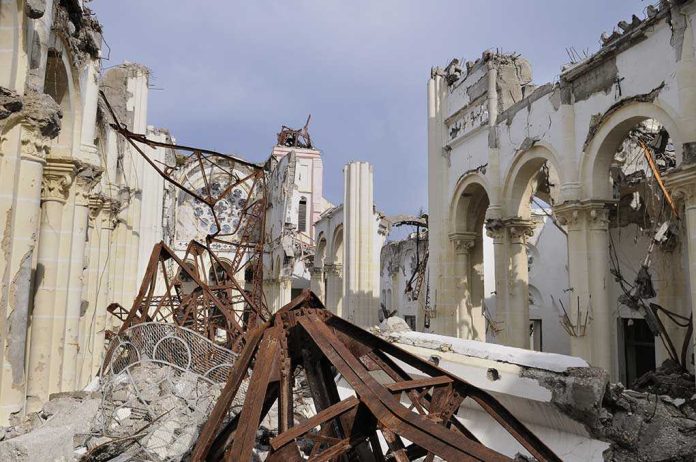
Local officials said stored pyrotechnics exploded Saturday night in Santa María Canchesdá, a community in Temascalcingo, in the State of Mexico. The blast killed at least 10 people and injured 64 others, striking as residents gathered near the Nuestra Señora de la Luz church for a patron saint celebration. Photos and video from the scene showed heavy damage near the church grounds and frantic rescue work. Authorities began a criminal inquiry to determine how the materials were stored and what triggered the detonation.
Witness accounts and early reports described festival fireworks close to crowds and buildings. Some outlets said the fireworks were kept inside or next to the church complex when they went off, which fueled the scale of destruction and the high casualty count. The explosion occurred in the evening, when families were gathering for displays tied to the festival. Officials did not immediately release identities of the victims, and hospitals treated dozens for burns, blast injuries, and smoke inhalation.
What Authorities Are Probing Now
Investigators are looking at storage practices, permits, and whether ignition came from a nearby display or an accident among the stored devices. The Mexico State government confirmed the casualties and said rescue teams, police, and medical staff responded within minutes. The State Attorney General’s Office opened an investigation to gather forensic evidence, interview organizers, and map the blast site. Officials urged the public to avoid speculation while they confirm the sequence of events.
Authorities will likely review if organizers followed national rules for handling explosives. Mexican law places the Defense Ministry in charge of permits and oversight for fireworks manufacture, transport, storage, and use. Local leaders have also pushed reforms to tighten safety at festivals. Even so, enforcement can be uneven across towns where fireworks are central to cultural and religious life. These checks often lag when communities rely on tradition and volunteers to run events.
A Recurring Safety Gap With High Costs
Mexico sees repeated festival blasts when fireworks are stored in tight spaces, handled informally, and used near crowds. Similar disasters in recent years have killed and injured many, including children, often at churches or village squares. Officials and citizens mourn the losses after each event. Then attention turns to accountability for storage, distance from people, and whether permits existed or safety rules were ignored in practice despite clear laws on the books.
In the Mexican state of Mexico, 10 people were killed and 64 were injured in an explosion involving fireworks – N+
Among the injured were two priests. The incident occurred near a church in the Santa Maria Canchesda settlement, the day before a celebration in honor of the Virgin… pic.twitter.com/VtzsIGLuaX
— 𝕊𝕡𝕣𝕚𝕟𝕥𝕖𝕣 𝕻𝕣𝕖𝕤𝕤 (@SprinterPress) September 7, 2026
The pattern fuels a wider worry shared across politics: basic safety depends on rules that many officials announce but fail to enforce. People expect competent oversight that protects families without erasing local traditions. This tragedy again raises simple questions that matter everywhere. Who signed off on storage? Who checked distances and exits? Who made sure trained crews handled live fireworks? Answers will show if this was a lone mistake or another sign of a system that looks away until it is too late.
What To Watch Next
Families want timely, transparent updates on victims, causes, and any charges. Investigators will publish blast forensics and permit findings once complete. State leaders may propose tighter checks for church and town events, like certified handlers, clear buffer zones, and limits on on-site storage. Communities can honor tradition and still set firm safeguards. The test will be whether officials back words with action that prevents the next avoidable loss while respecting local faith and culture.
Sources:
youtube.com, pbs.org, aljazeera.com, amp.dw.com