With morgues overwhelmed and thousands still missing, Nepal has started recorded burials of unidentified flood victims after collecting DNA.
Story Snapshot
- Officials report a death toll nearing 800, with thousands missing as searches continue.
- Authorities are burying unidentified bodies after taking DNA and logging grave locations.
- Chitwan district set a designated burial site in Devghat and is tracking each interment.
- Limited morgue capacity and public health risks forced this temporary burial step.
Casualty Count Rises As Searches Push On
Nepal’s disaster count climbed fast over several days as rescue crews reached new areas. By August 30, reporting tied to Nepal’s disaster ministry put the death toll at about 781, with roughly 2,500 people still missing. Earlier tallies showed 95 dead on August 26 and 469 by August 28, underscoring how quickly numbers changed as officials gained access to remote valleys. Police-led teams continue to search flooded zones and riverbanks as rain and rough terrain slow progress.
Authorities say the large number of unrecovered people reflects violent flash floods and debris flows after a Himalayan glacier failure. Rescue workers describe blocked roads, washed-out bridges, and unstable slopes that complicate access. Helicopters and ground teams have ferried survivors and remains where possible. Local administrations have coordinated food, shelter, and medical care for displaced families. Officials warned that full accounting will take time as communities report missing relatives and submit descriptions and photos.
Why Temporary Burials Started In Chitwan
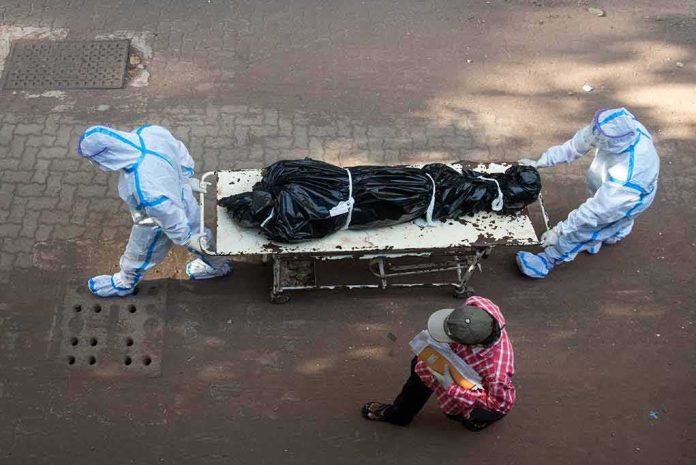
Chitwan district faced more bodies than its morgue could store, with decomposition advancing in the heat. District leaders approved temporary burials to reduce health risks while keeping future identification possible. Officials took DNA samples before interment and marked each burial site. Reporting describes about 96 bodies buried on Saturday and more than 100 planned Sunday, reflecting a controlled but urgent process. The goal is to protect communities now and allow families to claim loved ones later through DNA matches.
Chitwan’s District Security Committee chose Devghat in Bharatpur Metropolitan City-1 for the burials. The chief district officer, Ganesh Aryal, and police organized documentation of each set of remains. Local coverage says the plan followed the Unidentified and Unclaimed Bodies Management directive and included recording grave numbers for later exhumation if a match is made. The district logged locations and identification markers above and below ground to keep clear records for investigators and families.
How DNA And Records Protect Family Rights
The burial protocol relies on standard disaster victim identification steps used worldwide. Teams gather postmortem details and DNA from remains, then compare them later with family samples to confirm identity. Reporting from the scene says India sent a forensic team to help process DNA due to the large caseload and limited local capacity. This approach aims to balance speed, dignity, and accuracy. It supports family rights to a named burial while reducing immediate health risks from unrefrigerated remains.
Chitwan’s Devghat forest is being used for mass burials after the August 26 flash floods in Nepal. Authorities have buried 96 unidentified bodies and are collecting DNA samples to help families identify victims later.
VOICEOVER: Suha Nisviya S A
PRODUCER: Lavanya R
VIDEO… pic.twitter.com/mdctZGRgl3— The Federal (@TheFederal_News) August 31, 2026
International guidance stresses tagging bodies with unique identifiers, recording where each was found, and preserving evidence for exhumation when needed. Nepal’s approach to log grave locations and maintain DNA samples aligns with those practices in mass-fatality events. Officials caution that totals will continue to shift as more areas become reachable and as DNA work confirms identities. The priority now is to stabilize conditions, complete safe burials where needed, and match families to their loved ones as labs process results.
Sources:
youtube.com, khaleejtimes.com, thejournal.ie, usnews.com, english.news.cn, humanitarianlibrary.org