
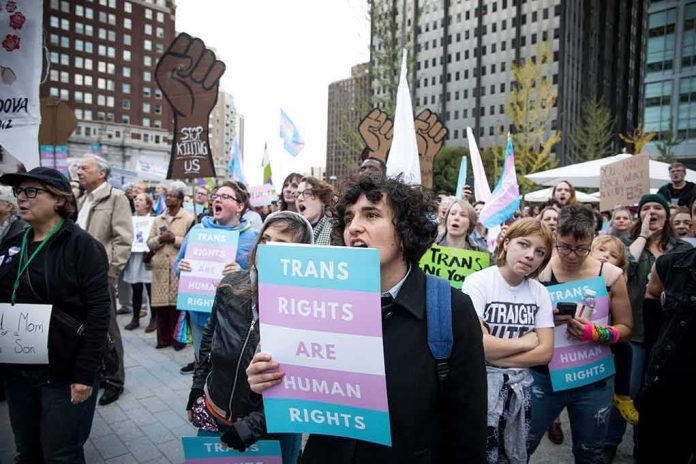
Coalitions do not break apart over abstractions; they fracture when incentives, audiences, and risks realign. The Log Cabin Republicans’ decision to drop transgender advocacy and recast itself as an LGB organization is best understood as a strategic retrenchment in a party where support for even marriage equality has fallen sharply. It is not an outlier but a case study in how advocacy groups adapt when the ground under them shifts.
At a Glance
- Log Cabin Republicans’ board voted to narrow its mission to sexual orientation and conservative values, explicitly defining itself as an LGB advocacy group.
- The shift tracks with a multi-year decline in Republican support for LGBTQ rights, including a steep drop in GOP backing for same-sex marriage.
- The group frames the move as pro-child and “not anti-trans,” while critics call it a betrayal of transgender people and a reversal of prior inclusive positions.
- This is a familiar pattern in movement politics: coalitions widen in ascendant periods and constrict when political headwinds rise.
What Changed: From Coalition Umbrella to Narrower Mandate
By board vote, Log Cabin Republicans (LCR) refined its national advocacy scope to concentrate on sexual orientation and conservative principles—its leaders’ words, not a gloss—formally stepping back from transgender rights. Public statements describe the organization going forward as an LGB advocacy group and emphasize that the decision followed internal membership discussions. In plain terms, LCR is contracting from a once-broader LGBT umbrella to a mission it believes is more congruent with today’s Republican base and donor reality.
Coalition contraction usually happens when the political cost of a broad agenda exceeds the access it buys. In this case, that calculus is easy to see: Republican support for same-sex marriage—once a slim majority in the party—has fallen into the 30s across several national measures, with parallel declines on other LGBTQ indicators. This is not a debate isolated to transgender policy; it is evidence of a wider rightward movement within the GOP on sexuality and gender norms.
The Mechanism: Mission Drift, Then Mission Discipline
Advocacy organizations face a predictable tension. Broader umbrellas can generate moral coherence and bargaining power, but they also require defending the hardest edge of the coalition’s platform in the harshest forum available: polarized party primaries and legislative fights. For LCR, the newly disfavored edge is transgender issues—particularly youth medical care, school policy, and sports—topics that conservative media and lawmakers have made central. LCR’s own materials underscore this emphasis and insist the shift is “not anti-trans,” casting it instead as a reorientation around children’s welfare and “common-sense” boundaries.
Critics reply that you cannot separate the letters without injuring the people represented by the one removed; they frame LCR’s move as pulling up the ladder after climbing it under a broader LGBT banner. That critique also notes the organization’s prior statements that embraced inclusion and equal treatment for transgender Americans, highlighting a genuine reversal in institutional stance, not a mere messaging tweak.
The Backdrop: Opinion Trends and GOP Incentives
The through-line is opinion movement inside the Republican Party. Multiple sources report a marked slide in GOP support for same-sex marriage from majority levels in 2021–2022 to roughly a third today, with similarly low Republican acceptance of changing one’s gender. As coalition politics goes, declining base support for a once-settled right compresses the space for adjacent claims; organizations pay the price if they insist on defending the frontier position while trying to cultivate influence with party power brokers.
Historically, LGBTQ coalition-building has waxed and waned in response to this kind of pressure. Periods of expansion—when public tolerance rises and legal wins accumulate—encourage a movement to speak with one voice. Contraction arrives when backlash organizes and the marginal issue becomes the rhetorical fulcrum for undoing gains. That is the logic LCR is acting on: protect the core, shed the flank, preserve access. Whether that trade actually preserves anything durable is the open question.
Continuity and Reversal: What LCR Says Now Versus Then
LCR’s leaders emphasize continuity on two points: equal dignity for all Americans and a belief that conservative arguments for liberty can carry LGB rights within the GOP. They also stress that transgender people are not excluded from membership, only from the organization’s advocacy agenda. That distinction is meaningful inside organizations—it governs which fights receive staff time, political capital, and money—but to outside observers it reads as fracture, especially against earlier LCR materials that situated T rights alongside LGB claims in areas like adoption and nondiscrimination.
This is why reactions split so sharply. For movement critics, the past is prologue: a group that once defended a broader coalition now deprioritizes the most vulnerable subset amid a partisan turn against them. For LCR’s current board and members who favored the change, the reversal is pragmatic triage in a harsher environment, aimed at preserving standing to argue for LGB rights within a party where even marriage is re-litigated in rhetoric and, in some states, in resolutions.
The Log Cabin Republicans voted to remove transgender advocacy from their national organization mission. Board members decided to focus the group exclusively on sexual orientation and conservative political principles. https://t.co/xhrjdYPAN6
— The Washington Times (@WashTimes) August 24, 2026
Strategic Consequences: Access, Tradeoffs, and the Risk of Isolation
What does the new stance buy? Potentially, easier access to Republican electeds who are dug in on transgender policy but still persuadable—or at least reachable—on LGB questions. It may also steady donor relationships that had grown wary of the political baggage attached to trans debates. The cost is equally legible: diminished credibility with transgender conservatives and allies, a harder sell to corporate partners who prefer broad inclusion, and censure from the rest of the LGBTQ advocacy ecosystem that sees unity as a nonnegotiable condition of progress.
There is a deeper risk to mission contraction that veteran organizers recognize. When a movement subset accepts the opponent’s frame for where the “reasonable middle” lies, the middle often moves again. If the GOP’s internal consensus continues drifting against LGBTQ rights broadly, then today’s pragmatic compromise could yield little protection tomorrow. The downward trend in Republican support for same-sex marriage is the canary here; if a settled right can erode, narrower claims do not become safer simply by narrowing them.
How to Read This Moment
Seen in isolation, LCR’s announcement could be misread as an internal housekeeping note. It isn’t. It is a signal of where the party’s social coalition now exerts pressure and where an allied advocacy group believes it must place its chips to survive. The organization asserts it can still argue for inclusion by speaking a language Republican leaders will hear; its critics argue that abandoning the “T” concedes the very ground on which those leaders test the sincerity of inclusion claims. Both assessments share an assumption that matters: this is not a stable equilibrium.
Sources:
cnn.com, yahoo.com, nytimes.com, news.gallup.com, logcabin.org, en.wikipedia.org, nbcnews.com