Rep. Ilhan Omar’s floor-shouting during President Trump’s 2026 State of the Union turned a constitutionally serious night into a fresh flashpoint over borders, law enforcement, and basic respect for American institutions.
Quick Take
- Rep. Ilhan Omar disrupted President Trump’s Feb. 25, 2026 State of the Union while he discussed immigration enforcement and sanctuary-city policy.
- Rep. Rashida Tlaib also protested during the address, adding to a broader wave of Democratic opposition, including reported boycotts.
- Omar’s invited guest, Aliya Rahman, was removed from the gallery and arrested by Capitol Police after standing silently, then charged with “Unlawful Conduct.”
- The episode collided with public anger and grief in Minnesota after two U.S. citizens were killed by federal agents during an immigration operation in Minneapolis.
- Key facts are still missing, including Capitol Police’s detailed justification for the arrest and what conduct triggered the charge beyond “standing.”
Disruptions Break Out During Immigration Portion of the Speech
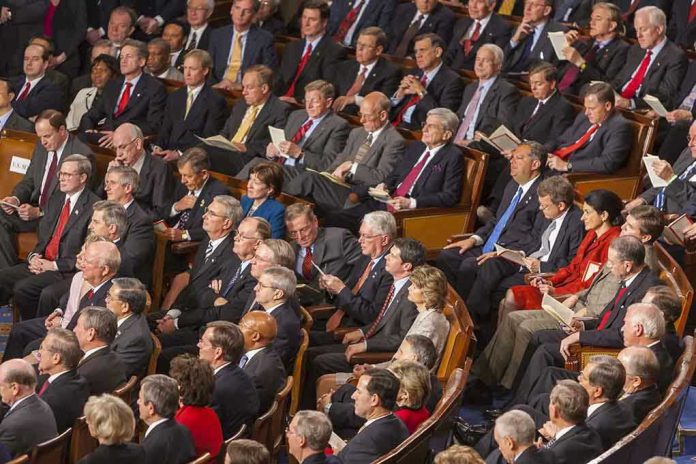
President Donald Trump delivered the State of the Union on February 25, 2026, and Rep. Ilhan Omar (D-Minnesota) repeatedly interrupted as he addressed immigration enforcement and sanctuary-city policy. Reports describing the moment indicate Omar shouted objections during that segment of the address, with Rep. Rashida Tlaib (D-Michigan) joining in. The disruption stood out because the State of the Union is a formal constitutional proceeding, not a typical campaign-stage event.
Video coverage and reporting framed the scene as a direct, vocal confrontation rather than a silent protest. That distinction matters because lawmakers have wide latitude to express dissent, but Congress also relies on shared rules and decorum to function in public view. When members turn a national address into a shouting match, the public’s focus shifts away from policy details and toward the spectacle—especially when the topic is already as divisive as border enforcement and interior immigration operations.
Why Minnesota Became a Pressure Point
The confrontation did not happen in a vacuum. Reporting connected Omar’s objections to recent incidents in Minneapolis involving “Operation Metro Surge,” described as a January immigration enforcement operation. According to the available accounts, two U.S. citizens in Minnesota were killed by federal agents weeks apart, and Democrats referenced those deaths during the State of the Union. Those claims intensified scrutiny of how enforcement actions are planned, how force is used, and how accountability is handled when operations go wrong.
At the same time, the research material available is limited on the underlying case details, including what the agents believed at the time, how the events unfolded, and what investigative findings exist. That gap is important for readers who want clarity rather than slogans. Without official after-action reporting in the cited materials, the deaths function mainly as political fuel—used by critics to argue enforcement has gone “too far” and by supporters to argue the country still needs serious border and interior enforcement executed within lawful, disciplined constraints.
Capitol Police Arrest of Omar’s Guest Raises Narrow but Serious Questions
Omar brought software engineer Aliya Rahman as her State of the Union guest. During the address, Rahman reportedly stood silently in the gallery and was removed by Capitol Police, then arrested and charged with “Unlawful Conduct.” Omar said Rahman warned officers about injured shoulders during the removal. The charge, as described in reporting, carries potential penalties of up to six months in jail and a fine of up to $500.
The limited details create two separate issues conservatives typically care about: enforcing rules in secure government spaces, and ensuring enforcement is clearly justified and evenly applied. The sources summarized here do not include a detailed Capitol Police explanation of what specific behavior triggered the charge beyond standing. Without that, the public is left debating competing narratives—whether this was a necessary security response in a high-stakes setting or an overreaction that could chill lawful, non-disruptive expression.
Trump’s Response and the Political Collision Course Ahead
Trump responded publicly to Omar and Tlaib after the disruption, using blunt language to criticize them and calling them a “disgrace” during the address. Reporting also described Trump’s social media post criticizing both lawmakers and saying they “should be sent back from where they came.” Tlaib responded with her own rhetoric, portraying Trump as unable to handle being challenged. The exchange ensured the story moved quickly from policy disagreement into personal and cultural grievance.
From a practical perspective, the spectacle highlights how immigration enforcement debates now tend to merge three separate arguments into one: border control, interior operations, and the cultural meaning of “America-first” governance. Conservatives backing Trump generally see enforcement as a basic sovereign duty that protects wages, public safety, and rule of law. Critics focus on human cost and enforcement mistakes. The public deserves facts on both the Minneapolis incidents and the Capitol arrest, not just viral soundbites.
Ilhan Omar CRASHES OUT During Trump’s State of The Union Address | Drew Hernandez https://t.co/EoFmlWaPQ8
— The Gateway Pundit (@gatewaypundit) February 26, 2026
Next steps will likely hinge on information that is not yet in the cited reporting: a fuller Capitol Police account of the arrest decision, clearer definitions of “Unlawful Conduct” as applied that night, and any official findings tied to Operation Metro Surge and the Minnesota deaths. Until then, Americans are left with a familiar 2020s pattern—high drama, low trust, and institutions strained by activists who push boundaries and by authorities who must justify their power transparently.
Sources:
https://www.foxnews.com/politics/squad-member-claims-state-union-guest-arrested